
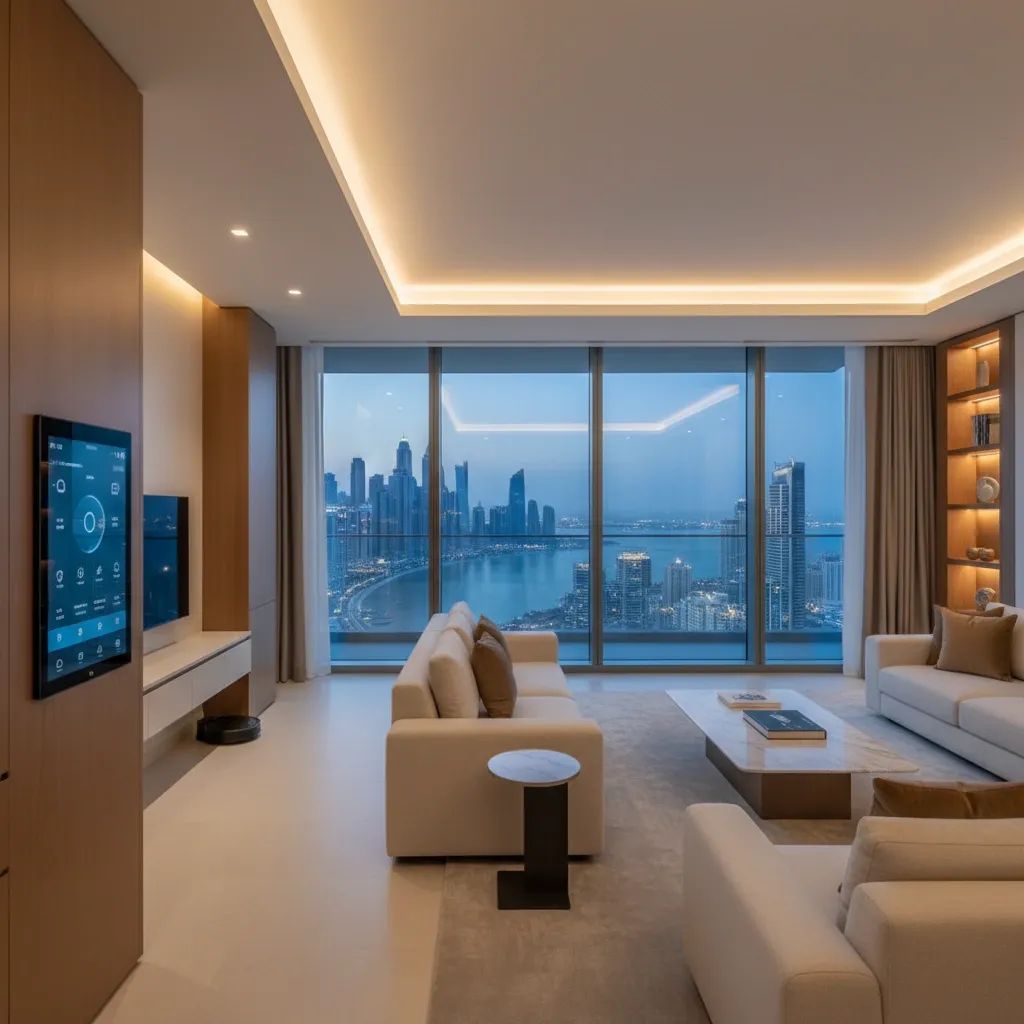
When Half a Billion Dirhams Changes Hands: Inside Dubai's Ultra-Luxury Property Boom
A 5-bedroom apartment stretching 931 square meters in Jumeirah II commanded AED 171 million in an off-plan transaction this week, exemplifying how Dubai's apex real estate tier has decoupled entirely from the supply pressures reshaping the mainstream residential landscape. The sale, registered by the Dubai Land Department, reflects something deeper than a single transaction: an ongoing structural shift in how global capital deploys wealth across geographies.
Why This Matters
• The price per square foot lands around AED 18,365, positioning this apartment among the most expensive per-unit-area in the emirate.
• Market backdrop: On the same trading day, 596 transactions totaling AED 1.9 billion registered, demonstrating consistent volume beneath the headline figures.
• Buyer risk calculus: With handover slated for Q4 2028, purchasers are betting on developer execution, brand heritage, and location immunity to market volatility—a wager only patient, wealthy capital embraces comfortably.
The Branded Residences Premium: Why Names Command Prices
Aman Residences sits at the intersection of hospitality provenance and real estate scarcity. When an international luxury brand partners with a developer to create a residential product, the transaction economics shift fundamentally. Buyers are no longer purchasing square meters; they are acquiring a reputation.
The mathematics are stark: branded units command 20% to 35% premiums over non-branded competitors with identical footprints and locations. This premium persists because it solves a wealthy buyer's core anxiety. An ultra-high-net-worth individual purchasing a property for AED 171 million fears not price but invisibility—the prospect of owning an asset that, despite its cost, lacks the cultural cachet to retain value or command rental premiums among peers.
Aman Residences Dubai, developed through H&H Development's partnership with the hospitality brand, neutralizes this risk. The Aman name signals to international wealth networks that the property adheres to recognized standards, carries professional management, and will remain desirable through market cycles. It functions as a trust transfer mechanism: rather than evaluating the developer or builder independently, the purchaser outsources confidence to a globally recognized entity.
This dynamic materialized throughout early 2026. In March alone, multiple Aman units transacted above AED 140 million, including a penthouse fetching AED 422 million and another apartment selling for AED 356.2 million. These were not isolated outliers. They represented consistent price discovery at the ultra-prime tier, where supply scarcity and brand pedigree override broader market dynamics.
Why Dubai Became the Wealth Magnet
Between 2024 and 2026, approximately 6,500 ultra-high-net-worth individuals annually migrated to or expanded Dubai holdings, many transplanting family offices and operational bases. This influx reflects rational capital allocation rather than speculative enthusiasm.
Start with the tax structure. The United Arab Emirates applies zero tax to rental income and capital gains, enabling a property generating AED 500,000 annually to produce zero tax liability. London investors face marginal rates exceeding 45% on equivalent income. Monaco imposes wealth taxes on similar scenarios. Singapore subjects foreign buyers to an Additional Buyer's Stamp Duty reaching 60%, effectively barring capital mobility.
The UAE Golden Visa program compounds this advantage, granting 10-year residency for real estate investments exceeding AED 2 million. This pathway converts a property acquisition into a residency instrument—critical for wealthy families seeking geographic flexibility while maintaining stable bases for operations, education, and healthcare access.
Geopolitical turbulence amplifies Dubai's appeal. In an era of sanctions, asset freezes, and capital controls, the United Arab Emirates presents itself as politically neutral territory with transparent property rights and stable banking relationships. This perception—whether empirically absolute or not—creates a "safe vault" mentality. Wealthy individuals park capital not solely for returns but for protection against jurisdictional risk.
The Supply Constraint That Justifies the Price
Palm Jumeirah, Jumeirah Bay, and Emirates Hills cannot be infinitely expanded. Waterfront villas operate within rigid geographic boundaries, and regulatory constraints prevent rapid development approval. This scarcity is structural, not artificial—a distinction that matters because it prevents markets from self-correcting through new supply.
When developers manage inventory intelligently by controlling release timing and unit counts, prices escalate without triggering skepticism. The market absorbs price growth because the fundamental constraint is real. You cannot build additional waterfront villas on Jumeirah Bay; existing inventory becomes progressively more valuable.
This scarcity dynamic extends to branded developments. Aman Residences occupies finite space. The developer cannot double the unit count without degrading the brand promise—exclusivity itself becomes the limiting factor. For buyers, this means capital appreciation remains likely regardless of broader market dynamics because supply will never catch demand at the ultra-prime tier.
Off-Plan Architecture: Why Buyers Lock in Early
Off-plan transactions dominate the luxury segment because they offer asymmetric risk distribution. A buyer securing a unit during pre-construction locks in pricing before market appreciation occurs. If property values rise between purchase and handover, the buyer captures the spread. If conditions weaken, the developer absorbs the decline—not the purchaser.
In a market currently experiencing 5% to 8% apartment appreciation annually and 12% to 18% villa growth in prime locations, off-plan entry points create meaningful leverage. Securing AED 171 million in value today at a negotiated pre-construction price, only to see similar units trade for AED 180 million at completion, yields the buyer a capital gain without additional capital deployment.
Developers recognize this leverage and structure payment plans accordingly. Flexible, extended payment schedules reduce friction for high-net-worth buyers, allowing them to deploy capital across multiple projects rather than concentrating outlay in a single transaction. This flexibility is not a concession but a market-clearing mechanism—it attracts more buyers and justifies higher asking prices.
The Dubai Advantage Against Global Competitors
London's luxury market is in recovery mode. The 3% decline in 2025 has given way to forecasts of 1% to 5% growth for 2026, a modest rebound constrained by rising property taxes and a languishing economic outlook. A new High-Value Council Tax Surcharge beginning assessments in 2026 will further depress international demand, as wealthy overseas buyers increasingly view the regulatory burden as excessive relative to returns.
Rental yields in London's Prime Central district average just 3% to 4% annually—roughly half what Dubai offers. This yield compression means London investors are betting purely on capital appreciation without income generation. Meanwhile, Dubai delivers 6% to 8% rental returns on apartments, simultaneously providing growth and yield.
Monaco occupies a different strategic position. Average prices exceed €57,500 per square meter, with flagship locations like Larvotto reaching €70,000 per square meter or approximately AED 270,000 per square foot. However, this carries a critical trade-off: Monaco rental yields rarely exceed 1% to 3%, making it a pure capital preservation play for wealth that requires no income component.
Singapore offers 3% projected price appreciation and 8.62% rental yields, superficially outpacing Dubai on yield. However, foreign buyers face an Additional Buyer's Stamp Duty reaching 60%, effectively converting a AED 100 million property into a AED 160 million commitment. This regulatory friction reserves the market for settled end-users and long-term residents rather than fluid international capital. Wealth managers avoid Singapore for deployment because the transaction costs obliterate arbitrage opportunities.
Dubai's combination—5% to 8% apartment appreciation, 12% to 18% villa growth, 6% to 8% yields, zero foreign buyer taxes, and political stability—creates a rare confluence. The AED 171 million Aman transaction represents a rational capital allocation by family offices rebalancing geographic exposure toward jurisdictions offering simultaneous appreciation and yield.
Market Volume and Liquidity: The Foundation Beneath the Headlines
The AED 171 million off-plan sale occurred against a trading day that saw 596 transactions totaling AED 1.9 billion registered. This volume is not ancillary context; it is foundational. Deep liquidity prevents outlier pricing and ensures headline deals reflect genuine market-clearing values rather than isolated transactions.
Q1 2026 real estate transactions reached AED 252 billion, a 31% year-on-year value increase. The luxury segment alone accounted for AED 87.71 billion, up 26% from the prior year. Foreign investment surged to AED 148.35 billion, a 26% increase, indicating that international capital remains committed despite global volatility.
This resilience reveals that ultra-prime Dubai real estate is transitioning from a local market into a global asset class, traded by international wealth managers employing capital deployed across multiple jurisdictions. When venture capitalists, sovereign wealth funds, and family offices allocate capital to real estate, they do so on a global mandate. Dubai's consistent appreciation, predictable policy environment, and deep transaction volume earn it portfolio allocation.
The Incoming Supply Wave: Segmentation Becomes Critical
Approximately 120,000 residential units are anticipated for delivery in Dubai during 2026. This supply surge presents a sharply bifurcated impact: generic, non-waterfront apartments in secondary locations will face rental pressure and price moderation. Branded, scarce, villa-heavy developments occupy an entirely different demand tier with minimal substitutability.
Investors navigating this environment must recognize the stratification within the market. A mid-rise apartment in Business Bay faces competitive pressures from 5,000 new units launching simultaneously. A villa in Dubai Hills Estate or a branded apartment in Jumeirah II operates in an effectively separate marketplace with 10 to 20 new competitors, not thousands.
For residents in the United Arab Emirates holding investment capital, the takeaway is straightforward: location scarcity trumps all other metrics. Properties in supply-constrained areas with brand heritage or villa status will outperform generic inventory regardless of broader supply dynamics.
Developers Respond with Experience Differentiation
Rather than competing purely on price, developers of ultra-luxury projects are embedding smart-home systems, sustainability certifications, and curated amenities—private spas, resident-only museums, Michelin-recognized dining facilities. These are not cosmetic upgrades; they constitute material resale and rental premiums, justifying price points and differentiating properties in a crowded ultra-luxury marketplace.
An apartment with smart climate control, energy management, and water conservation systems commands rental premiums in a market increasingly attentive to operational costs. A residency with professional museum curation attracts tenants who value cultural integration into their living spaces. These differentiators are becoming pricing factors rather than luxuries, materially affecting resale and rental valuations.
The Geopolitical Stabilization Effect
March 2026 witnessed a brief slowdown in investment activity attributed to regional tensions. April's rebound signals that uncertainty has dissipated and capital has re-prioritized Dubai's investor-friendly policies, visa programs, and track record of political stability. This volatility-recovery pattern is itself instructive: when global investors require a safe harbor, Dubai consistently emerges as a priority destination.
The transaction velocity—596 deals on a single trading day—demonstrates that market depth absorbs price pressures and prevents manipulation. This liquidity is structural, not cyclical, ensuring that high-value sales like the AED 171 million apartment represent market consensus rather than outlier transactions driven by speculative buyers or distressed sellers.
The Emerging Asset Class
Ultra-luxury Dubai real estate has evolved into a scarcity-anchored asset class increasingly divorced from mainstream residential dynamics. Branded residences, waterfront villas, finite-supply penthouses, and location-exclusive developments continue to absorb capital regardless of broader supply concerns.
The AED 171 million Aman Residences transaction is symptomatic of this broader phenomenon. It exemplifies how global capital flows toward jurisdictions combining tax efficiency, political stability, supply scarcity, and strong yields. For the United Arab Emirates, this dynamic represents far more than luxury excess—it constitutes a structural economic advantage, converting consistent international capital flows into a revenue stream that diversifies the economy beyond hydrocarbons and tourism.
The next decade will likely deepen this stratification. Generic residential segments will consolidate. Branded, scarce, and professionally managed properties will appreciate and command rental premiums. Investors recognizing this segmentation early and deploying capital accordingly will position themselves advantageously.


