
A Barrage Continues as UAE Defenses Remain on High Alert
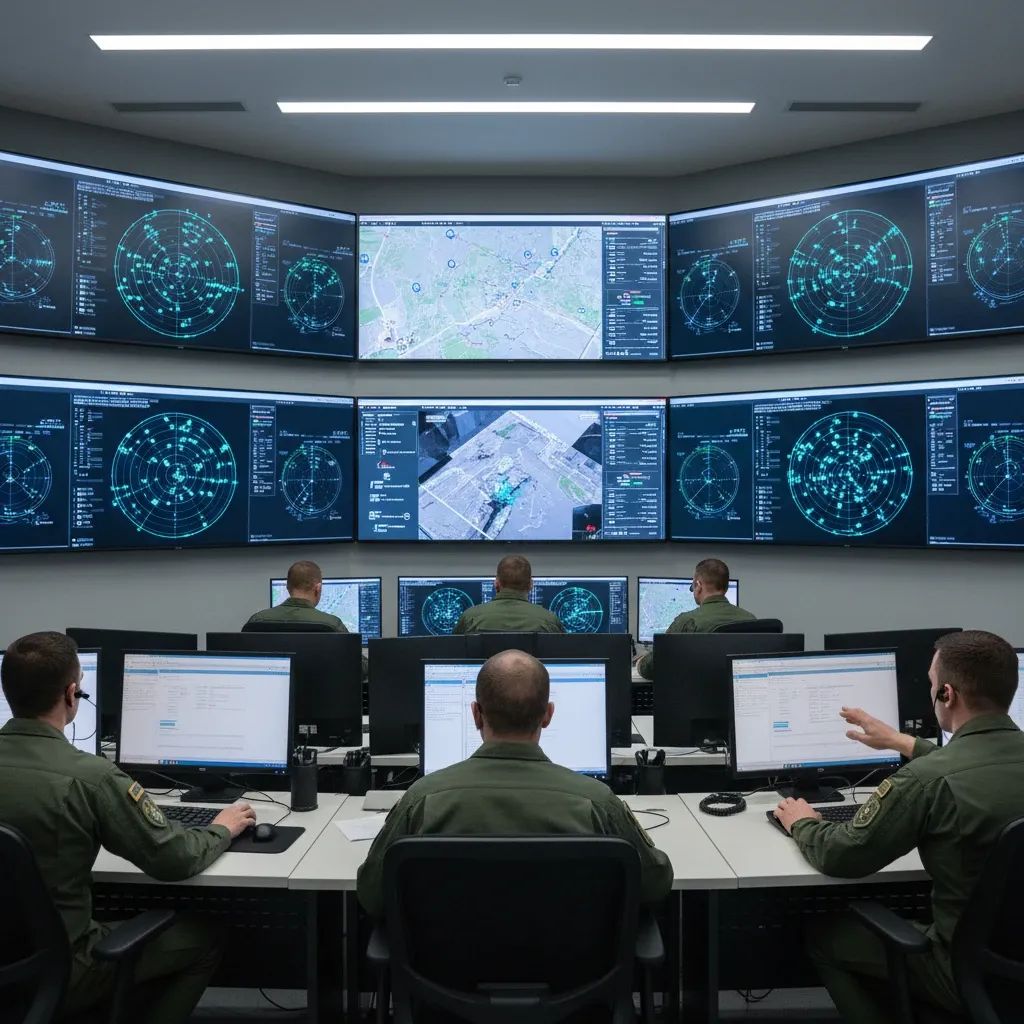
The United Arab Emirates air defence network is holding against a sustained Iranian assault that has now stretched into its fifth consecutive day. The Ministry of Defence confirmed this morning that its layered array of interceptor systems—primarily American-made THAAD and Patriot platforms—continues to neutralize incoming projectiles at rates exceeding 90%, yet the sheer volume of attacks means residents across Abu Dhabi and Dubai are experiencing disruption that extends far beyond the skies.
Why This Matters
• Travel chaos ongoing: Dubai International Airport remains partially operational with flight delays and cancellations; alternative routing through other regional hubs is straining capacity.
• Insurance questions unresolved: Property damage claims from shock-wave effects and debris are caught in disputes over whether standard coverage applies to what insurers define as "acts of war."
• Workplace flexibility expanding: Major employers in the financial and tech sectors have authorized sustained remote-work arrangements as a precautionary measure.
• Departure pressure rising: American and some European citizens are being advised by their governments to consider leaving the region, adding urgency to evacuation discussions.
The Tactical Situation and Defense Mechanics
Since Iranian forces commenced operations on February 28, the United Arab Emirates has faced approximately 193 ballistic missiles, 8 cruise missiles, and over 900 unmanned aerial vehicles across five days. The sheer diversity of incoming threats—ranging from subsonic drones to hypersonic missiles—has tested the limits of even the UAE's world-class defenses, which combine detection, guidance, and interception across multiple layers and altitudes.
The Terminal High Altitude Area Defense system, which the UAE was the first nation outside America to acquire, operates at the uppermost tier. THAAD engages threats in the terminal phase of flight and even in space before warheads begin descending. Below that, Patriot PAC-3 missiles handle medium-altitude intercepts, while Patriot GEM-T variants address cruise missiles and low-flying targets. For point defense around critical installations, the Russian-built Pantsir-S1 platforms provide rapid-fire coverage against vehicles or structures. The newer South Korean KM-SAM system, deployed within the past year, fills a "mid-tier" role, intercepting targets between the thresholds handled by other systems.
AN/TPY-2 radar arrays feed real-time tracking data across this integrated network, enabling commanders to direct interceptors with precision timing. The mathematics of interception are unforgiving: a THAAD or Patriot interceptor costs several million dollars per launch; each Iranian Shahed drone costs roughly 30,000 dollars. Over five days, the UAE's defenders have expended interceptors in quantities that suggest stocks were already being replenished even as the initial barrage landed.
Precision and Volume: Iran's Strategy
Analysts tracking the campaign point to an evident dual-layer Iranian calculation. The first is psychological and military: by striking American military assets—specifically Al Dhafra Air Base, which hosts the United States Air Force's 380th Expeditionary Wing—Tehran signals that it can impose operational costs on Washington's forward presence in the Gulf. The second layer is economic. Sustaining a campaign with hundreds of inexpensive drones and ballistic missiles forces the defender into a calculus of attrition, where each successful intercept consumes resources far exceeding the cost of the incoming threat.
The Shahed-136 drones, which comprise a significant portion of the Iranian arsenal, are simple, relatively slow (subsonic), and yet capable of striking with modest precision. When a cluster of them penetrates a defense perimeter simultaneously—which occurred on several occasions over the past five days—even sophisticated systems face saturation challenges. The intercept logs confirm this dynamic: while 88% of ballistic missiles have been destroyed, the drone interception rate hovers at approximately 94%, suggesting some tactics are proving more difficult than others.
Where Projectiles Have Landed and the Civilian Toll
Three residents—nationals of Pakistan, Nepal, and Bangladesh—have been killed in direct strikes or debris impact. An additional 58 individuals across 16 nationalities have sustained injuries ranging from minor cuts and shock to more serious trauma. The casualties reflect the emirate's demographic reality: the vast majority of residents are expatriates from across South Asia, Southeast Asia, Africa, and the Middle East.
The Shahed-type drone that struck near the Fairmont The Palm Hotel on Palm Jumeirah detonated with enough force to ignite a secondary fire and scatter fragments across neighboring properties. The Burj al Arab, visible from much of Dubai's coast, was targeted but sustained only limited structural damage, according to preliminary reports. At Dubai International Airport, drone debris penetrated terminal sections, injuring four ground staff and disrupting baggage handling for several hours.
Early reports of an incident at the Mussafah fuel terminal in Abu Dhabi remain officially unconfirmed. Initial emergency-response dispatches referenced fire, but the United Arab Emirates authorities have neither released a formal statement nor provided damage assessments. Fuel supply chains have remained stable, suggesting either the incident was contained rapidly or reports were preliminary in nature.
Across both emirates, residents in high-rise buildings have reported cracked windows from shock waves generated by successful interceptions—the acoustic concussion from a high-altitude detonation can travel downward and outward with considerable force. Property assessors are still cataloguing damage; claims adjusters are grappling with policy language designed for peacetime.
The Insurance Puzzle and Economic Reopening
Standard property insurance policies across the United Arab Emirates have long contained exceptions for "acts of war" and "civil unrest." The challenge facing residents and businesses is that the distinction remains legally ambiguous. Is an Iranian ballistic-missile strike an "act of war," which would typically fall outside coverage? Or does the designation depend on whether the United Arab Emirates has formally declared war—a status that has not been adopted, despite the ongoing military exchange?
Insurance brokers report client calls have become increasingly urgent. Annual policy renewals and new premium quotes are expected to increase by 15-30% in coming weeks as underwriters reassess Gulf-region risk. For property owners, the implication is straightforward: premiums will rise, and coverage gaps may widen unless explicit amendments are negotiated now.
Parallel to insurance concerns, businesses are reassessing operational continuity. Dubai's hospitality sector has seen significant booking cancellations, with some high-end hotels reporting occupancy drops to 40% of normal levels. Gallery operators and event planners, particularly those preparing for Art Dubai scheduled for April, are maintaining contingency plans. Airlines have reactivated surge capacity at alternate hubs, including Muscat, Doha, and Abu Dhabi, to absorb diverted traffic.
Security Escalation and Diplomatic Rupture
The United Arab Emirates government has formally closed its embassy in Tehran and evacuated all diplomatic personnel, a decisive move that signals the current conflict phase has transitioned beyond previous tensions. Historically, the Emirates and Iran maintained a pragmatic relationship—trade continued, consular services functioned, and both sides managed disputes through back-channel diplomacy. That institutional structure is now dismantled.
The Ministry of Foreign Affairs issued a statement characterizing the Iranian attacks as a "flagrant violation of national sovereignty and international law," language that reflects the severity of the breach but also leaves diplomatic channels nominally open should circumstances permit de-escalation. Neighboring Gulf states—Bahrain, Qatar, Kuwait, and Saudi Arabia—face parallel dilemmas. Each has absorbed strikes, each hosts American military facilities, and each now must decide whether to deepen security integration with Washington or attempt to signal nonalignment in hopes of reducing Iranian targeting.
For expatriate professionals and investors, the broader calculus is whether the current escalation represents a temporary spike in an ongoing proxy conflict or whether it reflects a structural deterioration in regional security that will persist for months or years. That distinction determines everything from contract negotiations to family relocation decisions.
Military Readiness and Global Attention
The United States military has activated additional defensive assets across the Gulf, stationing reinforcement units in and around the region. European governments have issued travel advisories. The United Nations Security Council has called for de-escalation, but Russia and China have abstained from more forceful resolutions, muting the organization's response.
Meanwhile, the UAE Ministry of Defence has announced consultations with defense contractors in the United States and South Korea regarding accelerated resupply of interceptor missiles and advanced radar capabilities. The implicit acknowledgment is that at current consumption rates, stocks will become depleted within 2-3 weeks if the Iranian pace continues. Replenishment timelines for THAAD and Patriot munitions typically require 6-12 months under normal procurement; expedited delivery contracts negotiate that window downward but at premium cost.
Immediate Guidance for Residents
The Civil Defence and Authorities have issued standing advisories: during alert periods, sheltering indoors, remaining away from windows, and avoiding upper-floor exposure is recommended. Ground-floor rooms and internal corridors provide the most protection against blast overpressure and fragmentation. Employers have activated contingency plans; many have authorized staggered schedules to reduce facility occupancy during peak alert hours (typically late afternoon and early evening, when interception activity has been historically more frequent).
Air travel remains possible but degraded. Passengers should confirm departure times directly with carriers 24 hours before arrival at terminals. Additional security screening and occasional airspace closures have extended typical airport processing times by 60-90 minutes. For those considering departure from the region, commercial flights remain available, though prices have climbed and onward connections face capacity constraints.
The broader reality for residents is adapted normalcy rather than crisis mode. Most government offices remain open, shops operate, and schools have resumed. Yet an undercurrent of urgency shapes decisions—employment contracts are being renegotiated with remote-work provisions, family meetings center on contingency scenarios, and conversations at cafes and workplaces return repeatedly to insurance, evacuation timelines, and how long the situation will persist.
The Ministry of Defence has committed to daily public updates as long as the air-defense operations continue, and early indications suggest that commitment will be sustained for the foreseeable future. For now, the UAE's sophisticated defensive infrastructure is performing its designed function: keeping the majority of incoming threats from reaching population centers. Whether that defensive posture alone will be sufficient to anchor regional stability remains the unresolved question shaping daily life across Abu Dhabi and Dubai.


