
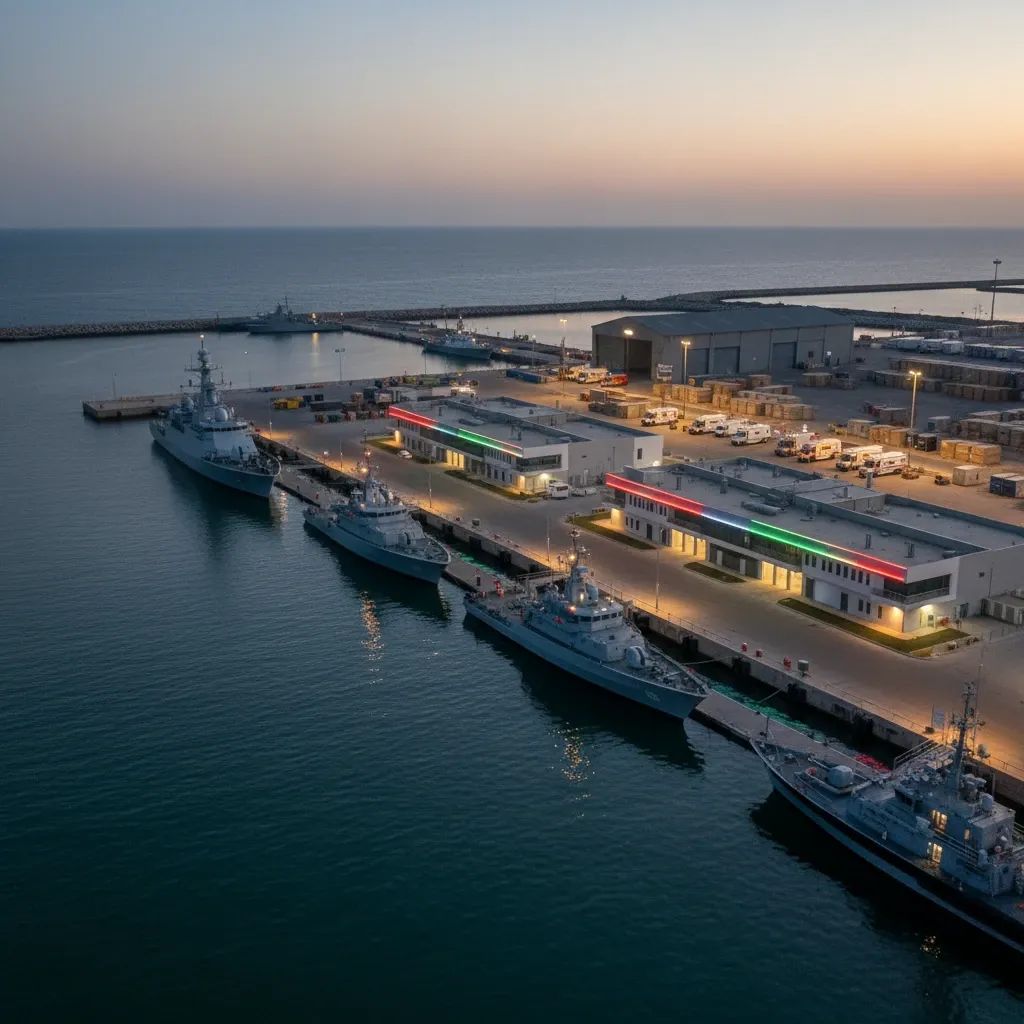
Two Iranian unmanned aircraft penetrated United Arab Emirates airspace and struck a logistics facility at the Al Salam Naval Base in Abu Dhabi on Sunday, March 1, signaling escalating regional tensions affecting the federation's security posture.
Quick Context
• When: Sunday, March 1, 2026, early morning
• What happened: Two drones hit a storage warehouse; fires were contained immediately by emergency crews
• Casualties: None reported
• Official response: Ministry of Defence condemned the attack as a violation of the UN Charter and affirmed the federation's sovereignty
The Incident at Ground Level
The United Arab Emirates Ministry of Defence confirmed that specialized emergency response teams deployed rapidly to Al Salam Naval Base and extinguished the fires without incident. The warehouse targeted stored routine materials—supplies classified by the Ministry as general inventory rather than munitions or classified equipment. Two containers suffered damage; structural integrity of the base remained intact.
The Ministry's public statement condemned the attack in unambiguous legal language as a violation of the UN Charter and affirmed the federation's sovereignty. The Ministry pledged to "address any threats decisively" and to "take all necessary measures to protect its territory, citizens, residents, safeguard sovereignty, security, stability, national interests, and capabilities."
Why This Attack Matters
Al Salam Naval Base is a recognized component of the United Arab Emirates Naval Forces and hosts logistics, patrol vessels, and coastal defense assets. The targeting of this installation sends a clear message: military and strategic infrastructure in the federation faces direct threat from cross-border drone operations.
This represents a significant breach of the UAE's security perimeter. The federation has invested heavily in air defense systems following regional escalations, including capabilities acquired through partnerships with international allies. The successful penetration of airspace to strike a defended military installation demonstrates vulnerabilities in layered air defense networks.
Implications for Daily Life in the Emirates
For those living in the United Arab Emirates, the Al Salam incident carries practical implications despite the contained damage. The federation houses a diverse population of residents and workers employed in finance, hospitality, aviation, and trade. Regional volatility translates directly into economic consequences: airport operations, security protocols, and investor confidence can be affected during periods of heightened tension.
Residents should be aware of:
Short-term security measures are likely to intensify around critical infrastructure. Enhanced security screening may affect airport operations and access to government facilities. Commercial aircraft using Dubai International or Abu Dhabi International airports may experience adjusted processing procedures as security protocols adapt to current threat levels.
Insurance products, particularly those covering property and business interruption, should be reviewed. Policyholders should understand coverage terms during periods of regional conflict or elevated security situations. Life and health insurance typically remain unaffected; property and general liability policies warrant closer examination.
Emergency preparedness at the household level—knowing the location of designated shelter facilities and understanding local emergency protocols—remains prudent. Residents should stay informed through official UAE government channels and media for any guidance regarding safety measures.
The Federation's Response and Path Forward
The United Arab Emirates has historically prioritized stability and economic openness as core pillars of national identity. The federation's defense strategy emphasizes deterrence, protection of critical infrastructure, and international partnerships.
The Ministry's statement reflects the federation's commitment to protecting citizens, residents, and visitors while maintaining the nation's position as a stable hub for regional and international commerce. The incident will likely prompt continued evaluation of defense capabilities and international coordination on regional security matters.
Residents can expect the federation to maintain its established focus on safety and security while continuing normal economic and social operations. The UAE's track record in managing security challenges over the past decade demonstrates institutional capacity to respond effectively while preserving the nation's role as a center of commerce, tourism, and international engagement.
The incident occurred in daylight with a swift containment response. The federation's core infrastructure and daily life operations remain unaffected. Whether additional measures are implemented will depend on evolving regional developments and official government guidance.


