
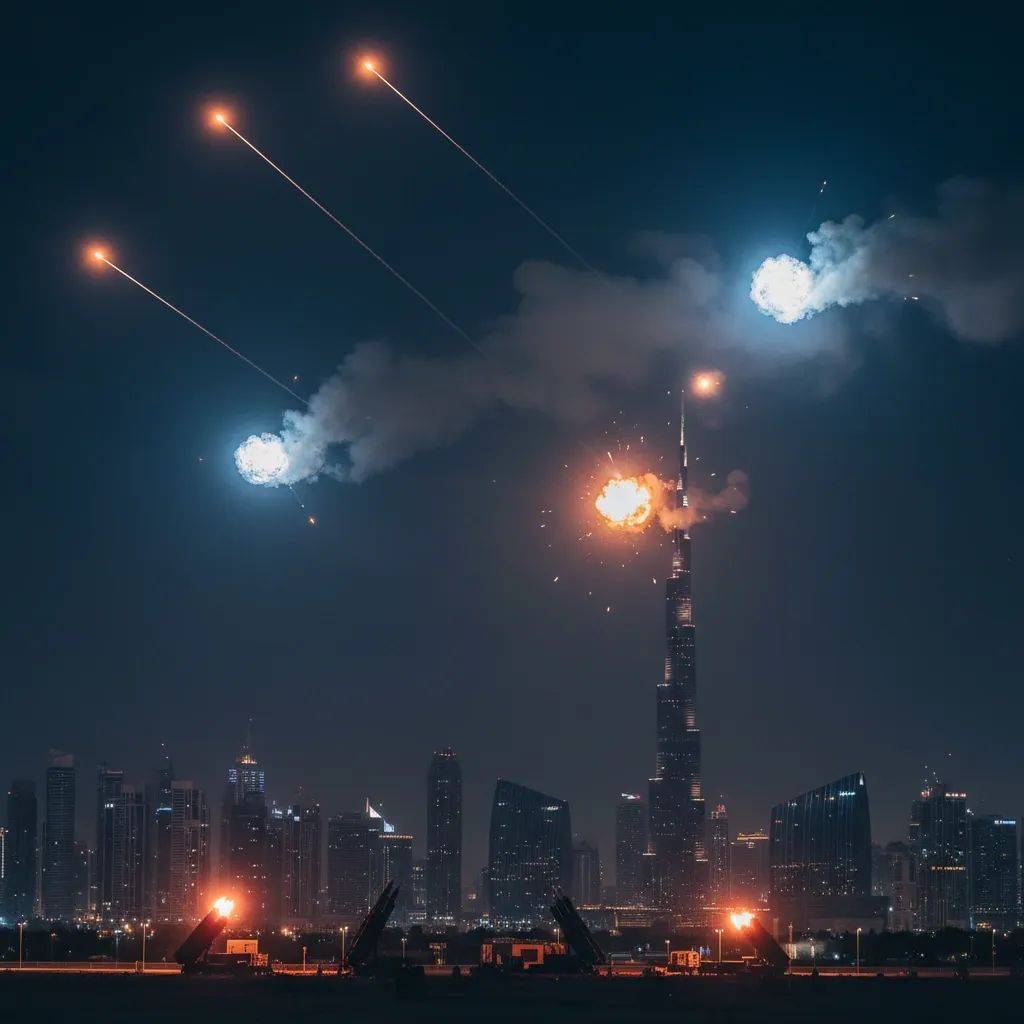
The United Arab Emirates Ministry of Defense has intercepted 137 ballistic missiles and 209 drones launched by Iran in a multi-day barrage beginning February 28, 2026, marking one of the most intense aerial assaults on Gulf territory in recent history. The strikes, which Iran claims are retaliation for the deaths of senior Iranian leaders including Supreme Leader Ayatollah Ali Khamenei in alleged US and Israeli operations, have challenged Dubai's international reputation and forced the Emirates into its strongest diplomatic confrontation with Tehran in years.
Why This Matters:
• Residents witnessed explosions at iconic sites including Burj Khalifa, Palm Jumeirah, and Dubai International Airport as falling debris ignited fires and damaged structures.
• Three people were killed—Pakistani, Nepali, and Bangladeshi nationals—with 58 others injured, all foreign workers, underscoring the human cost even when defenses succeed.
• The UAE closed its Tehran embassy and withdrew all diplomatic staff, the most severe response by any Gulf state to the escalation, signaling a shift in bilateral relations that had been warming since 2022.
• Insurance premiums and flight routes for the Emirates are expected to adjust as questions arise about the UAE's role as a stable business hub.
Defense Systems Stop 96% of Threats
The United Arab Emirates Air Force and integrated air defense network—comprising US-made THAAD and Patriot PAC-3 batteries, Israeli-Indian Barak-8 systems, and South Korean Cheongung II interceptors—achieved an interception rate exceeding 96% during the intensive operations on March 1. According to the Ministry of Defense, forces destroyed 20 ballistic missiles, two cruise missiles, and 311 drones in a single 24-hour period.
Since the assault began on February 28, the total tally includes 165 ballistic missiles detected, with 152 successfully intercepted. Of the 13 that evaded the net, all reportedly fell into the sea. The drone count stood at 541 detected, with 506 destroyed before impact. The sheer volume meant that 35 unmanned aerial vehicles struck United Arab Emirates territory, their wreckage compounding the damage from falling interceptor debris.
Military analysts specializing in Gulf defense noted that even with these success rates, dozens of projectiles still cause fires, trigger evacuations, and saturate emergency services. "No system is infallible," defense experts told regional outlets. "When facing hundreds of inbound threats simultaneously, the mathematics of failures become significant."
Landmarks Hit, Workers Killed
Debris and drone fragments struck Jebel Ali Port, the Middle East's busiest container terminal, causing a brief suspension of operations. Fires erupted near the Burj Al Arab hotel and at a construction site adjacent to Palm Jumeirah, the man-made island synonymous with Emirates luxury. Abu Dhabi's Etihad Towers sustained minor structural damage from falling missile fragments, while Dubai International Airport—the world's busiest for international passengers—reported runway closures lasting several hours.
The three fatalities occurred when interceptor debris struck a labor accommodation facility in an industrial zone outside Dubai. All victims were South Asian migrant workers, a demographic that comprises roughly 88% of the United Arab Emirates population but often lives in areas with less robust shelter infrastructure. The 58 injured included Indian, Filipino, and Egyptian nationals, most treated for shrapnel wounds and smoke inhalation.
What This Means for Residents
Immediate Changes:
• Flight Disruptions: Several international carriers suspended or rerouted services through Dubai and Abu Dhabi for 48 hours. Schedule adjustments may continue as airlines reassess operational protocols.
• Insurance Costs: Property and business interruption policies in free zones and near strategic sites like airports and ports are likely to see premium increases of 15–25%, according to insurance market reports.
• Alert Status and Monitoring: The United Arab Emirates National Emergency Crisis and Disaster Management Authority issued updated safety guidelines instructing residents to identify the nearest reinforced structure and avoid windows during alerts. Residents are advised to monitor the UAE Government mobile app and official Ministry of Interior channels for real-time emergency updates.
• School and Business Operations: Schools in Abu Dhabi and Dubai resumed normal operations by March 3. Government and private sector offices operated normally, though some businesses near critical infrastructure implemented flexible work arrangements during the heightened alert period (February 28–March 5).
Longer-Term Implications:
• Investor Confidence: The attack raises questions about the UAE's position as a geopolitical center of stability. Real estate analysts are monitoring whether high-net-worth individuals reconsider relocating to Dubai if regional tensions escalate further.
• Defense Spending: The Ministry of Defense is expected to accelerate procurement of additional THAAD batteries and expand coverage to less-protected northern emirates like Ras Al Khaimah and Fujairah.
• Labor Market: Recruiting South Asian construction and service workers may face headwinds if families perceive increased security risks in the UAE, potentially affecting labor supply in key sectors.
The Diplomatic Rupture
In a move unprecedented among Gulf Cooperation Council (GCC) members, the United Arab Emirates Ministry of Foreign Affairs announced the closure of its Tehran embassy and the recall of all diplomatic personnel on March 1. Deputy Prime Minister and Foreign Minister Sheikh Abdullah bin Zayed Al Nahyan publicly declared the UAE "reserves its full right to respond in accordance with its legal rights."
The UAE's statement rejected any Iranian justification for the strikes, emphasizing that "targeting civilian sites violates sovereignty and breaches international conventions." Within 72 hours, the United States, Bahrain, Jordan, Kuwait, Qatar, and Saudi Arabia issued a joint condemnation of Iran's "indiscriminate and drone attacks" across the region, noting that other Gulf states also faced projectile incursions.
The embassy closure signals a significant shift in regional relations. The UAE had spent the past four years rebuilding trade channels with Iran while maintaining defense ties with Washington. This escalation forces the Emirates into a more defined strategic alignment.
Regional Context: Why the UAE Was Targeted
Iran framed the assault as retaliation for what it alleges were US and Israeli strikes that killed Ayatollah Ali Khamenei and other senior figures. Tehran has accused Gulf states of supporting such operations by hosting US military installations. The UAE, home to Al Dhafra Air Base where US Air Force assets are stationed, became a symbolic target despite official denials that Emirates territory was used in any strikes on Iran.
The timing is particularly significant. The UAE had been pursuing a balance between maintaining defense ties with Washington while reopening trade routes to Tehran. The missile barrage forces the Emirates into a more binary choice between American alliance obligations and regional positioning.
How the Defense Shield Compares
The UAE's air defense architecture ranks alongside Israel and Saudi Arabia as the most sophisticated in the Middle East. Only the UAE and the Kingdom operate the THAAD system, designed to intercept ballistic missiles at altitudes above 150 kilometers. The multi-layered approach also includes Russian Pantsir-S1 for low-altitude threats, French Crotale batteries, and Swedish RBS-70 portable systems, creating overlapping coverage zones.
Yet experts caution that no network can guarantee zero leakage when facing saturation attacks. Iran's arsenal is estimated at several thousand ballistic missiles and drones, far exceeding the inventory of interceptors available to Gulf states. The fact that falling debris—even from successful intercepts—caused three deaths and dozens of injuries underscores the operational limits of defensive technology.
The UAE's 96% interception rate is notable by international standards, but the remaining percentage, plus the kinetic energy of falling wreckage, still translates to real casualties and economic disruption.
The Economic Toll
Preliminary estimates from the Dubai Chamber of Commerce peg the direct damage from fires, debris, and operational shutdowns at AED 800 million (approximately USD 218 M). Indirect costs—lost tourism bookings, flight cancellations, insurance payouts, and temporary port closures—could push the total economic impact beyond AED 2 billion (USD 545 M).
Real estate markets showed immediate caution, with several property transactions in Dubai Marina and Downtown Dubai reportedly paused pending security assessments. Hotel occupancy rates in the first week of March dropped 12% compared to the same period in 2025.
The Abu Dhabi Securities Exchange fell 3.7% in the two trading sessions following the initial strikes, though it recovered roughly half those losses by week's end as investors assessed the event as localized rather than indicative of sustained conflict.
What Happens Next
The Gulf Cooperation Council convened an emergency session in Riyadh on March 2, with diplomats signaling a coordinated response focused on expanded intelligence sharing and joint air defense coordination. The UAE is pursuing a formal UN Security Council resolution condemning Iran's strikes, though Security Council dynamics complicate enforcement.
On the ground, United Arab Emirates Civil Defense authorities extended a heightened alert status through March 5, advising residents to maintain emergency kits stocked and to monitor official channels for updates. The Ministry of Interior deployed additional personnel to monitor critical infrastructure, including desalination plants and power generation facilities.
For the millions of expatriates who have made the Emirates home, the focus remains clear: the UAE's air defense systems demonstrated effectiveness, but the incident underscores the security complexities of the region. Residents are encouraged to stay informed through official government channels and to follow updated safety protocols issued by civil defense authorities.


