
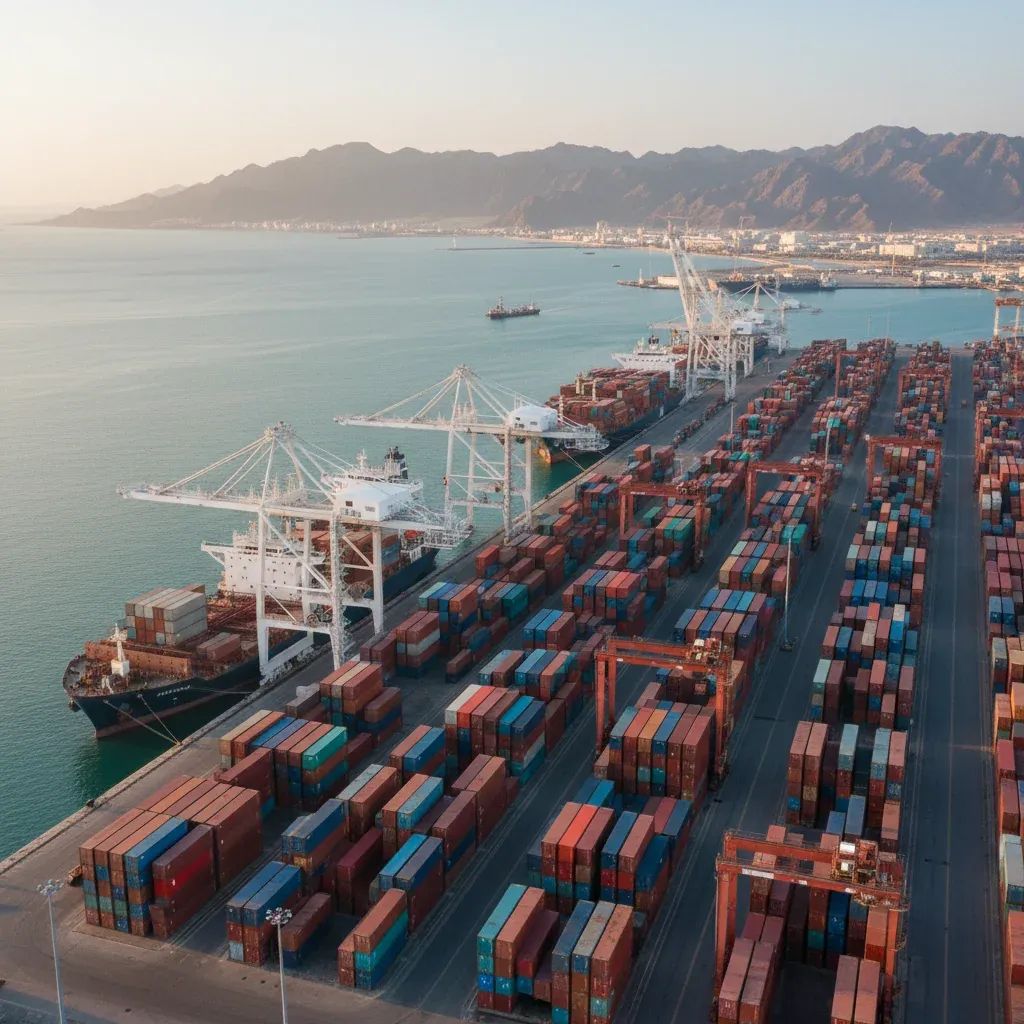
FAO Issues Warning: Hormuz Strait Closure Threatens UAE Food Security
The United Nations Food and Agriculture Organisation issued a critical warning on Wednesday that a prolonged closure of the Strait of Hormuz risks triggering a severe global food crisis within 6 to 12 months, with United Arab Emirates residents particularly vulnerable due to the country's heavy reliance on imported food supplies.
The Strait of Hormuz—through which approximately 20 million barrels of oil daily and a significant portion of globally traded fertilizers normally flow—has been disrupted since March, creating cascading effects across agricultural supply chains worldwide. With over 80% of food consumed domestically in the UAE sourced internationally, the nation faces material exposure to transport disruptions and commodity inflation.
How the Crisis Will Unfold
The FAO outlined a progression of impact in four distinct phases:
Phase One: Energy Markets Constrict. Crude oil and liquefied natural gas supplies tighten, raising transportation costs and increasing expenses for fertilizer production facilities dependent on gas feedstock.
Phase Two: Fertilizer Shortages. Nitrogen-based fertilizers—particularly urea, a critical agricultural input—become scarce or prohibitively expensive. Farmers across Asia, Africa, and the Americas face difficult choices: apply less fertilizer, switch to less productive crop varieties, or accept unsustainable production costs.
Phase Three: Reduced Harvests. Lower fertilizer applications yield fewer grains and pulses globally. Farmers operating on thin margins cannot absorb production shortfalls by raising prices alone; supply contracts and per-acre yields fall instead.
Phase Four: Consumer Prices Rise. As harvests disappoint globally and storage reserves thin, traders bid up prices for available grain, oilseeds, and legumes. Within six to twelve months, households experience higher costs for bread, cooking oil, and meat products.
What This Means for UAE Residents and Businesses
For people living in the United Arab Emirates, the implications are significant. The nation's exceptional food import dependency—among the world's highest—means any sustained spike in shipping costs or commodity prices translates directly to grocery expenses and household budgets.
The UAE's role as a regional re-export and distribution hub amplifies exposure. Disruptions to inbound fertilizer and grain shipments affect not only residents but also businesses serving broader Gulf and East African markets. Hospitality, logistics, and food service industries that rely on price-stable supply chains face potential margin pressure.
The government's strategic food reserve system provides a buffer that many nations lack. Dubai's and Abu Dhabi's ability to stockpile commodities has historically insulated the country from short-term shocks, though analysts note the critical question of whether current reserves can sustain a full 6-12 month disruption.
Alternative Routes Under Pressure
Cargo is being rerouted through ports on the UAE's eastern coast—Fujairah and Khorfakkan, positioned on the Gulf of Oman outside the Strait—with goods transported overland into Saudi Arabia and connecting to Red Sea ports. While these alternatives demonstrate logistical flexibility, overland transport carries substantially higher costs than traditional maritime shipping.
The UK and France-led multinational naval mission, supported by 38 nations, provides mine clearance and reassurance to commercial operators. However, full normalization of Strait traffic is not anticipated until late 2026 or early 2027 at the earliest, according to energy sector analysts.
Climate Adds to Pressure
An additional threat exists in the approaching El Niño weather pattern, anticipated to bring droughts across multiple agricultural regions. Water-scarce countries already importing most food—a category encompassing the Gulf and broader Middle East—face compounded vulnerability should weather disruptions occur simultaneously with fertilizer shortages.
The Critical Window: Now
The FAO's central warning emphasizes timing. Farmers and governments are making decisions about planting schedules, input purchases, and crop selection during May and June 2026. These decisions—influenced by fertilizer prices and uncertainty about the Strait's reopening—will significantly determine whether the world experiences a manageable supply squeeze or a more severe food security challenge.
The organization has explicitly called for government restraint on export restrictions, particularly affecting energy, fertilizers, and agricultural inputs. Market fragmentation—when countries ban exports to protect domestic supplies—amplifies scarcity globally and drives panic buying. Humanitarian food flows must remain protected, and strategic reserves must be prioritized to absorb higher transport costs.
The Path Forward
For UAE-based consumers, businesses, and policymakers, the next quarter is critical. The FAO's assessment is clear: this represents a significant challenge to global agriculture that will test the adaptability of markets and governments through the remainder of 2026 and potentially beyond. The connection between shipping disruption, fertilizer costs, crop yields, and grocery prices is not theoretical—it is a documented economic chain with direct implications for households across the region.


