
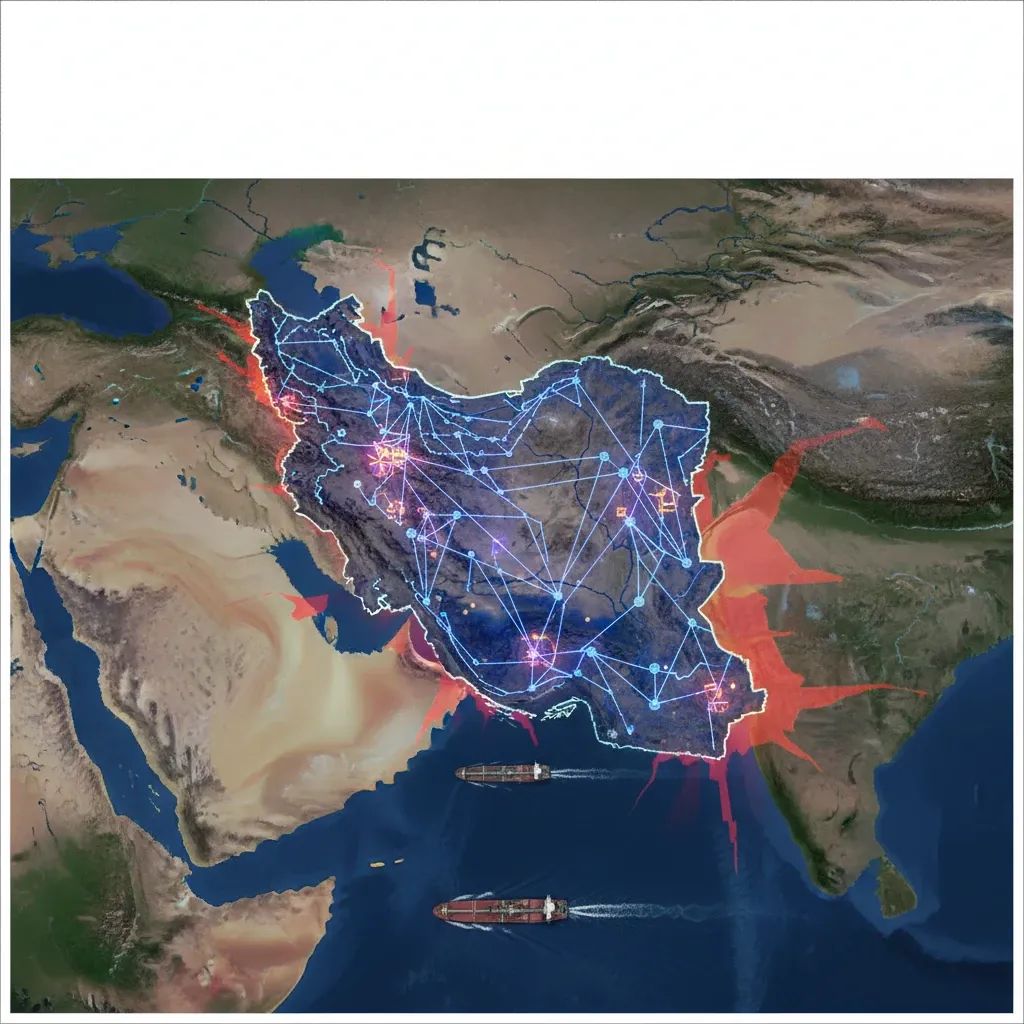
A Brief Window for Dealmaking, But the Real Test Lies Ahead
The diplomatic pause that opened on May 18 has given financial markets permission to exhale, at least temporarily. After weeks of escalating threats and plummeting asset prices, President Trump's decision to postpone military action against Iran has allowed bond traders to step back from panic-hedging and currency markets to stabilize. The US Dollar Index settled at 99.026, a modest but meaningful steadying after earlier volatility. But here's the critical reality for anyone managing money or running a business in the United Arab Emirates: this reprieve is fragile, conditional, and dependent on negotiators resolving issues that remain fundamentally deadlocked.
Why This Matters
• Oil price ceiling under pressure: Brent crude lingering above $115-120 per barrel means energy-dependent households and businesses are absorbing elevated costs through utility bills and freight charges; any negotiation collapse sends prices toward $130-150 levels, triggering cascading inflation across imported goods.
• Interest rate timing uncertainty: Central banks globally are withholding anticipated rate cuts as long as energy inflation persists; this means borrowing costs stay elevated longer, directly impacting UAE residents with dollar-denominated debt and businesses seeking credit expansion.
• Trade corridor stability: The Strait of Hormuz remains partially constrained; full closure would devastate Dubai's port throughput and force rerouting around Africa, adding 2-3 weeks to shipping times and crushing the UAE's competitive advantage as a logistics hub.
The Negotiation Framework: What's Actually Being Discussed
The diplomatic machinery currently engaged involves intermediaries in Oman, Switzerland, and Pakistan working toward a broad framework that would address three interlocking issues: Iran's nuclear enrichment levels, frozen asset releases, and sanctions relief on oil exports. The US side demands zero uranium enrichment capability, while Iran is demanding significant sanctions relief on oil exports and access to frozen assets.
Trump's postponement came specifically after direct appeals from Qatar's Emir, Saudi Arabia's Crown Prince, and UAE officials, who collectively argued that abandoning the diplomatic track would trigger an energy catastrophe that would destabilize the entire Gulf economy. The message was direct: military action would cost these nations more economically than any nuclear concerns could justify. This regional pressure matters because Washington typically weights Gulf state input heavily when weighing Middle East policy choices, particularly when those nations have something at immediate economic stake.
The proposed framework involves phased concessions: Iran halts enrichment and begins verification processes, the US gradually unfreezes Iranian assets in tranches, and sanctions on crude oil sales ease incrementally. Critically, this structure would only work if both sides trust implementation timelines. Given the mutual hostility between Washington and Tehran, trust is precisely what doesn't exist. Analysts monitoring the talks report that while negotiators are discussing specifics, fundamental disagreements persist on ballistic missile programs and Iran's backing of armed groups across the region.
How Crude Price Movements Reshape UAE Household Economics
When oil climbed past $120 in mid-May following military threats, the immediate effect was visible: fuel prices at petrol stations across Dubai and Abu Dhabi increased, utility bills for industrial customers spiked, and shipping companies immediately began passing surcharges onto customers. The mechanism works through two channels that affect residents differently depending on their income level and asset holdings.
For salaried expat workers and UAE nationals on fixed incomes, elevated energy costs primarily appear as higher living expenses—fuel, air conditioning (substantial in Gulf summers), and imported goods that traveled via expensive freight. A family spending roughly 3,000 AED per month on fuel and utilities saw that creep toward 3,500 AED during the peak crisis period. For businesses, the impact compounds: construction firms saw cement and steel prices rise, logistics companies absorbed fuel surcharges, and hospitality venues struggled with elevated operational costs that didn't justify raising customer prices.
Conversely, for investors with oil company holdings or real estate portfolios in Abu Dhabi, elevated crude prices temporarily benefited returns. The UAE government's fiscal position strengthened—the revenues flowing into state coffers from ADNOC and other energy holdings provided cushion for spending programs and capital projects. This creates a peculiar dynamic where rising oil prices help government workers and businesses linked to state spending while hurting ordinary households and import-dependent businesses.
Elevated oil prices have prompted global central banks to maintain restrictive interest rate policies longer than markets had priced in. When inflation is surging due to energy shocks, central banks cannot cut rates aggressively. This means the interest rate differentials that have been sustaining dollar strength—the spread between US rates (currently at elevated levels) and rates in emerging markets—persist. For UAE borrowers with dollar-denominated debt or cross-border loans, this has translated into elevated effective borrowing costs that won't decline until oil prices normalize and central banks feel comfortable easing policy.
Reading the Dollar's Steadiness: Illusion or Genuine Stability?
The US Dollar Index holding at 99.026 looks stable, but appearances deceive. Earlier in May, when military action seemed imminent, the dollar actually weakened as investors rotated capital into safe-haven assets like Japanese yen and gold, seeking protection outside of US assets. The logic: if oil prices spike catastrophically, global growth deteriorates, and emerging market currencies collapse, the dollar might weaken due to broader financial stress despite its safety-haven status.
Now, with the diplomatic window open, risk appetite has returned. Investors are rotating back into higher-yielding emerging market assets, which typically puts downward pressure on the dollar. Yet the dollar hasn't notably declined because elevated US interest rates continue to attract foreign capital seeking yield, counterbalancing the risk-appetite rotation.
For UAE investors and businesses managing dollar exposure, this creates genuine operational risk. A comprehensive nuclear deal between the US and Iran would likely push oil prices downward toward $70-80 levels, which would ease global inflation pressures and accelerate the interest rate cuts that central banks are currently withholding. In that scenario, the US would become a less attractive destination for yield-seeking capital, potentially weakening the dollar 5-10% over the subsequent months. Conversely, if negotiations collapse and oil prices spike again, the dollar would strengthen as investors retreat to safety.
The practical implication: companies with dollar liabilities should consider locking in hedges through forward contracts to protect against rate changes. Financial advisors recommend that households maintain caution with floating-rate debt denominated in foreign currencies until there's greater clarity on the negotiation trajectory.
Emerging Market Bond Markets: Opportunity and Trap
The two-day bond market selloff that preceded Trump's announcement saw US Treasury yields surge as traders repriced inflation risk and repositioned for extended geopolitical disruption. Those elevated yields—currently offering 4.5-5.5% on 10-year maturities—have proven attractive to yield-hungry investors, pulling capital flows away from emerging market bonds, including those issued by Gulf Cooperation Council governments and regional banks.
This capital flow has created a peculiar investment environment. GCC bonds trading at elevated spreads, meaning they're yielding significantly more than their credit fundamentals would justify—pure geopolitical risk premium. For sophisticated investors, this presents opportunity. If the Iran situation resolves peacefully and energy inflation declines, bond prices would rally sharply as risk premiums compress, generating capital gains on top of yield.
However, the risk cuts the other way just as sharply. If talks collapse and oil prices reignite toward $130-150, longer-dated bonds would decline steeply as yields rise further. Many professional portfolio managers in the UAE are currently positioned for this volatility by maintaining overweight allocations to short-duration US Treasury securities while underweighting longer-dated GCC bonds. This defensive positioning reduces yield but limits downside risk if geopolitical tensions resurface.
For UAE retail investors, the broader lesson: don't chase yield without understanding the underlying geopolitical risk. A higher coupon on a regional bank bond isn't attractive if there's meaningful probability that the instrument declines significantly in value within a short timeframe.
Cryptocurrency Markets as Risk Sentiment Barometer
Bitcoin edged up 0.2% to $77,005 while Ethereum climbed 0.8% to $2,131 on Tuesday morning, reflecting the modest risk appetite that returned following Trump's announcement. Crypto markets have become surprisingly correlated with geopolitical risk sentiment in 2026—when conflict fears spike, margin calls force liquidations and retail investors flee to traditional safe havens, causing crypto to plummet. When risk appetite returns, crypto rallies.
The limited gains in digital assets shouldn't be misinterpreted as investor confidence. Derivatives markets show elevated implied volatility, indicating that traders remain willing to pay premium prices to hedge against sudden shocks. This pricing structure persists because market participants understand that geopolitical situations can shift rapidly if rhetoric escalates or if an incident occurs in the Strait.
For UAE investors with crypto holdings, current conditions suggest maintaining defensive positioning. The negotiation window might provide a temporary reprieve, but the underlying catalyst for volatility—fundamental disagreements between the US and Iran on nuclear and missile issues—remains unresolved.
The Shipping Economics Nobody Discusses Publicly
The Strait of Hormuz isn't merely a geographic feature—it's the arterial system for global commodity trade. Approximately 20% of global oil passes through this corridor daily, but so do LNG shipments serving Asian economies, aluminum exports from the Middle East, and specialized chemicals including ammonia (essential for fertilizer production) and helium (critical for semiconductor manufacturing).
During the February-April 2026 conflict period, when the Strait faced disruption threats, shipping lines immediately imposed war risk surcharges ranging from 2-4% of contract value. A container moving from Dubai to Singapore that normally costs $3,000 to ship suddenly cost $3,100-3,120. Multiplied across hundreds of thousands of containers monthly, these surcharges became the hidden tax on global commerce.
For the United Arab Emirates, a prolonged Strait closure would be economically devastating. Dubai's significant container port volumes depend on the Strait remaining navigable. A closure lasting beyond 30 days would force shipping lines to reroute around the Cape of Good Hope, adding 8-10 days to transit times and approximately $500-800 in additional costs per container. Shipping lines would likely divert traffic to competitors in other regions, directly undermining the UAE's competitive position as a logistics hub.
The UAE government's diplomatic efforts to encourage restraint aren't altruistic—they reflect hardheaded economic calculation. Regional stability directly determines whether the UAE can maintain its position as the Middle East's preferred trading intermediary.
Positioning for Uncertainty: Practical Steps for the Next Six Weeks
The diplomatic window likely remains viable through June, though it could collapse abruptly if either side escalates rhetoric or if an incident occurs in the Strait. Market observers have outlined several scenarios: a comprehensive nuclear deal, a limited interim agreement extending the ceasefire, or a negotiation collapse returning to military confrontation.
For UAE-based business decision-makers, the immediate priority is currency hedging. Companies with significant dollar exposures—whether liabilities (loans) or assets (receivables)—should lock in protection through forward contracts or vanilla options. The cost is modest relative to the risk of rapid currency moves if negotiations shift.
For households, financial advisors recommend caution against overleveraging into debt denominated in foreign currencies during periods of geopolitical uncertainty. If carrying mortgages in dollars or pounds, prioritizing principal reduction rather than extending maturities provides greater financial stability.
Market analysts suggest that investors seeking portfolio insurance should consult with financial advisors about diversification strategies, which may include modest allocations to traditional hedges like gold. The key is avoiding concentrated exposure in single emerging market currencies or commodity-linked assets without understanding the specific geopolitical risks embedded in those positions.


