
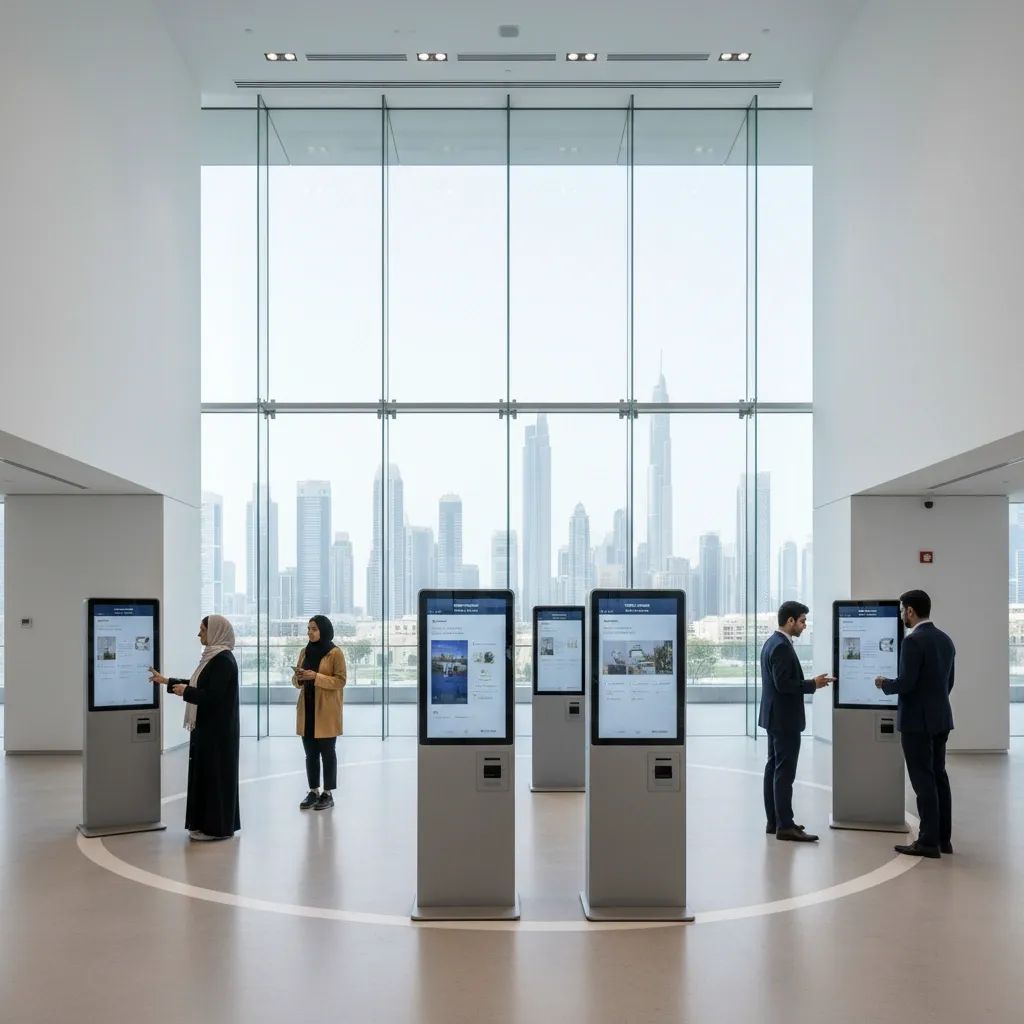
The United Arab Emirates has crossed into the world's top 10 exporters, achieving a historic 9th-place ranking in global merchandise trade during 2025. For anyone living or doing business in the Emirates, this is not abstract economic news—it means a more stable currency, better job prospects across key sectors, and a trading position that now rivals industrial economies with far larger populations.
Why This Matters
• Trade surplus reached AED 584.1 billion in 2025, providing currency stability for the dirham and government spending on infrastructure and services.
• Total bilateral and goods trade jumped to AED 6.014 trillion, representing 15% growth from the prior year and reflecting sustained demand for Emirates-based exports and services.
• Services exports crossed AED 1 trillion for the first time, signaling an economy that has moved decisively beyond oil dependency into logistics, finance, technology, and hospitality.
• 35 active trade partnerships now give UAE exporters and manufacturers preferential access across Africa, Asia-Pacific, Latin America, and Europe—opening markets that were previously behind tariff walls.
The Export Machine: What Defines the Top-10 Club
The nine countries ahead of the United Arab Emirates in global merchandise exports share little in common except scale and infrastructure mastery. China dominates the global export ranking by commanding roughly 15% of world merchandise trade, while the United States, Germany, Japan, Netherlands, South Korea, France, Hong Kong, and Italy each occupy distinct niches defined by manufacturing capacity, natural resources, or strategic geography.
The Emirates occupies that last slot in the top 10 through an entirely different model: it is a re-export hub powered by zero tariffs, world-class port infrastructure, and geographic position between three continents. Goods enter the country through Jebel Ali Port, Khalifa Port in Abu Dhabi, or Fujairah on the eastern coast, move through specialized free zones with minimal duties, and then flow to final consumers in Asia, Africa, and beyond. This model generates 53% of total goods trade as outbound exports, according to the World Trade Organization's latest statistics, creating structural surpluses that support economic resilience.
Sector Performance: Where Growth Is Actually Happening
The surprise in the latest trade data is not goods exports—those have been the UAE's traditional strength. It is the explosion in services trade, which totaled AED 1.14 trillion in 2025 and exceeded market expectations. Within that category, financial services, logistics, aviation maintenance, information technology, and hospitality grew at rates between 9% and 14%, creating immediate demand for skilled workers, engineers, and management across private and semi-public enterprises.
Digital services alone generated USD 33 billion in export revenue, positioning the UAE 25th globally in this rapidly expanding category. For the country's expanding technology workforce, software developers, and fintech entrepreneurs operating in free zones, this growth trajectory signals sustained investor interest and market access. The sector now represents 17% of all services exports, a proportion that grows annually as the economy transitions from commodity-dependent to knowledge-intensive.
What makes this sector growth significant for residents is not the abstract statistics. It means hiring for software engineers, data analysts, and cloud architects. It means premium salaries in competitive markets, remote work opportunities, and stable employment in sectors insulated from oil price fluctuations. For a UAE resident seeking career stability, this economic pivot matters far more than quarterly trade tallies.
How Trade Agreements Unlock Market Access
The United Arab Emirates' recent surge in export rankings would be impossible without the network of Comprehensive Economic Partnership Agreements that now cover 35 trading partners. These are not ceremonial documents. Each CEPA eliminates tariff barriers, streamlines customs procedures, and provides legal certainty for cross-border contracts—practical advantages that can reduce transaction costs by 5% to 15% depending on the sector.
During 2025, the UAE brought CEPAs into force with New Zealand, Australia, Malaysia, Costa Rica, Mauritius, Serbia, and Jordan. In 2026, agreements with Vietnam entered force in February, and South Korea's early implementation framework took effect on May 1st, just weeks ago. Negotiations continue with the European Union, Japan, Canada, Egypt, Pakistan, and Ghana, adding to an ever-expanding network.
For a manufacturer in the Abu Dhabi Airport Free Zone or a logistics company based in Dubai Jebel Ali, these agreements translate into tangible business advantage. An exporter of machinery parts to Vietnam no longer faces tariff barriers after February 2026. A service provider targeting South Korean clients gains legal protections and streamlined dispute resolution under the bilateral agreement finalized last month. Small and medium enterprises, which form the backbone of the UAE's non-oil private sector, benefit disproportionately from tariff elimination and customs modernization because tariffs and bureaucratic delays historically consumed larger percentages of their margins.
Geopolitical Shocks and the Test of Infrastructure Resilience
The WTO's March 2026 outlook carried a stark warning: global merchandise trade will slow to just 1.9% growth in 2026, down from 4.6% in the prior year. The primary culprit is the Middle East conflict and what experts have called a "grocery supply emergency" triggered by the effective closure of the Strait of Hormuz in early March.
This waterway, through which over 80% of the GCC's food imports historically pass, became partially impassable following escalating tensions and geopolitical ruptures in the region. Brent crude surged above USD 120 per barrel, ocean freight insurance premiums spiked, and staple food prices across the UAE jumped noticeably. For a family in Dubai accustomed to affordable imported produce and dairy, this produced immediate impacts on grocery bills. For import-dependent economies, it signaled fragility.
Yet the United Arab Emirates weathered this shock better than regional peers, and there is a reason. The country invested in multiple port corridors and redundancy. When the Strait of Hormuz faced disruption, cargo diverted through Fujairah on the eastern coast, a naturally protected port less exposed to transit risks. The government maintains strategic food and fuel reserves—kept partially secret for security reasons—that buffer short-term supply shocks. Vegetable imports historically sourced from Iran shifted to India, Jordan, and Egypt within weeks, demonstrating logistical flexibility in real time.
The United Arab Emirates national railway project, spanning over 900 kilometers and connecting the country's eastern and western coasts, is being accelerated to reduce reliance on maritime chokepoints. The Hafeet Rail connection to Oman offers overland alternatives for goods flowing to the Indian Ocean. These infrastructure investments—made long before the current crisis—now serve as insurance against trade route disruptions.
Economic Translation: What the Top-10 Ranking Means for Your Wallet
For someone living in the United Arab Emirates, the connection between trade rankings and daily life is direct, though not always obvious.
Currency and Remittances: The AED 584.1 billion trade surplus supports the dirham's peg to the US dollar, which has held steady since 1997. For the 1.5 million Indians, Pakistanis, and Filipinos working in the UAE who send remittances home, this currency stability means the dirham they earn has predictable purchasing power. A resident sending AED 10,000 home monthly knows it will convert at a fixed rate, eliminating currency risk that plagues workers in countries with floating or volatile exchange rates.
Employment and Compensation: Sectors driving export growth are hiring aggressively. The logistics industry, aviation, financial services, and information technology are competing for talent and pushing wages upward. Growth rates near 14% in services translate into recruitment demand and wage pressures that benefit skilled professionals across management, technical, and operational roles. For blue-collar workers in logistics and hospitality, this means more jobs and tighter labor markets, historically producing modest wage improvements.
Cost of Living: While the Strait of Hormuz disruption temporarily raised food prices, the UAE's diversified sourcing and strategic reserves have mitigated costs compared to neighboring states like Saudi Arabia or Oman, which face sharper food inflation. Continued infrastructure investment in ports and rail aims to lower long-term logistics costs and stabilize consumer prices. The trade surplus also supports government revenues, funding subsidies on electricity, water, and other services that hold down living costs for residents.
Business and Investment Climate: The 35 active CEPAs and the 9th-place export ranking reinforce the UAE's reputation as a stable, trade-friendly jurisdiction. This attracts foreign direct investment, supports property values in commercial districts, and sustains government spending on public infrastructure, healthcare, and education. For someone investing in real estate or planning a long-term career in the UAE, these signals matter—they suggest an economy that will remain competitive and prosperous even as global trade faces headwinds.
The Roadmap Ahead: Sustaining Momentum Through Uncertainty
The United Arab Emirates government has signaled intent to expand the CEPA network further, with ongoing negotiations covering over a dozen additional countries. The strategy, embedded within the "Projects of the 50" initiative, aims to boost annual non-oil trade by AED 40 billion and double the national economy to over USD 800 billion within a decade.
However, external risks persist. The WTO expects services trade growth to decelerate to 4.8% in 2026 before recovering to 5.1% in 2027, while goods trade faces a more pronounced slowdown. If Middle East tensions persist and energy prices remain elevated, the WTO projects merchandise trade growth could fall to just 1.4% globally—a near-stall.
For residents and investors in the UAE, the practical takeaway is measured optimism grounded in infrastructure reality. The country's economic model is evolving from a hydrocarbon-dependent state into a diversified trading hub with structural surpluses, expanding digital sectors, and a strategic chokepoint position in global supply chains. The 9th-place export ranking reflects underlying investments in ports, free zones, logistics networks, and regulatory frameworks that now generate competitive advantage independent of oil prices.
Whether the Emirates maintains this momentum amid global uncertainty depends on continued infrastructure execution, successful negotiation of new trade agreements, and adaptation to shifting geopolitical and energy landscapes. The government has demonstrated both capability and commitment to these priorities. For now, the trajectory remains upward—the trade surplus is growing, employment is expanding in key sectors, and the country's international ranking provides both economic benefit and soft power advantage in a region facing economic slowdown and instability elsewhere.


