
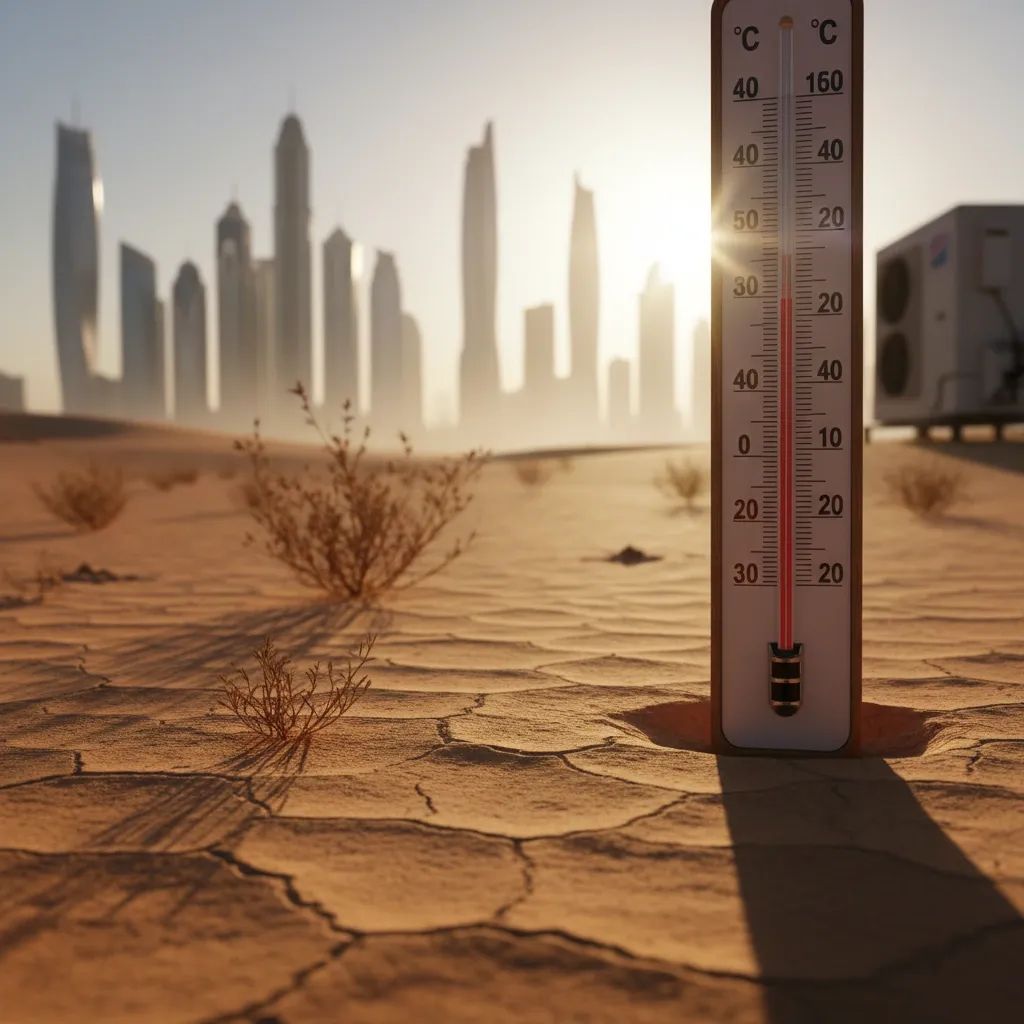
A Sudden Shift: Your May Heat Reality Across the Emirates
The thermometer is climbing faster this week, and by afternoon, inland areas of the United Arab Emirates will feel the full force of seasonal transition. The National Centre of Meteorology (NCM) is forecasting temperatures that will reach 43°C to 45°C across desert zones, while coastal cities like Dubai and Abu Dhabi will settle in the 39°C to 41°C range—signals of what's now arriving: the departure from a forgiving spring and entry into punishing early summer. This is not speculation about distant weather patterns; this is the immediate reality unfolding across your commute, your workplace, and your home today.
Why This Matters
• Immediate health shift: Temperatures exceeding 40°C trigger genuine physiological stress—heatstroke becomes a realistic risk, not a theoretical warning.
• Practical schedule adjustments: Peak outdoor exposure now requires protection; noon-to-afternoon activity outdoors becomes genuinely hazardous.
• Dust and visibility concerns: Moderate winds averaging 25 km/h will reduce driving visibility and irritate respiratory systems, especially for those already vulnerable.
• Coastal access limitations: Rough Arabian Gulf conditions by afternoon will restrict water activities and beach leisure—plan morning visits only.
The Geographic Heat Picture Across Seven Emirates
Temperature disparities tell the full story of how geography shapes exposure. Abu Dhabi will experience a high of 40°C with overnight relief dropping to 25°C, while Dubai hovers nearly identical at 41°C (26°C overnight). Moving southeast, Fujairah on the eastern coast reaches 43°C with marginally higher nighttime temperatures at 28°C. But the real intensity clusters inland: Al Ain will push to 43°C, and Liwa, buried in the dunes at the edge of the Empty Quarter, will peak at 45°C—the highest reading in the forecast. That dramatic overnight plunge in Liwa to 22°C creates a 23-degree swing that strains both air-conditioning systems and human bodies cycling between extreme indoor cold and extreme outdoor heat.
For workers, residents, and families scattered across Sharjah (42°C), Umm Al Quwain (41°C), and Ras Al Khaimah (43°C), the pattern is consistent: daytime peaks in the low-to-mid 40s, nighttime relief in the high 20s. This narrow band between dangerous heat and chilled interiors has become the rhythm of UAE life at this time of year.
Wind, Dust, and Disrupted Routines
The NCM is flagging moderate afternoon winds averaging around 25 km/h, with gusts potentially reaching 40 km/h in some zones. This is where the day moves from merely hot to actively uncomfortable. These winds don't cool; they stir. Dust particles become airborne across highways, residential neighborhoods, and workspace areas, and visibility on major routes can drop to a few hundred meters during peak wind hours in the late afternoon.
For people with asthma, chronic obstructive pulmonary disease (COPD), or unmanaged allergies, this dust carries real consequences. Fine particles lodge in the respiratory tract, triggering coughing episodes, chest tightness, and breathing difficulty that can send vulnerable individuals to emergency rooms. Those without pre-existing respiratory conditions often experience eye irritation, throat dryness, and nasal congestion that persist hours after returning indoors.
Driving becomes tactically different: use low-beam headlights to improve visibility without creating glare off dust particles, reduce speed below posted limits, avoid sudden braking (which unsettles vehicles on dusty roads), and shift air conditioning to recirculation mode to prevent dust infiltration. In severe dust events, authorities occasionally issue cautionary alerts or temporarily lower speed limits on major highways.
Employers managing outdoor operations—construction sites, landscaping, delivery logistics—face productivity challenges. Work slows, safety protocols tighten, and workers require more frequent breaks indoors to avoid cumulative dust inhalation.
What This Means for Residents and Expats
The United Arab Emirates Ministry of Human Resources and Emiratisation (MoHRE) formally prohibits outdoor work in direct sunlight from 12:30 PM to 3:00 PM during the official summer ban period (mid-June through mid-September). While May technically falls outside this legal window, employers are expected to adopt similar protections as a matter of occupational health. This means shaded rest areas must be accessible, water breaks must be frequent (every 30 to 40 minutes for intensive outdoor work), and cooling vests or portable cooling devices should be provided for prolonged shifts.
For everyone else—office workers, retail staff, school-age children—the lesson is scheduling. Move outdoor errands, exercise, and social activities to early morning (before 10 AM) or late evening (after 4 PM). The noon-to-4 PM window is not when you want to be outside. The body loses efficiency at thermoregulation once temperatures exceed 40°C. Sweating becomes the only cooling mechanism available, and at these temperatures, sweating alone cannot prevent core body temperature from rising dangerously.
Heatstroke starts as confusion or a sudden loss of orientation. You might feel dizzy, your pulse accelerates, and without intervention, organ failure follows. It is a medical emergency. Heat exhaustion—the stage before heatstroke—announces itself through heavy sweating, nausea, weakness, and muscle cramps. Catch it at this stage and you can recover at home; miss it and you're in an ambulance. Dehydration, the most commonly ignored of the three, shows up as dark urine, persistent thirst, headache, and fatigue—it is insidious because people often mistake it for simple tiredness rather than a genuine medical condition requiring fluid restoration.
Drink at least 8 to 10 glasses of water daily, more if you're outdoors or exercising. Skip caffeine and alcohol; they accelerate fluid loss. Oral rehydration solutions—salts plus electrolytes—are more effective than plain water during extended heat exposure or physical activity.
Certain populations face outsized risk. Children and elderly residents have less efficient body cooling systems. Pregnant individuals experience additional cardiovascular strain during heat stress, with documented links to adverse birth outcomes. People managing diabetes, heart disease, hypertension, kidney conditions, or respiratory illnesses are at elevated risk of complications. Some medications, including certain diuretics and antihistamines, impair the body's ability to cool itself—review your prescriptions with a pharmacist if you're concerned.
Creating Your Personal Heat Defense
Dress strategically: lightweight, loose-fitting garments in light colors—white, pale gray, cream—reflect heat rather than absorb it. Cotton and linen allow skin breathing; synthetics trap heat. Apply broad-spectrum sunscreen (SPF 30 minimum, preferably SPF 50) every two hours, more frequently if sweating. A wide-brimmed hat or umbrella and quality sunglasses reduce direct UV exposure to face and eyes.
At home, use curtains or blinds to block direct sun during peak hours (10 AM to 4 PM). Open windows at night when exterior temperatures drop, allowing air circulation without relying entirely on air conditioning. Have your AC unit serviced regularly—clogged filters reduce cooling efficiency and circulate dust indoors. Some residents add humidifiers or place bowls of water near AC outlets to counteract the drying effect of constant air conditioning on skin and respiratory passages.
Prepare a basic heat-response kit: oral rehydration salts, a thermometer, cooling cloths (damp towels stored in a freezer), and a battery-operated water sprayer for instant skin cooling. Know the location of your nearest health center or the non-emergency medical hotline (local clinics often have faster response times than emergency rooms for minor heat illness). Memorize early warning signs: intense thirst, headache, fatigue, dizziness, nausea, rapid heartbeat. If they appear, move to air conditioning immediately, spray cool water on skin, and drink room-temperature fluids. If symptoms persist or worsen after an hour, seek medical attention.
Never leave children or pets in parked vehicles, even briefly. Car interiors reach lethal temperatures within minutes, far exceeding ambient air temperature—a difference of 10 to 15 degrees is routine, sometimes 20 degrees or more.
The Coastal Caution: Sea Conditions Turn Rough
Beachgoers and water sports enthusiasts should note the forecast shift: Arabian Gulf waters will transition to rough conditions by afternoon. Morning visits are safe; the water temperature averages a pleasant 29°C (84°F), ideal for swimming. Afternoon conditions, however, bring elevated wave heights and unpredictable currents that complicate swimming, jet ski operation, paddleboarding, and small vessel activities. Tourism operators and leisure facilities may restrict or cancel water-based bookings as conditions deteriorate. If you've scheduled a beach day, arrive early and plan to depart by early afternoon.
Looking Ahead at the Seasonal Pattern
May represents the beginning of a months-long thermal stretch. From June onward, temperatures will climb further, with July and August routinely exceeding 45°C in inland areas. Rainfall remains virtually absent across the UAE—historical records show 0 to 1 day of precipitation in May. Humidity, while slightly lower than April's levels, still hovers around 39%, creating a sticky, oppressive combination when paired with 40-plus-degree heat.
Sunshine will dominate: expect 11 to 12 hours of direct sun daily, with virtually no cloud cover to filter UV rays. The rhythm of daily life has adapted to this reality. Parks and jogging tracks empty during midday; malls and air-conditioned indoor spaces fill. Shopping, dining, and socializing shift to dawn and dusk. It is a collective seasonal rhythm, but one that demands conscious adjustment, particularly for people new to the region or those relocating from temperate climates. The heat is not just discomfort—it is a real constraint on health and safety that requires respect and preparation.


