
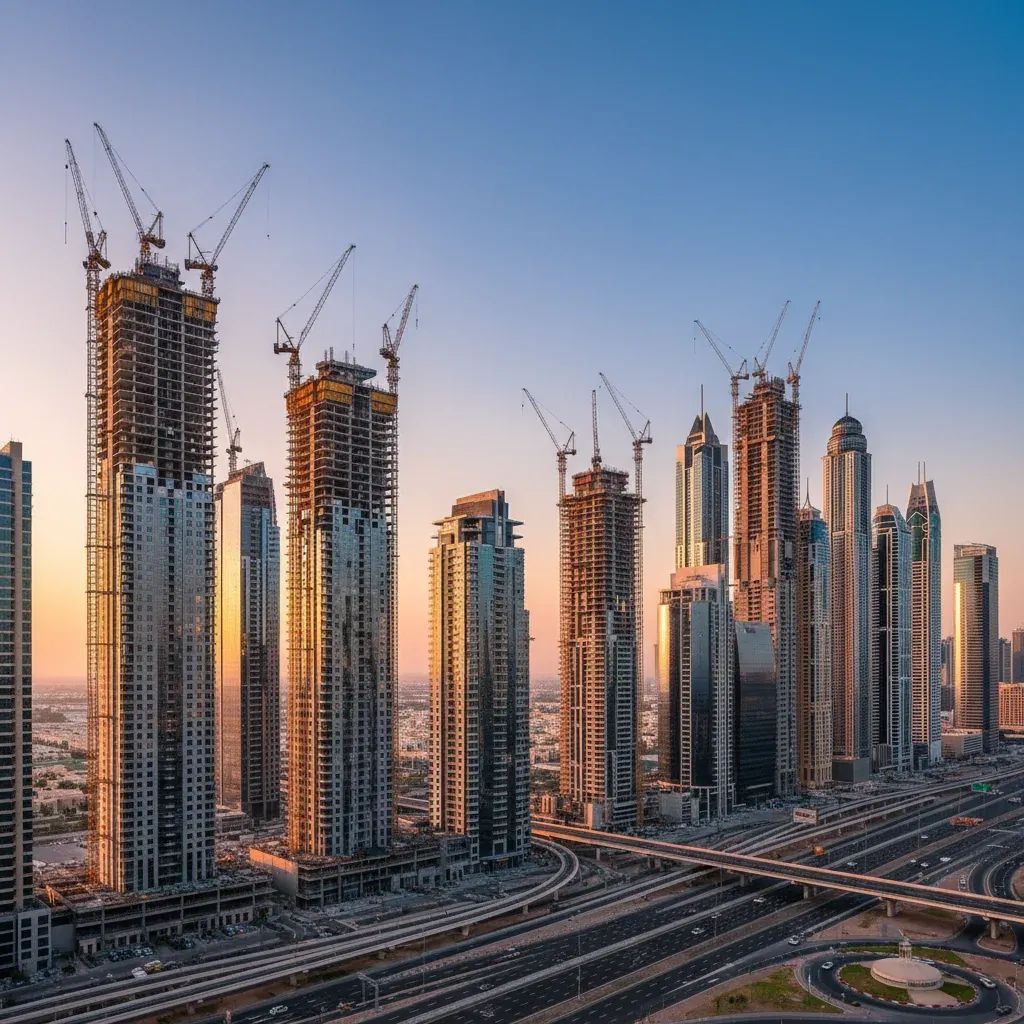
Alpen Capital has increased its 2030 outlook for Gulf housing and office inventory, a projection that could translate into greater choice—and sharper price discipline—for people renting, buying, or leasing space in the United Arab Emirates.
Why This Matters
• 7.28 million homes by 2030: Roughly 1 in 5 of those units will be in the UAE, widening options from studio apartments in Dubai to waterfront villas in Abu Dhabi.
• 42.4 million sqm of offices: A fresh dose of premium, ESG-rated workspaces is on the way—good news for startups weighing mainland versus free-zone addresses.
• Timing the market: Analysts see delivery spikes in 2026-2027; locking in off-plan prices today may secure better terms than waiting for completed stock.
• Regulatory tailwinds: Golden Visa thresholds, 0% corporate tax for qualifying free-zone firms, and green-building mandates are shaping where and what gets built.
The Region’s New Build Wave – Headlines & Numbers
The Gulf Cooperation Council’s real-estate pipeline has entered a more disciplined phase. Alpen Capital’s latest industry report projects:
• Residential stock: From 6.26 m units in 2025 ➜ 7.28 m units in 2030 – a net gain of just over 1 m homes.
• Office space: From 33.3 m sqm in 2025 ➜ 42.4 m sqm by 2030, driven largely by Riyadh’s giga-projects and Dubai’s push for lifestyle-oriented business districts.
• Hospitality rooms: Up to 410-420 k keys, cementing the Gulf’s capacity to host mega-events and rising visitor flows.
Behind the headline numbers is a strategic pivot: governments now favour quality, mixed-use, and sustainability over break-neck volume. Saudi Arabia and the UAE are expected to account for more than two-thirds of the extra offices and half the new homes.
UAE: Where the Cranes Will Be Most Visible
The United Arab Emirates’ residential stock is forecast to rise by ≈390 k units to 1.51 m homes by 2030. The split is clear:
• Dubai: Apartment-led towers in Dubai Creek Harbour, JVC, and the recently rezoned Palm Jebel Ali will dominate. Market intelligence suggests Dubai needs ≈150 new units a day to match its 5-6 % annual population growth.
• Abu Dhabi: Expect premium villas on Saadiyat and Yas Islands plus eco-centric neighbourhoods in Ghadeer and Al Hudayriyat.
On the commercial side, 910 k sqm of fresh offices are pencilled in, with DIFC phase-two expansion and Business Bay repositioning leading the charge. Abu Dhabi’s Masdar City Square, designed for LEED Platinum certification, will become the template for low-carbon workplaces.
Riyadh Sets the Bar High—and Raises Competitive Pressure
Across the border, Riyadh’s office vacancy has plunged to 0.5 %, forcing multinationals to sign leases years in advance. The Saudi capital alone is adding 1 m sqm of Grade-A space by 2026 via projects like New Murabba and KAFD. For UAE landlords, that means the days of automatic regional headquarters flowing to Dubai are over; incentives and fit-for-purpose buildings will matter more.
Oversupply Fears: How Real Are They?
Dubai’s apartment market still carries isolated oversupply risk, especially in high-rise clusters with heavy investor stock. UBS highlighted that current building permits echo 2017 levels—a year that preceded a price reset. Yet, three factors act as shock absorbers:
Phased handovers: Construction bottlenecks mean only 60-70 % of announced units reach the market on time.
Population magnet: Visa reforms continue to pull professionals into the country, keeping rental yields at 5-9 %.
Asset segmentation: Villas and townhouses—where supply is tight—are expected to outperform city-centre apartments.
For offices, the flight-to-quality trend limits vacancy in new Grade-A buildings to low single digits, while older stock faces double-digit emptiness unless refurbished to green standards.
What This Means for Residents & Investors
• Renters: A bigger housing pipeline should moderate rent hikes seen over the past two years. Keep an eye on handover schedules in 2026 and 2027; that’s when negotiating power is likely to peak.
• First-time buyers: Developers are rolling out longer payment plans—often 60/40 or 70/30—to compete for off-plan sales. Early entry locks in today’s dirham price before U-turns in interest rates.
• Landlords: Yield compression is possible in secondary apartment locations. Diversifying into villa communities or green-certified offices can hedge against that risk.
• Business tenants: Upcoming supply in DIFC and Abu Dhabi Global Market offers a window to upgrade space without a massive rent premium—if you pre-lease.
• Contractors & suppliers: Energy-efficient building codes (Al Sa’fat in Dubai, Estidama in Abu Dhabi) mean demand for solar façades, low-VOC materials, and smart-metering systems will surge.
Talking Money: Financing & M&A Undercurrents
The influx of inventory overlaps with a 33 % rebound in Middle-East M&A activity last year, plenty of it tied to real estate platforms and prop-tech. Cheaper borrowing costs—Egypt just cut policy rates, and Gulf central banks often follow the US Federal Reserve—could nudge UAE lenders to revive 0.99 % teaser mortgages.
Private credit funds, flush with cash after record inflows, are circling build-to-rent portfolios. Golden Visa properties priced above AED 2 m remain a magnet for families seeking residency stability.
Looking Ahead: Smart Moves for 2026-2027
Track delivery, not launches. Off-plan hype seldom equals keys in hand.
Prioritise energy class. Buildings boasting green certificates will enjoy lower service charges and stronger resale demand.
Lock in long leases early. Prime office vacancy is projected to stay below 5 % even after new completions.
Watch Riyadh. If Saudi incentives lure more regional HQs, UAE free zones may respond with fresh tax breaks—good news for tenants.
The forecast build-out is ambitious but grounded in demographic reality and policy support. For UAE residents—from tenants hunting for the next bargain apartment to entrepreneurs scouting creative work lofts—the cranes on the skyline signal one thing: more choice is coming, and the smart money is positioning now rather than later.


