
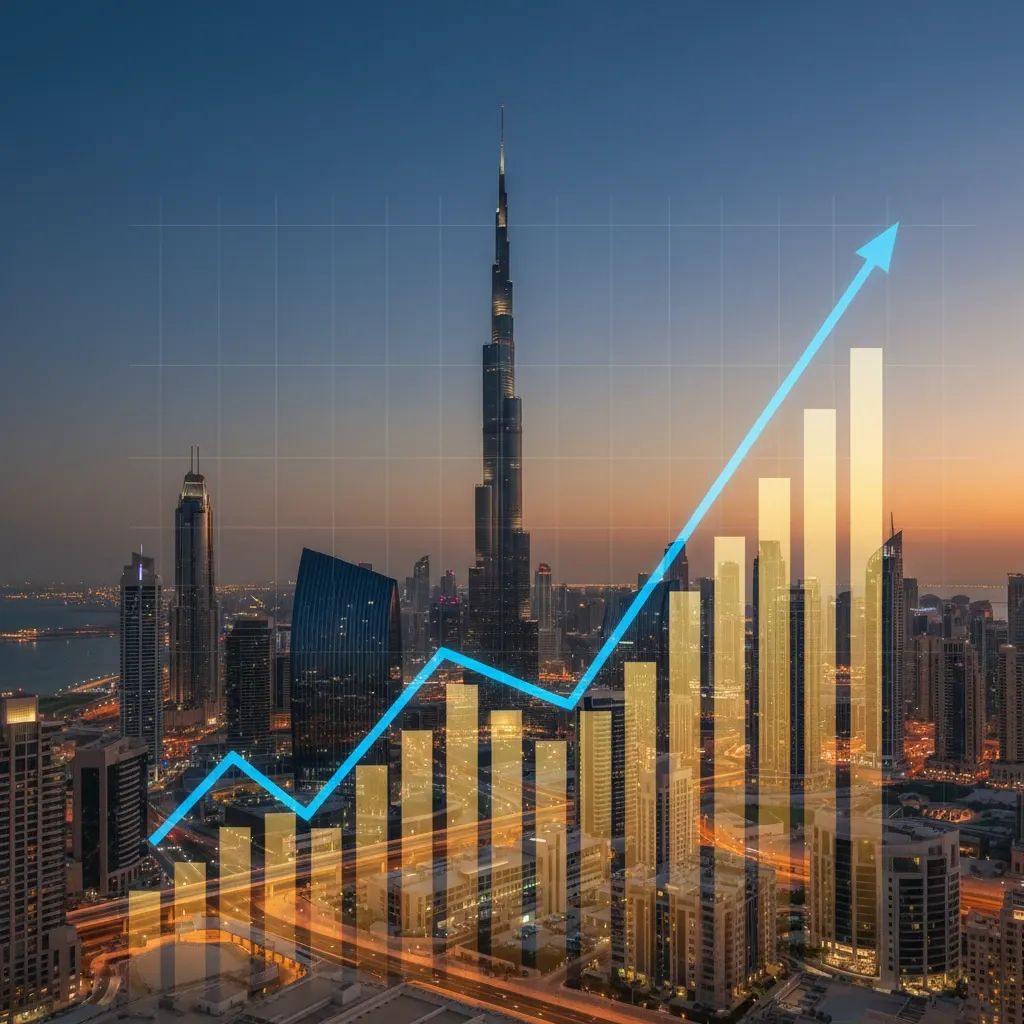
The Dubai Land Department has tallied AED 541.5 billion in residential transactions for 2025, a record haul that is already reshaping budgets, mortgage terms and rent negotiations across Dubai.
Why This Matters
• Record-high sales often translate into higher asking prices for both buyers and tenants in the following 12 months.
• Off-plan dominance (≈70% of deals) means many homes will be delivered only in 2026–2028, affecting supply timelines and resale values.
• A pipeline of 100k+ new units this year could slow price growth to 5–8%, giving patient buyers more leverage.
• Golden Visa thresholds remain unchanged, so a AED 2 million purchase still unlocks long-term residency even as average apartment prices edge closer to that mark.
What Powered the 2025 Surge
Dubai’s housing market rode a cocktail of robust GDP growth, population expansion and investor-friendly rules. Off-plan launches with post-handover payment plans drew capital from more than 20 nationalities, while the mainstream market (AED 1–3 million) generated over half of all transactions. Crucially, inflation stayed muted and the dirham’s peg to the US dollar kept currency risk low, reinforcing Dubai’s image as a safe-haven for global wealth.
Where the Money Landed
Apartments made up 60% of sales volume, amounting to AED 325 billion. Villas and townhouses—especially four-bedroom layouts in MBR City, Dubai Hills and Arabian Ranches III—accounted for AED 216.5 billion. Plot sales spiked 194% in Q1 2025, a hint that developers are banking on the next demand wave. Nationality tables show Indian, British, Chinese, Saudi and Russian buyers still rank top five, but Mexican investors cracked the top ten for the first time, reflecting an increasingly diversified buyer pool.
Early 2026: Momentum or Moderation?
January 2026 delivered AED 55–72 billion in sales, up roughly 40% YoY even as the average price per square foot plateaued around AED 1,900. The first week of February saw 5,255 deals worth AED 18 billion—healthy, but not the break-neck pace of late 2025. Analysts from JLL and CBRE now forecast 5–8% price appreciation for the full year, citing the handover of 73k units and higher borrowing costs after the United Arab Emirates Central Bank echoed the US Fed’s rate hikes.
What This Means for Residents
For would-be homeowners:
• Waiting could pay off in mid-market communities as inventories rise, but turn-key villas remain scarce and may still command premiums.
• Fixed-rate mortgages are becoming harder to secure under 4%, so locking a rate early adds cost certainty.
For renters:
• Annual rent renewals are still climbing 10–15%, though fresh supply in JVC, Dubailand and Damac Lagoons should cool the spike late in 2026.
• Keep an eye on the RERA rental calculator; caps have not changed, but landlords often test the limits after record sales years.
For landlords & investors:
• Gross yields on studios hover near 8%, among the highest globally for dollar-pegged markets.
• Off-plan flips face higher transfer fees after the Land Department’s 2024 rule change; budget an extra 4% in transaction costs.
Hot Spots to Watch in 2026
The forthcoming Dubai Metro Blue Line is turbo-charging demand near Dubai Festival City, International City and Silicon Oasis; plots within 800 m of planned stations have already seen price jumps exceeding 20%. Meanwhile, branded residences tied to luxury hotel chains in Palm Jumeirah and Business Bay are on track for an 8–10% premium over unbranded peers, according to Knight Frank.
The Bigger Picture
With AED 541.5 billion chalked up, Dubai now rivals London and New York in annual residential turnover. Yet policymakers appear keen to avoid another overheating cycle: stricter escrow rules, higher off-plan registration fees and stepped-up project vetting hint at a more disciplined market ahead. For residents, the era of double-digit price jumps may be fading, but so is the window for bargain buys under AED 1 million.
The takeaway? Record sales have validated Dubai’s global property status, but 2026 will test whether supply lines and regulatory tweaks can keep the boom from boiling over—offering both risks and opportunities for anyone who calls the emirate home.


