
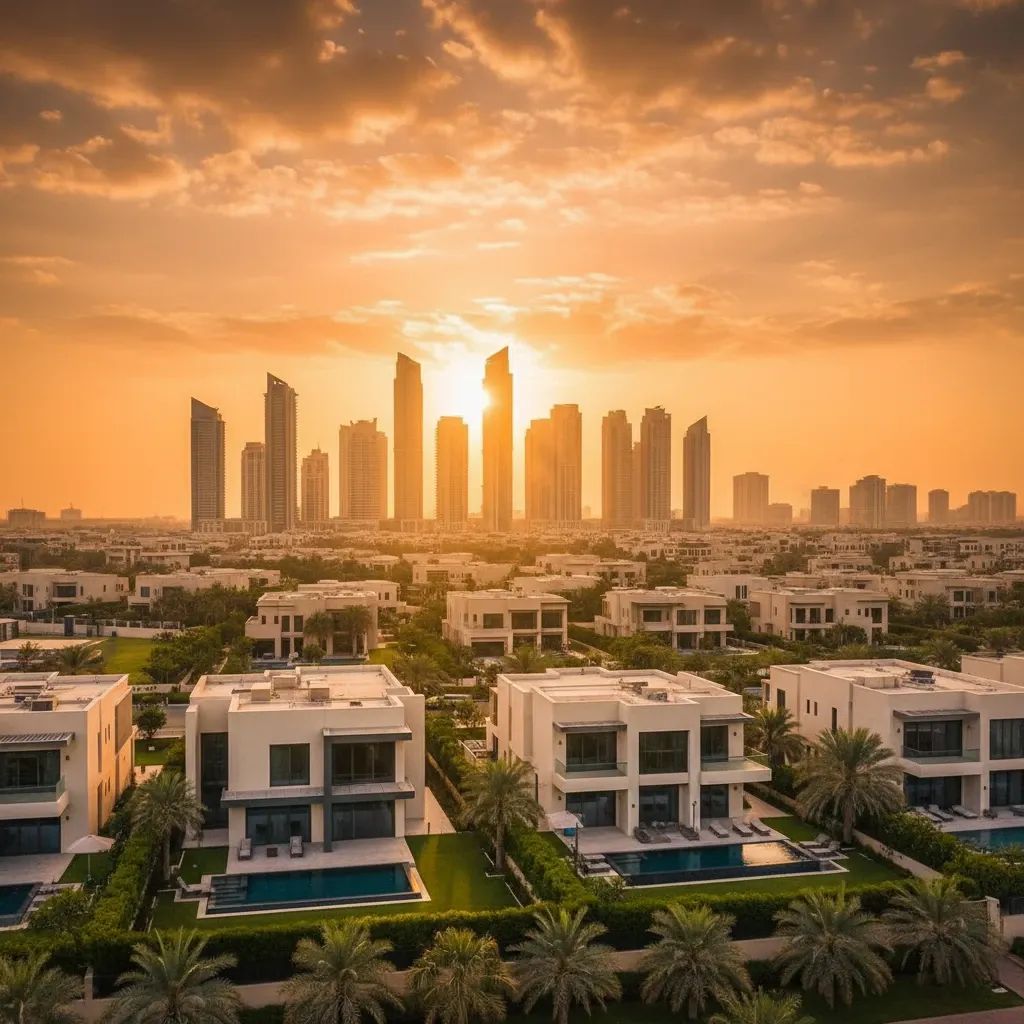
The United Arab Emirates property sector has stretched its winning streak into 2026, a defiant show of strength that is cushioning households and investors even as the hydrocarbon trade takes a breather.
Why This Matters
• Prices still rising, not racing: Abu Dhabi homes expected to gain 5-8% this year; Dubai 3-5%, keeping owners in the black without triggering affordability shocks.
• Rental income outperforms savings accounts: Typical gross yields hold above 6-7%, double what most local dirham deposits pay.
• Golden Visa tie-in: A home purchase of AED 2M+ secures long-term residency, a perk highly sought by expatriate families planning roots.
• Foreign cash is a safety valve: Strong inflows from China, India, the UK and Europe continue to soak up new supply, stabilising values even if oil receipts wobble.
The Momentum Behind the Numbers
The latest data collected from the Dubai Land Department and the Abu Dhabi Department of Municipalities & Transport confirm that 2025 closed with record transaction counts—over 200,000 deals in Dubai and 20,000 in Abu Dhabi. Off-plan sales, frequently priced in manageable instalments, dominated activity and will populate handovers through 2027. Crucially, macro forecasts now peg non-oil GDP growth at 4%+, led by tourism, logistics and tech, giving property its demand engine.
Supply Pipeline: Enough but Not Too Much
Roughly 6,500 new units are slated for delivery in Abu Dhabi this year, with Dubai’s number several times higher. History shows only 70-75% of announced completions arrive on schedule, a “delivery gap” that inadvertently protects landlords from rental oversupply. Meanwhile, headline villa shortages in communities such as Saadiyat Island and Palm Jumeirah keep luxury prices firm.
Foreign Capital Keeps Pouring In
Regulatory tweaks—100% foreign business ownership, reduced transfer fees and the ten-year Golden Visa—have turned UAE deeds into a global asset class. Chinese buyers, looking for yuan diversification, now make up one of the fastest-growing segments, often targeting waterfront off-plan launches. European investors, enticed by tax-free gains and a strong euro, represented 12% of Dubai purchases in 2025. Their continued presence is significant: it dilutes the historical link between oil prices and property cycles, smoothing volatility for local owners.
What This Means for Residents
• Renters: Budget for incremental annual increases—research suggests 4-6% uplifts in mid-market communities. Negotiating multi-year leases or shifting to emerging corridors like Dubai South can cap costs.
• First-time buyers: With mortgage rates steady around the mid-4% range and prices rising single digits, 2026 remains conducive to upgrading from rent to ownership, particularly for those eyeing long-term residency perks.
• Landlords: Expect sustained tenant demand and minimal vacancy, especially in units near new infrastructure such as the Dubai Metro Blue Line or Etihad Rail stations.
• Small businesses: Office rents climbed 22-32% last year. Locking a long lease in secondary zones (e.g., JLT, KEZAD) before further hikes could trim overheads.
Outlook: Where Opportunities Lie
Analysts at three major consultancies converge on a “moderate growth, high yield” thesis. Villas in Yas Island and Dubai Hills Estate are tipped for 8-12% appreciation on constrained inventory. For pure income, studios in Jumeirah Village Circle still clear 8% gross yields. Industrial assets along the Abu Dhabi–Dubai corridor remain a contrarian play as e-commerce logistics scale up.
Here is the reality: the UAE’s multi-year diversification push has decoupled bricks and mortar from the Brent barrel. For residents deciding where to live, invest or work, that translates into a property market that is no longer boom-or-bust, but reliably steady, profitable and policy-backed.


