
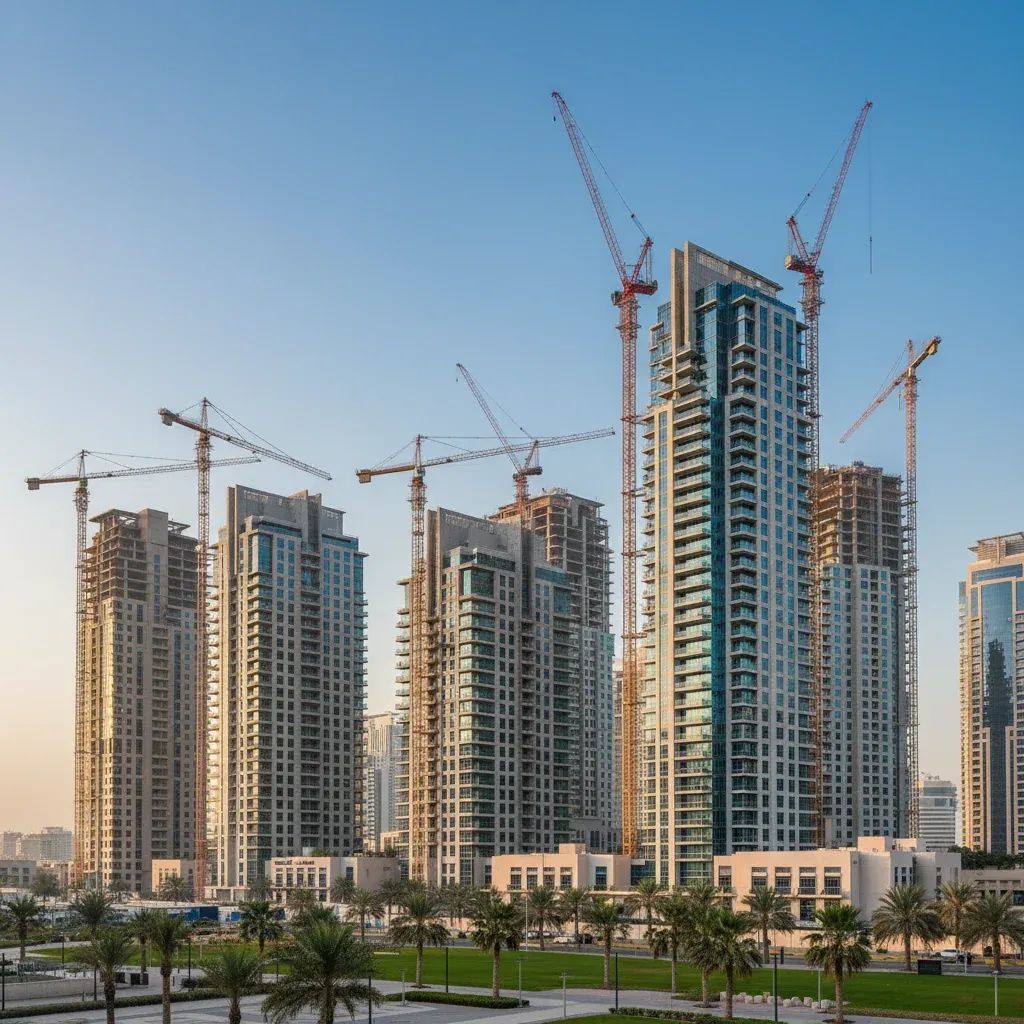
The United Arab Emirates’ biggest property developers and leading lenders have bulked up their cash reserves and trimmed risk just as analysts forecast a softer housing market, a shift that is expected to shield homeowners, buyers and savers from any 2026 price wobble.
Why This Matters
• Loan-to-value ratios are lower: UAE banks now hold real-estate loans equal to only 14% of their book, down from 20% four years ago.
• 120,000 new Dubai homes land in 2026: Supply will finally outpace demand in some suburbs, creating chances for negotiators—and pitfalls for speculators.
• Golden Visa floor at AED 2 million: Government residency incentives continue to put a natural bottom under mid- to upper-tier prices.
• Mortgage rates are nudging down: A 0.25-point cut in the Central Bank’s overnight rate already shaved roughly AED 470 a month off a typical AED 2 million, 25-year mortgage.
A Market Shifting From Sprint to Long-Distance
After three years of double-digit growth, the property cycle is maturing rather than collapsing. Fitch and Moody’s both see a 10-15% decline in mid-market Dubai apartments by late 2026, largely because 120,000 units are scheduled for hand-over next year—triple the historic average. Luxury villas on Palm Jumeirah and Emirates Hills, by contrast, remain insulated thanks to scarce plots and a pipeline of global buyers who treat Dubai as a wealth park. Abu Dhabi tells a different story: constrained land supply plus new tech and culture jobs keep capital values climbing 8-12%.
How Developers Are Re-Tooling
Emaar, Aldar, Nakheel and DAMAC have quietly shifted from "sell it fast" to "hold it smart". The strategy includes:
Bigger rental portfolios for recurring income. Emaar has ring-fenced AED 14 billion to bulk up shopping-centre and hotel assets.
Green master plans—solar roofing, recycled water systems and EV-ready parking—to satisfy eco-aware buyers and bank green-loan criteria.
Tokenised titles. From 20 February, Dubai will allow peer-to-peer resale of fractional property tokens, boosting liquidity for smaller investors.
Financially, the top six listed builders generated a record AED 46 billion in combined profit during 2025 while average leverage fell, giving them headroom if off-plan sales slow.
Banks: Lower Risk, Higher Tech
The Central Bank of the UAE (CBUAE) froze its overnight deposit rate at 3.65%, mirroring the Fed’s pause and signalling that further trims are possible in 2026. Lower EIBOR feeds directly into mortgage quotes, which dropped below the psychological 4% mark in January.
Risk metrics paint a calmer picture than in the 2014-2016 dip:
• Non-performing loan ratio: 5.1%, the lowest in a decade.
• Average Tier-1 capital: 17.4%, among the highest in the GCC.
• Digital mortgage approvals: Most banks now issue in-principle decisions within 10 minutes, accelerating deal flow and reducing pipeline risk.
Regulatory Safety Nets
Policy makers have layered multiple buffers since the last downturn:
• Golden Visa thresholds (AED 2 million per property) keep a floor under mid-range pricing.
• Rental-cap rules in Abu Dhabi and Sharjah curb extreme year-on-year rent hikes, protecting tenants and discouraging panic buying.
• Escrow account audits ensure off-plan buyer cash is released only as construction milestones are verified, limiting default risk.
What This Means for Residents
• End-users finally gain leverage. With more keys being handed over than demand requires, families can negotiate better payment plans or free maintenance periods.
• Investors should segment the market. Prime villas will likely remain buoyant; mid-market studios could slide 5-10%. Tailor exposure accordingly.
• Mortgage shoppers can lock in lower rates. Analysts expect another 50-basis-point cut by year-end. Fixing now or opting for a variable rate with a cap may save thousands over the loan life.
• Beware smaller developers. While the big names are cashed-up, boutique builders face higher construction-cost risk. Verify escrow protections before signing any off-plan contract.
Looking Ahead
Economists at the IMF still peg UAE GDP growth at 5% for 2026, underpinned by tourism, tech and energy transition investments. That macro strength should keep property corrections orderly, not chaotic. For residents, the message is clear: real estate is shifting to a more disciplined, data-driven cycle. Bargains will appear—but so will traps. Due diligence, not headlines, will decide who benefits from the slowdown.


