Bottom Line
The United Arab Emirates tourism sector delivered a record 2025—AED 49.21 billion in revenue, 32.34 million guests, and robust 79.3% occupancy—validating years of strategic investment. Then February's regional military escalation erased that momentum overnight. Hotel occupancy in Dubai collapsed from 86% to 15-20% within weeks. Tour bookings plummeted 60% in 48 hours. Today, 200,000+ hospitality workers face immediate income threats, employment visa cancellations loom, and the sector confronts an uncertain recovery path that could reshape employment and economic stability across the Emirates for months ahead.
The Crisis: What Happened and What Changed
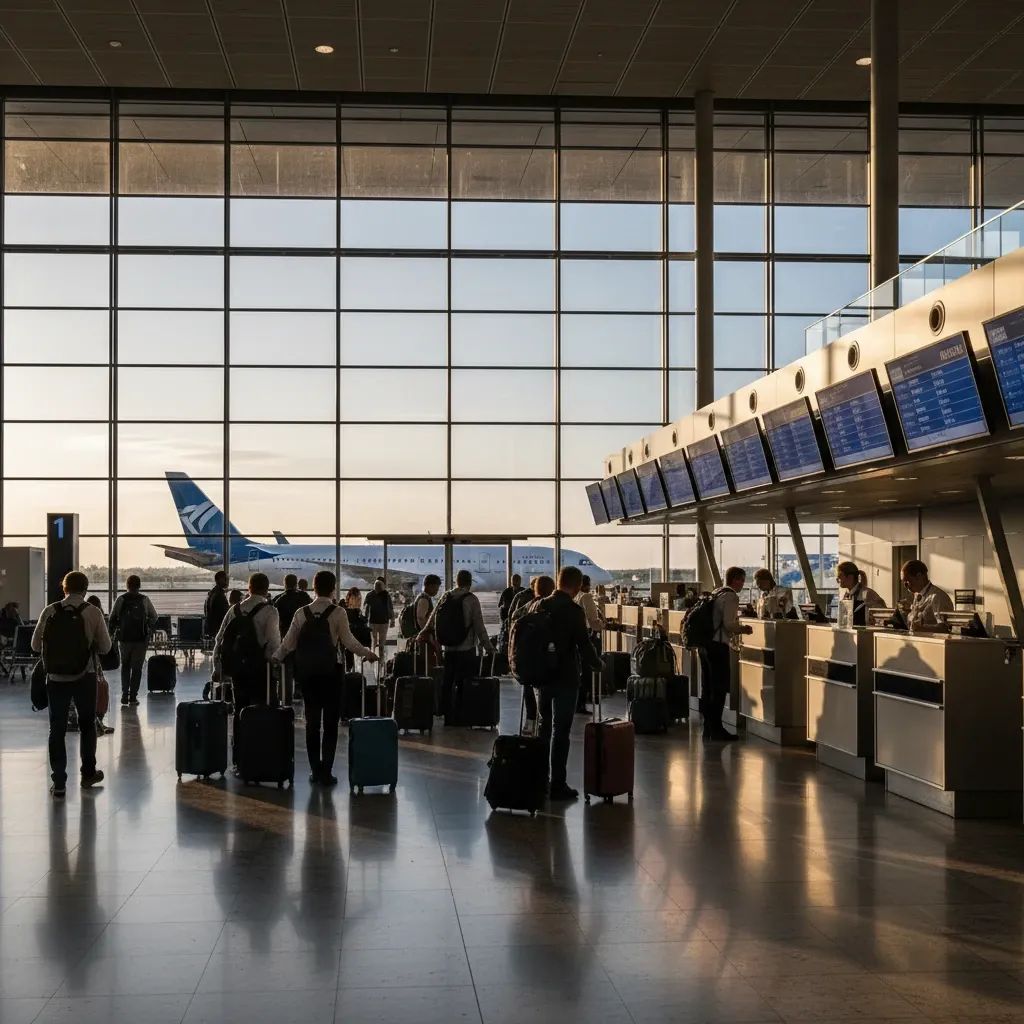
On February 28, 2026, regional military hostilities centered on Iran-directed drone and missile strikes targeting United Arab Emirates military installations and critical infrastructure. Within 48 hours, over 20,000 flights were canceled across regional hubs. Airspace corridors closed. Rerouting protocols extended flight paths and increased fuel surcharges.
Travel advisories from the U.S. State Department, Global Affairs Canada, and the Australian Department of Foreign Affairs issued concurrent recommendations to reconsider or avoid all travel to the UAE. These official statements carry institutional weight—they trigger automatic travel restrictions for corporate employees, government workers, and insurance-bound tour groups.
The impact was immediate and severe:
• Dubai hotel occupancy collapsed from 86% in January to 15-20% by early March
• 80,000 short-term rental bookings canceled within the first week
• Tour operator bookings fell 60% within 48 hours
• Five-star room rates crashed from AED 1,200–1,500 to AED 300–400—a 70-80% markdown that obliterated profit margins
The World Travel & Tourism Council estimated daily regional economic losses at USD 600 million—a rate that, sustained for three months, consumes 5-6% of annual tourism GDP.
Why This Matters for UAE Residents and Expats Right Now
Employment visa risk is acute. Expatriate workers in the United Arab Emirates operate under employment-visa sponsorship tied to active employment. Layoffs or involuntary leave arrangements can trigger visa cancellation and forced repatriation within weeks. For the 200,000+ hospitality workers affected—housekeeping, room service, tour guides, ground transportation operators—reduced occupancy means immediate hour cuts.
Income exposure is immediate. Lower-income hospitality staff earning AED 2,500–3,500 monthly lose income through:
• Reduced scheduled hours (properties at 15% occupancy cut 70-75% of staff shifts)
• Forfeited performance bonuses tied to occupancy targets
• Forced unpaid leave arrangements some operators are implementing
For workers operating on tight cash-flow margins—many supporting dependents in home countries—a three-month downturn consumes entire savings buffers within weeks.
Government support exists but is limited. Dubai approved an AED 1 billion economic support package, including:
• 100% deferral of hotel sales fees and Tourism Dirham collections through June 30
• Expedited utility deferrals
• Relaxed compliance timelines for property maintenance
However, these address operator cash flow, not worker income directly. Labor disputes and visa cancellation protections operate on months-long timelines while financial exposure is immediate.
Related sectors face deferred hiring. Construction projects tied to hotel expansion have frozen. Catering, audiovisual production, and business services hiring is delayed. Residents in these sectors should expect discretionary project postponement.
Context: Why 2025 Was a Record Year
Understanding the strength of the 2025 baseline explains both the sector's genuine market resilience and its current vulnerability.
32.34 million guests arrived in 2025—the highest count in UAE modern tourism history, a 5.2% increase from 2024. Beyond raw arrivals, the data revealed commercial sophistication: occupancy held at 79.3% nationally while average daily room rates climbed 4.2%. Typically, adding 217,000 rooms to the market depresses rates as operators compete. The opposite occurred—suggesting the market absorbed supply efficiently with pricing discipline intact.
Abu Dhabi outperformed dramatically, generating AED 9.1 billion in hotel revenues alone—a 19.5% increase that dwarfed national 9.7% growth. The emirate's cultural tourism pivot (Louvre Abu Dhabi, Sheikh Zayed Grand Mosque attracting 8.6 million visitors) proved stickier than Dubai's leisure-dependent market. Culture attracts fewer last-minute cancellations; business obligations survive security scares more easily than vacation plans.
Dubai functioned as the volume engine but faced narrower resilience. The emirate logged 19.59 million overnight guests (5% growth) with roughly 40% of national room inventory. When Dubai's massive footprint collapsed in March, it inflicted disproportionate economic damage.
Aviation connectivity expanded aggressively. Dubai International and Abu Dhabi's Zayed International collectively processed 159 million passengers in 2025—an 8% year-on-year increase. Emirates and Etihad Airways expanded India routes (largest source market), added Russia frequency (sanctions recovery), and increased UK/Saudi Arabia service. This density mattered: multiple daily flights from source markets enabled habitual travel rather than exceptional bookings.
Visa accessibility reduced friction. The visa-on-arrival program and multi-entry permits transformed bureaucracy into a non-factor for 195 countries. Airport immigration processing averaged 8-12 minutes—a metric that directly influences traveler convenience perception and booking behavior.
The Government's Response
The United Arab Emirates government deployed relief instruments starting April 1:
• Dubai's AED 1 billion package deferred hotel sales fees and Tourism Dirham (tourism tax) collections through June 30
• Property maintenance compliance timelines relaxed
• Utility deferrals expedited
• The Emirates Tourism Council, chaired by Abdulla bin Touq Al Marri, coordinated uniform emirate-level messaging to avoid competitive undercutting
Institutionally, officials signaled a strategic pivot: moving from luxury/exclusivity positioning (which triggers cancellations during crisis) toward value propositions—safety transparency, operational certainty, competitive pricing targeting regional business travelers less exposed to Western travel advisories.
What Happens Next: The Fragile Path Forward
A ceasefire announced in early April restored limited aviation capacity. Yet fundamental vulnerabilities persist.
Renewed military activity remains a trigger. Any fresh escalation—missile strikes, drone swarms, or precautionary airspace closures—would trigger fresh cancellation cascades and force additional government relief.
Reputational recovery is slow. Travel destination perception changes gradually. Even absent renewed violence, the Middle East's association with conflict is now active in global consciousness. Travelers default to alternatives: Mediterranean resorts, Southeast Asia, North Africa. Historical precedent: the region's tourism took 3-5 years to recover from earlier conflicts, and only through extraordinary marketing investment and price competition.
For residents and expats, the coming 6-12 months will determine whether employment markets stabilize at reduced levels or contract further. Tourism workers should consider skills diversification—event management, hospitality training in adjacent sectors—and familiarize themselves with visa protection regulations. Residents in construction and business services should anticipate delayed project approvals.
The 2025 baseline—32.34 million guests, AED 49.21 billion revenue—demonstrates genuine market demand exists. Recovery depends on diplomatic resolution, effective crisis communication demonstrating operational competence, and hotel operators rebuilding staffing and service standards after crisis-period deferred maintenance. The sector's much-publicized resilience will be tested against external vulnerabilities largely outside operator control.