
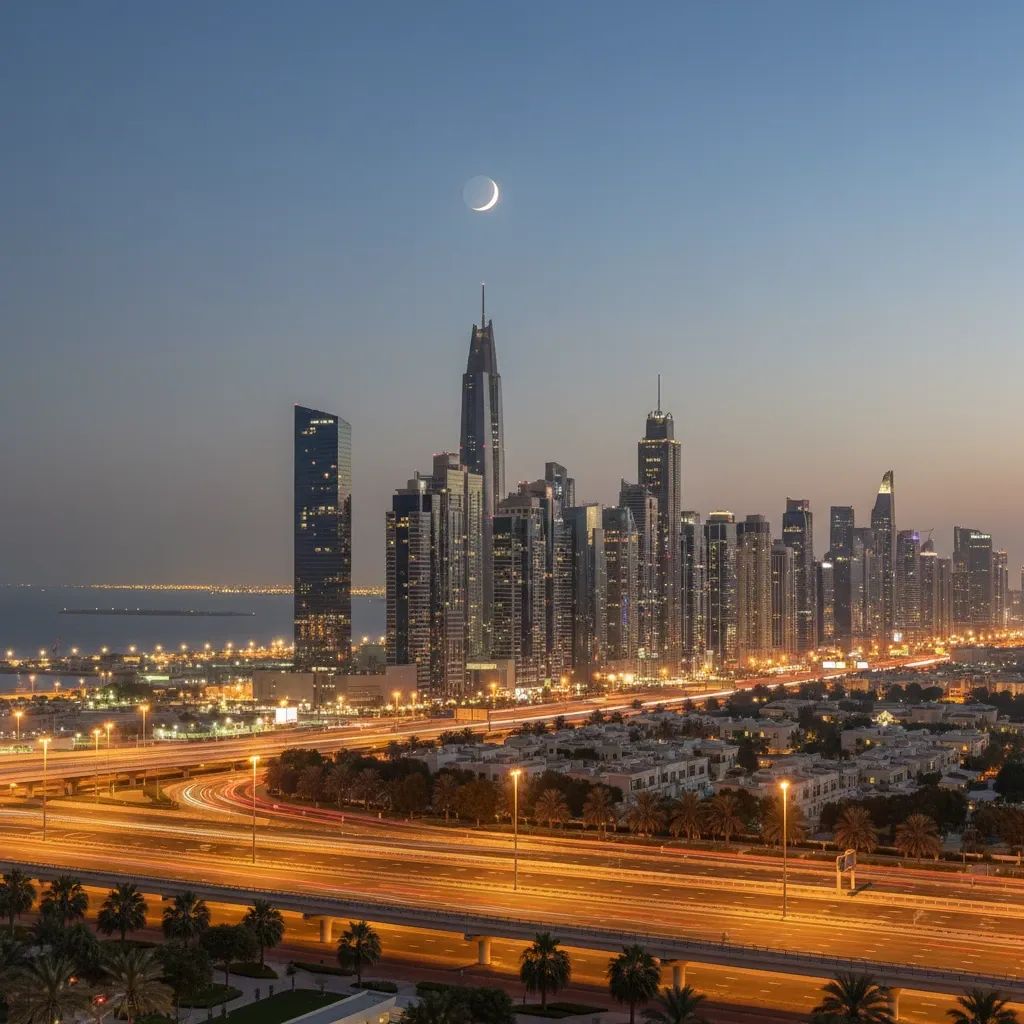
The United Arab Emirates Presidential Court has formally declared Wednesday as the opening day of Ramadan, setting in motion a nationwide shift in working hours, traffic patterns, and retail pricing that will touch virtually every household.
Why This Matters
• Shorter office schedules: Public-sector staff finish by early afternoon; private firms must trim 2 daily hours.
• Toll and parking tweaks: Salik and Darb fees move to off-peak windows, easing the sunset rush for iftar.
• Price caps on staples: Nine core food categories cannot rise without approval, shielding family budgets.
• Charity opportunities: Digital platforms now let residents fund an iftar with a single tap.
How the Crescent Was Confirmed
A joint session of the UAE Council for Fatwa and its Moon-Sighting Committee convened at Qasr Al Hosn after Maghrib on the 29th of Sha’ban. While telescopes and field teams scanned the skyline, five national observatories pushed live data to an AI dashboard. A fleet of AI-guided drones—each climbing more than 300 m—captured high-resolution imagery that verified the crescent met Sharia and scientific criteria. The verdict aligned the Emirates with Saudi Arabia and Qatar, though several Asian countries opted to begin fasting a day later.
What This Means for Residents
• Fasting window: Expect roughly 13-hour fasts, with Fajr around 5:20 am and Maghrib near 6:30 pm in Dubai at the start of the month.
• Government hours: Federal entities run 9 am–2:30 pm Monday–Thursday and a noon finish on Friday, mirroring last year’s model. Private-sector firms must reduce shifts by 2 hours daily, whether employees are Muslim or not.
• Traffic and parking:– Salik remains AED 6 only from 9 am–5 pm; it is free 2 am–7 am.– Abu Dhabi’s Darb toll applies 8 am–10 am and 2 pm–6 pm, with Sundays free.– Paid parking pauses during afternoon prayer times and resumes after Tarawih in most emirates.
• School timetables: The Ministry of Education has circulated optional remote-learning templates to cut midday heat exposure for younger students.
Implications for Businesses & Investors
Retail analysts at Emirates NBD forecast a double-digit sales lift in grocery and personal-care categories, bolstered by 65% discounts pledged by the major supermarket chains. Hoteliers in Dubai and Abu Dhabi are already quoting average daily rates 17% higher than last Ramadan as staycations surge. Inflation, however, is on track to cool to 1.8% thanks to early bulk-import deals struck through Jebel Ali.
Community & Charity Initiatives
More than 1.5 M people stand to benefit from the Emirates Red Crescent’s “Ramadan Continuous Giving” drive. Sharjah Charity International plans to distribute 1.2 M iftar meals via 129 tents. Digital giving is the breakout trend: food-delivery apps now feature “Donate an Iftar” buttons that auto-route meals to local mosques. Authorities have paired the generosity push with 420 price-inspection sweeps to deter profiteering.
Looking Ahead: Key Dates
• Mid-Month: Second-half traffic review could extend toll exemptions if congestion remains high.
• Last 10 Nights: Expect extended mosque operating hours and intensified patrols around commercial hubs.
• Eid al-Fitr: Astronomers currently expect a 29-day lunar cycle, which would place the holiday around the third week of March; a final moon-sighting will confirm.
For now, the rhythm of daily life shifts tonight: shorter shifts, slower commutes, and the communal quiet that signals Ramadan has returned to the Emirates.


