
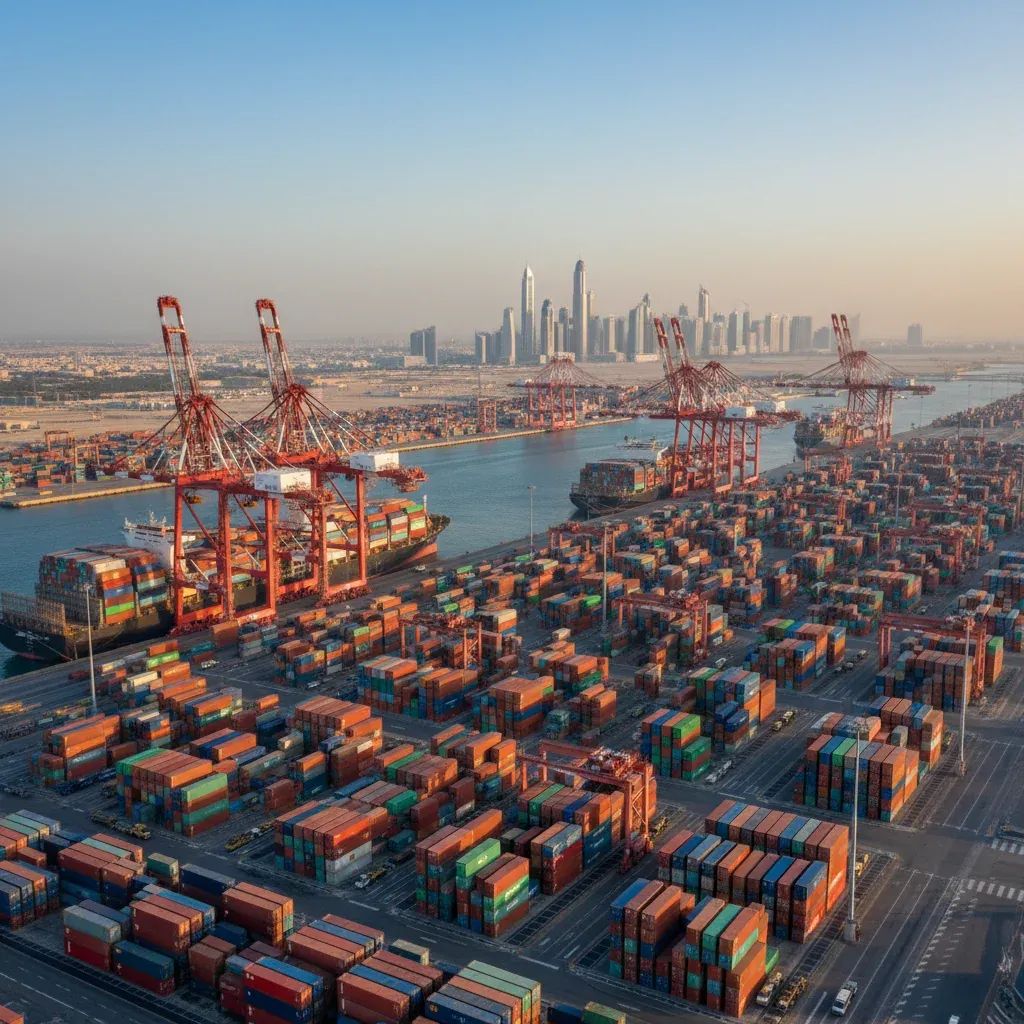
Dubai-owned DP World has begun moving extra shipments of rice, onions, and even small blenders through Jebel Ali Port, a signal that supermarkets have already started stocking up for Ramadan—weeks before the first sighting of the crescent moon—and that price spikes are unlikely this year.
Why This Matters
• 25 % more rice, 35 % more onions & garlic are already booked into Jebel Ali warehouses.
• Extended 24-hour gate access at the port should keep grocery shelves full and prices steady.
• Kitchenware imports up 10 %, suggesting promotional sales on coffee makers and iftar table sets are ahead.
• Date exports up nearly 60 %—a trade opportunity for growers in Al Ain and Liwa.
Why the Rush Starts Now
Retail chains in the United Arab Emirates have honed a playbook: ship in the staples roughly six to eight weeks before the holy month, when demand for iftar and suhoor spreads jumps overnight. That timing—late January into early February this year—helps retailers avoid the last-minute premiums that once plagued the market. According to DP World GCC chief Abdulla bin Damithan, moving early has become second nature: “It is the only way to guarantee that a 5 kg bag of basmati costs the same on day 1 of Ramadan as it does on day 28.”
Behind the Numbers: What Moves Through Jebel Ali
• Staple foods: Rice shipments climb 25 %, while pungent staples such as onions and garlic jump 35 %—a useful barometer because both are loaded by the bag, not the container, making weekly volume swings easy to spot.
• Protein companions: Imports of mixed nuts—walnuts, almonds, pistachios—are up about 15 %, driven by dessert demand.
• Beverages: Soft-drink and juice volumes edge 5 % higher, modest but steady, and a reminder that Ramadan does not entirely mute the region’s sugary-drink habit.
• Household gear: Beyond food, kitchen and tableware consignments rise 10 %, and small appliances such as air fryers and sandwich presses gain 9 %. Retailers say the gadgets sell fastest during the pre-Ramadan sale window when residents refresh their cookware.
• Outbound flow: Dates head the other way. Emirati growers ramp up deliveries to India, Morocco, and Bangladesh, markets that together absorbed 65 % of last year’s date volume through Jebel Ali.
Logistics Playbook for 2024 Ramadan
The United Arab Emirates Federal Customs Authority approved around-the-clock container gate hours from mid-January, mirroring a practice first trialled in 2023 that shaved truck wait times by 25 %. DP World’s cold-chain yards—reefer plugs, on-dock chillers, and insulated cross-docks—operate with IoT temperature sensors that alert staff if cargo drifts a single degree. The system proved itself in last summer’s 45 °C heat and is now routine.
To dodge Red Sea detours, several carriers have diverted Asian sailings via the Cape of Good Hope. The longer route adds eight days, but forwarders say early loading covers the slack. Air freight via Dubai World Central (DWC) is also up, especially for high-margin berries and fresh herbs that cannot risk a maritime delay.
What This Means for Residents
Stable grocery bills – Early stockpiling translates into price ceilings on staples; economists at Emirates NBD expect food inflation to stay below 2 % during the fasting month.
Retail promotions – Watch for bundle deals on kitchen gadgets in late February; importers want turnover before Ramadan starts.
Smoother traffic around the port – Truck flows spread over 24-hour windows should reduce the pre-Ramadan evening congestion many commuters remember from past years.
Export upside for farmers – Date growers in Al Dhaid and Liwa can lock in higher January spot prices while Asian buyers load up.
Outlook: After the Crescent Moon Sets
Once Eid al-Fitr arrives, food imports typically dip, but DP World planners are already modelling Q2 flows to avoid idle berths. They expect consumer spending to pivot from groceries to travel and electronics, meaning more car-charger plugs and fewer 40-foot containers of basmati. Still, the infrastructure—reefer racks, blockchain cargo visibility, and AI-driven yard scheduling—built for Ramadan will anchor the emirate’s wider bid to remain the Gulf’s most reliable logistics hub.
For residents, the takeaway is simple: the prep work has been done. Your rice, your juices, and that new air fryer you keep eyeing online are probably already in a Jebel Ali warehouse. All that is left is to plan the menu.


