
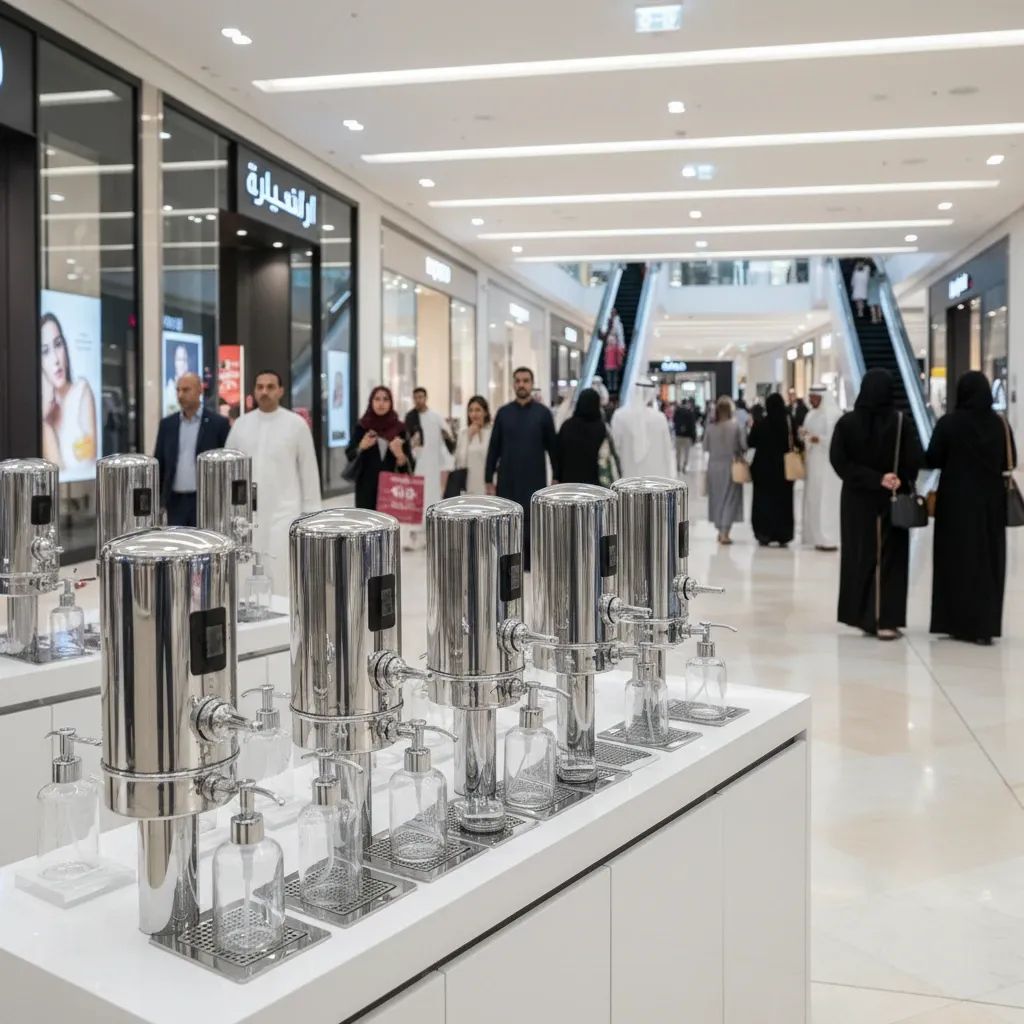
The United Arab Emirates operations of L’Oréal have shifted from pilot projects to full-scale roll-outs, a move that could reshape how fragrances, skincare and makeup are bought, refilled and moved around the country.
Why This Matters
• Refill stations are arriving in major malls this quarter; shoppers can top-up luxury fragrances at roughly 30% lower cost than a new bottle.
• Single-use plastic bans take effect nationwide on 1 Jan 2026, making circular packaging a regulatory, not optional, requirement for beauty brands.
• Electric trucks and biodiesel routes introduced with Mohebi Logistics and Aramex trim delivery emissions—savings freight forwarders say will soon appear on your checkout screen.
• Women-led retraining schemes tied to L’Oréal’s Inclusive Sourcing Programme open 200 new roles in sales and logistics for UAE residents in 2026.
Circular Beauty Hits the Shelves
Walk into a Sephora at Dubai Mall and you will now see gleaming silver dispensers beside perfumes from Prada, YSL and Lancôme. Scan, refill, pay. The system slices up to 44 % less glass and 67 % less plastic per transaction, according to L’Oréal’s life-cycle audits. Luxury brands have resisted reuse for fear of eroding their aura; Gulf consumers, however, are proving willing to pay a small premium for the sustainable version. A YouGov poll found 73 % of UAE shoppers would spend extra for eco-friendly packaging, and mall operators are answering by reserving prime floor space for refill bars.
Logistics and Energy: Cutting Tonnes, Not Corners
Behind the storefront, the group is rewriting its freight playbook. The Dubai office now runs on 100 % renewable power, aligning with the national Net Zero 2050 pathway. On the roads, 40 electric trucks operated by Mohebi Logistics cover last-mile deliveries across the Emirates, while longer hauls into Saudi Arabia use biodiesel-blended fuel via Aramex. L’Oréal’s regional scope-3 roadmap—validated by the Science Based Targets initiative—requires a 28 % cut in upstream transport emissions by 2030. The local fleet shift alone is expected to strip out roughly 3,000 t of CO₂e annually, equivalent to taking 650 petrol cars off UAE highways.
Retail Partnerships: From Talk to Till
Circularity only works if the product is within arm’s reach. That is why BinSina Pharmacy’s 100-store network has signed a multi-year deal to allocate 85 % eco-designed point-of-sale (POS) materials by 2027. All new shelving, testers and signage must meet strict carbon-intensity limits. Meanwhile, an expanded pact with Sephora Middle East targets 75 % eco-designed POS adoption by 2027 and a staff upskilling programme so beauty advisers can explain sustainability attributes in Arabic, English and Hindi. These retail standards sync neatly with the UAE Extended Producer Responsibility (EPR) draft, due to enter force in 2026, which shifts end-of-life costs onto suppliers.
How Policy Is Clearing the Path
Federal legislation is rapidly converging with corporate ambition. The UAE Circular Economy Policy 2021-2031 bans single-use shopping bags (already in effect) and will phase out plastic cutlery, lids and foam containers by 2026. Although cosmetics bottles are not yet in the cross-hairs, officials at the Ministry of Climate Change & Environment confirm that beauty packaging guidelines now in consultation mirror food-grade rules: recyclable or refillable by default. Crucially, the new Green Intellectual Property Roadmap accelerates patent approvals for low-carbon packaging, allowing L’Oréal to trial bio-based polymers locally without navigating multi-year paperwork.
What This Means for Residents
• Expect to see refill kiosks in Carrefour and Union Coop by the end of the year; bring your bottle, save money, skip the bin.
• Delivery-time carbon tags will start appearing on e-commerce checkouts, telling you whether your order arrived via electric van or biodiesel truck—useful for corporate gifting policies that now track Scope 3 emissions.
• Jobseekers with retail or supply-chain backgrounds can tap the Inclusive Sourcing Programme, which prioritises hiring women and UAE nationals for 200 logistics and advisory roles rolling out in 2026.
• Shoppers should watch for price-shield campaigns: L’Oréal has pledged that switching to a refill will never cost more than buying a new pack, insulating consumers from raw-material price swings linked to oil volatility.
The Road Ahead
L’Oréal’s SAPMENA zone, spanning 40% of the world’s population, uses the Emirates as its stress-test arena because infrastructure, policy and consumer appetite align unusually well here. The next milestones are clear: carbon-neutral transport by 2027, 100 % recycled or biobased plastics by 2030, and water-saving showerheads in 500 partner salons each year. For UAE residents, the upshot is simple: beauty aisles are turning into circular micro-markets and every refill, every electric delivery, nudges the broader economy closer to the nation’s waste-free, net-zero horizon.


