
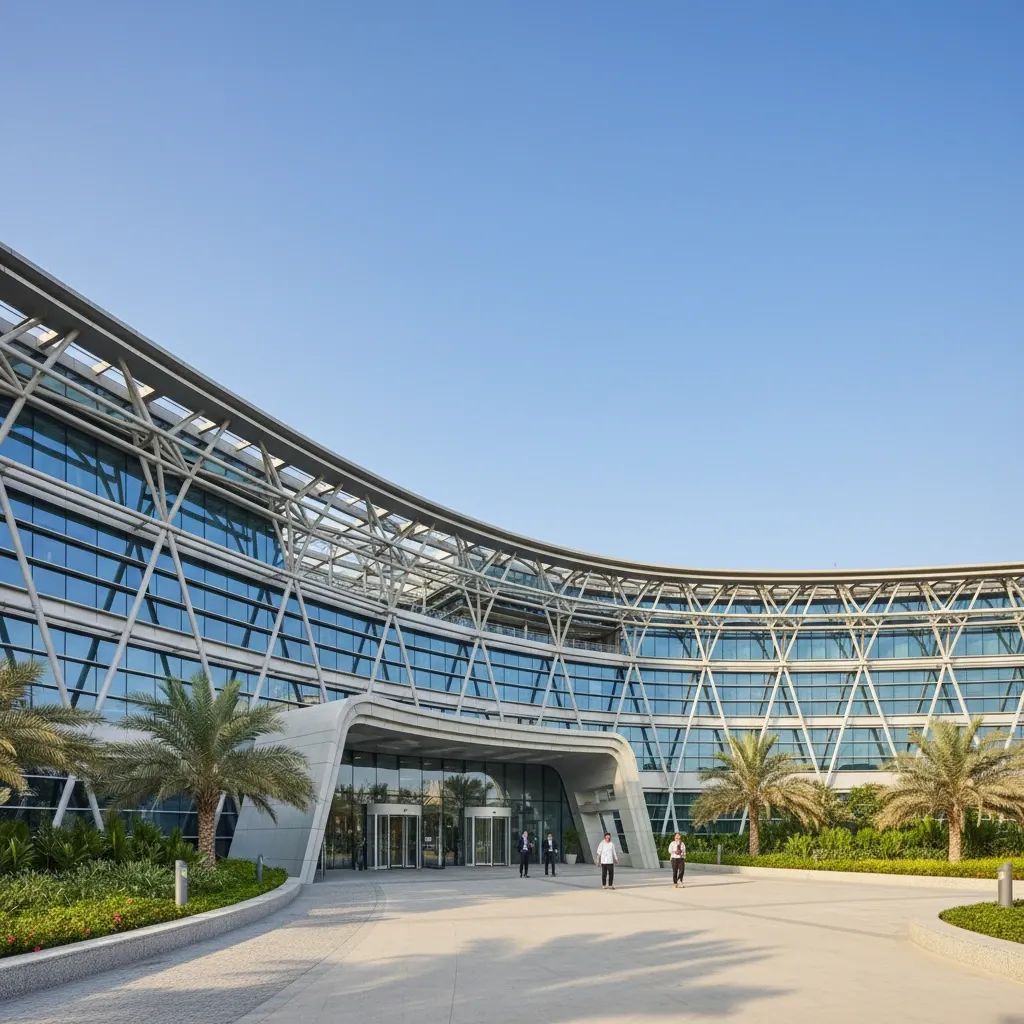
The United Arab Emirates' National Rehabilitation Centre marked World Health Day by reaffirming its commitment to evidence-based addiction treatment and mental health stabilization for residents. On April 7th, 2026, NRC CEO Yousef Altheeb Alketbi emphasized the facility's role as a critical anchor in the country's healthcare system, positioning addiction recovery as a mainstream health priority woven directly into national policy and federal healthcare expansion strategies.
"On World Health Day, we reaffirm our commitment to advancing healthcare standards and ensuring that individuals struggling with substance use disorders receive compassionate, evidence-based care," Alketbi stated, highlighting how the UAE has shifted away from viewing addiction as a stigmatized afterthought toward treating it as a critical health priority.
Why This Matters for Residents
• Compliance with international standards: The NRC holds CARF International Three-Year Accreditation, placing it among fewer than 10% of global rehabilitation facilities achieving this benchmark, ensuring patients receive care validated by independent external auditors.
• Middle East's only WHO hub: Designated as a WHO Collaborating Centre in 2017, the facility remains the region's sole addiction treatment provider holding this official designation, anchoring the UAE's leadership in evidence-based mental health practice.
• Measurable clinical success: Historical data shows relapse outcomes improved from 60% in early operational years to 20% by 2010, substantially outperforming the global standard of 40–60% first-year relapse for addiction recovery.
• Seamless health system integration: Through the PureHealth network integration, the NRC now operates alongside major hospitals, embedding advanced technologies into standard care pathways and expanding accessibility across the emirate.
Understanding Rehabilitation as National Infrastructure
For many residents, the concept of rehabilitation remains narrowly understood—typically conjuring images of detoxification clinics or short-term crisis intervention. The National Rehabilitation Centre's operational model reveals a far more expansive mission. Located in Shakhbout City adjacent to Abu Dhabi, the facility spans over 100,000 square meters across seven purpose-built structures and maintains capacity for 244 inpatient beds, supplemented by outpatient clinics and specialized recreational therapy spaces. This physical scale reflects a deliberate policy choice: treating addiction recovery not as a marginal service, but as infrastructure demanding the same quality investment as cardiology or trauma centers.
The UAE Ministry of Health and Prevention has integrated rehabilitation services into preventive healthcare through frameworks like the National Policy for Empowering People of Determination, which explicitly positions substance use treatment within early intervention pathways. For residents navigating substance misuse or supporting family members in recovery, this means access to a continuum extending from initial assessment through long-term community reintegration—all within a unified national system.
What This Means for Residents: Practical Access and Real Outcomes
The integration into PureHealth's healthcare network translates into tangible service improvements for residents seeking care. Tele-rehabilitation appointments now connect patients in remote areas to NRC specialists without requiring travel to Abu Dhabi. Virtual reality-based relapse prevention modules, robotics-assisted therapy, and AI-powered risk screening tools have moved from research pilots into routine clinical workflows. For a single parent managing substance recovery while maintaining employment, or an older adult addressing co-occurring addiction and chronic illness, these technologies reduce friction and enable care to fit actual life circumstances rather than forcing life to conform to rigid clinic schedules.
Admission protocols have similarly evolved. Rather than emergency room crises triggering treatment, the NRC now participates in structured referral networks with primary care physicians, occupational health services, and workplace wellness programs across the UAE. Early identification through screening programs—particularly at premarital counseling centers and during routine health checkups—means intervention occurs before acute deterioration. The National Framework for Healthy Ageing 2025–2031 explicitly mandates home care and mobile clinic services, many now incorporating NRC-trained rehabilitation specialists, particularly for older residents managing substance use alongside chronic conditions like hypertension or diabetes.
Patient satisfaction data from 2013 showed consistently above-75% satisfaction ratings across accessibility, admission processes, facilities quality, and clinical staff competence. This represents the upper echelon of international benchmarks; comparable data from rehabilitation settings in Jeddah and Istanbul report satisfaction ranging between 80–95%, but often skew higher in affluent private settings. That the NRC—a government facility serving diverse socioeconomic populations—maintains this performance indicates effective resource allocation and clinical culture.
How Treatment Actually Works: Beyond the Stereotype
Traditional perceptions of addiction treatment often misrepresent the clinical reality. The NRC treatment pathway begins with comprehensive multidisciplinary assessment, not immediate detoxification. Nursing teams evaluate general health status; psychiatrists assess substance use severity and co-occurring mental health conditions; physicians screen for acute or chronic medical complications; social workers map family, financial, and employment circumstances. The psychology team conducts detailed psychometric testing, including neuropsychological evaluation to detect cognitive deficits that may complicate recovery.
This diagnostic phase is not bureaucratic overhead—it determines treatment intensity and modality. A 35-year-old with primarily alcohol use disorder and stable housing requires markedly different care than a 22-year-old with polysubstance use, recent homelessness, and undiagnosed bipolar disorder. The NRC's individualized treatment plans reflect this clinical reality.
Following assessment, patients enter medically supervised detoxification if needed, often utilizing medication-assisted treatment to reduce withdrawal severity. Contrary to popular belief, withdrawal from alcohol or benzodiazepines carries genuine medical risk, and the NRC's ability to provide pharmaceutical management in-hospital rather than forcing cold-turkey approaches reflects evidence-based practice standards.
The Early Recovery Unit represents the operational heart of treatment. Here, motivational interviewing helps patients crystallize internal commitment to change rather than relying on external coercion. Contingency management establishes concrete behavioral incentives—structured rewards for abstinence verification and treatment engagement. The Matrix Programme, an evidence-based outpatient framework initially developed for methamphetamine addiction in Los Angeles, has been adapted to reflect local cultural contexts and family involvement patterns typical in the UAE. Individual therapy addresses trauma, cognitive distortions, and life skills; group therapy provides peer support and normalization; family sessions engage relatives in understanding addiction as a medical condition rather than a moral failing.
This multifaceted approach contributes to the center's improved clinical outcomes over its operational lifetime, suggesting sustained refinement of clinical processes and workforce capability.
Clinical Rigor and International Credibility
The CARF International Accreditation represents independent external validation, not internal marketing. CARF's assessment process involves site visits, patient interviews, staff competency verification, and review of clinical documentation against standardized criteria. Accredited facilities commit to continuous quality improvement cycles and regular re-assessment—it is neither a static credential nor an award distributed liberally. Fewer than 10% of global rehabilitation facilities achieve this standard.
The WHO Collaborating Centre designation carries particular weight in a Middle Eastern context where addiction treatment has historically carried stigma and resources have concentrated on acute emergency care. Recognition by the World Health Organization signals that the NRC operates at global best-practice standards and contributes to regional and international evidence development. The UNODC certification for substance analysis expertise further positions the facility as a reference institution, not merely a clinical provider.
These credentials matter concretely for residents. They mean that medications and evidence-based protocols applied at the NRC reflect international consensus, not localized experimentation. They mean that if a patient later relocates to North America or Europe, their clinical record will be recognized as credible by other accredited facilities. They mean that clinical staff maintain currency with evolving addiction medicine standards through mandatory training and external audit.
Workforce Development and Institutional Capacity
A critical strategic objective articulated by NRC leadership is reducing reliance on imported expertise through deliberate capacity building of Emirati psychologists and rehabilitation professionals. The establishment of a dedicated research and training center within the NRC marks a structural commitment to this goal. This center conducts longitudinal studies on treatment efficacy, develops infrastructure for clinical trials, and issues professional qualifications in addiction and rehabilitation sciences—essentially building a self-sustaining pipeline of local expertise.
During the SAKINA Integrated Mental Health Conference in February 2026, NRC experts presented peer-reviewed research on latest developments in addiction medicine and evidence-based interventions. This active research participation, rather than passive adoption of international protocols, positions the facility as a contributor to global knowledge rather than merely a consumer. For residents, this matters because it means the center continually refines practices based on direct observational data from the UAE population, adapting international models to local epidemiological patterns and cultural factors.
Public Health Messaging and Community Integration
The NRC operates public awareness campaigns, including the "Facts" and "Isolation" initiatives, aimed at destigmatizing addiction and advertising available support. These efforts, while sometimes dismissed as peripheral, represent critical infrastructure for behavioral change. In societies where addiction carries heavy social shame, many individuals and families delay seeking care until crises force intervention—emergency department presentations, workplace terminations, or family ruptures. Early public education campaigns reduce this delay-to-care interval and increase voluntary presentation during earlier disease stages when treatment success rates improve.
These campaigns align with broader national strategies like the National Strategy for Wellbeing 2031 and the "We the UAE 2031 Vision," both positioning quality of life as a core national metric. Addiction recovery directly affects family stability, workplace productivity, and community cohesion—dimensions explicitly tracked in national wellbeing indices. The NRC's public health efforts thus serve macro-policy objectives beyond individual patient outcomes.
Regional Context: Emirate-Specific Strategies
The UAE's approach to rehabilitation reflects deliberate coordination between federal and emirate-level initiatives. Abu Dhabi's comprehensive strategies emphasize unified assessment frameworks and integrated care pathways. Dubai Health has established specialized physiotherapy and rehabilitation centers while partnering with the Erada Centre for Treatment and Rehab to develop advanced care models for substance abuse disorders. These emirate-specific approaches complement federal standards, creating multiple entry points for residents depending on geographic location and specific health circumstances.
The National Framework for Healthy Ageing 2025–2031 further embeds rehabilitation into lifecycle health planning, recognizing that substance misuse often co-occurs with chronic conditions in aging populations. Home care and mobile clinic services, increasingly incorporating rehabilitation specialists, represent structural recognition that effective recovery requires services to reach individuals in their actual living environments rather than expecting patients to navigate centralized facilities.
Technological Integration and Future Capacity
The UAE's healthcare system is undergoing accelerated digitalization, and the NRC is embedded within this transformation. Artificial intelligence-driven early risk detection uses algorithmic analysis of patient characteristics to identify individuals at highest relapse risk, enabling proactive intervention before crisis occurs. Personalized care planning leverages AI to optimize therapy modalities and aftercare protocols based on individual behavioral patterns and treatment response data. This mirrors approaches at leading international facilities—Mayo Clinic, Cleveland Clinic, Johns Hopkins—where machine learning increasingly optimizes clinical decision-making.
The expansion of tele-rehabilitation infrastructure holds particular significance for the UAE, where geography and work schedules often create barriers to regular clinic attendance. Virtual reality-based relapse prevention modules, while still emerging globally, represent a frontier where the NRC can position itself as an early adopter, potentially attracting regional and international research collaboration and funding.
Strategic Implications for the National Healthcare System
The NRC's evolution reflects a conscious policy choice by UAE leadership to treat addiction recovery as core healthcare infrastructure rather than a peripheral specialty. This positioning has multiplier effects. It attracts international research partnerships and grants. It creates employment opportunities for trained rehabilitation professionals. It reduces downstream costs in emergency medicine, criminal justice, and social services by enabling earlier intervention and higher treatment completion rates. It signals to residents that the government recognizes addiction as a medical condition warranting the same evidence-based investment as oncology or cardiology.
As the UAE continues building its status as a global healthcare hub, the NRC exemplifies a distinctive model: international best-practice standards implemented through culturally adapted frameworks, with deliberate investment in local expertise development. This approach positions the facility as a regional reference point and demonstrates how the UAE is achieving world-class performance in specialized healthcare domains through strategic focus.


