
Salik, the United Arab Emirates-based toll operator, will add a 5% Value Added Tax to every gate crossing and tag activation starting June 1, 2026, a change that will add 30 fils to peak-hour commutes and reshape the cost structure for Dubai's estimated 1.5 million daily road users.
Why This Matters
• Peak-hour tolls rise to AED 6.30 (up from AED 6), off-peak crossings climb to AED 4.20 (from AED 4).
• Multi-gate commuters will pay AED 12.60 for two peak crossings instead of AED 12—an extra 60 fils per day or roughly AED 15 monthly for frequent users.
• Parkin parking fees will also jump 5% on June 1, 2026, meaning a premium AED 6 hourly spot will cost AED 6.30.
• No VAT on top-ups: Recharging your Salik account remains tax-free; the levy applies only to actual gate usage and tag purchases.
The move aligns with a directive from the Federal Tax Authority (FTA) under Federal Law No. 8 of 2017, which governs VAT implementation across the country. Both Salik and Parkin, Dubai's exclusive toll and parking operators, confirmed the change via official channels, noting that all collected tax will be remitted directly to the FTA.
What This Means for Daily Commuters
For residents navigating Al Maktoum Bridge, Garhoud Bridge, or any of Dubai's 10 active toll gates, the adjustment is modest but cumulative. A typical two-gate commute during peak hours—say, from Jumeirah Lakes Towers to Dubai International Financial Centre—will increase from AED 12 to AED 12.60 each direction, or AED 25.20 daily round-trip. Over a 22-working-day month, that's an additional AED 13.20.
Off-peak drivers fare slightly better: a single crossing that currently costs AED 4 will rise to AED 4.20, adding just 20 fils per gate. Sunday travelers, who already enjoy the flat AED 4 rate across all hours, will also see that figure tick up to AED 4.20.
Families with multiple vehicles or delivery fleets managing four-gate routes will notice larger increments. A low-peak, four-gate journey that totals AED 16 today will climb to AED 16.80, reflecting an 80-fil increase per trip.
Tag Activation and Delivery Fees Under the Microscope
New Salik users purchasing a tag online will also encounter the tax. Currently, a standard tag bundle—comprising a AED 50 tag fee, AED 50 prepaid toll credit, and AED 20 delivery charge—totals AED 120. Under the revised structure, the activation and delivery components will attract the 5% levy, though the prepaid toll balance itself remains exempt until used at a gate.
Crucially, the FTA has clarified that recharging an existing Salik account does not trigger VAT. Only the moment of gate passage—or the purchase of a physical tag—activates the tax obligation. This distinction matters for heavy users who top up accounts in bulk: the tax applies at the point of consumption, not at the point of deposit.
Parking Costs Follow Suit
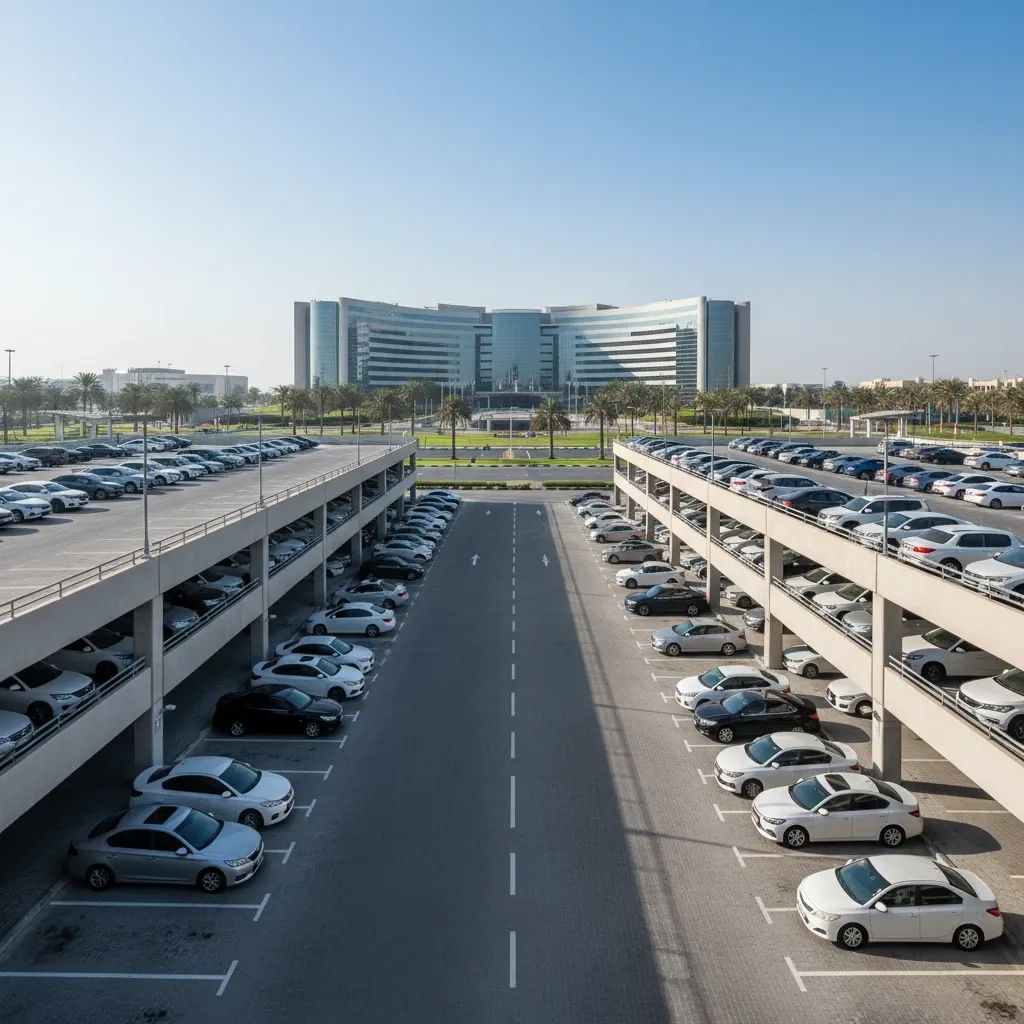
Parkin, which manages more than 115,000 paid parking spaces across Dubai, announced an identical 5% VAT rollout effective June 1, 2026. The tax will apply to on-street meters, multi-story car parks, seasonal cards, permits, and advance reservations. A premium AED 6 hourly slot in Dubai Marina or Downtown Dubai will become AED 6.30, while standard AED 4 zones in outlying business districts will rise to AED 4.20.
Seasonal pass holders should budget accordingly: a AED 3,000 annual permit will carry an additional AED 150 in VAT, pushing the total to AED 3,150. Parkin has also confirmed that cash payments at meters will be phased out on the same date, accelerating Dubai's shift toward cashless transactions via nol cards, the Parkin app, SMS, Dubai Now, and the RTA app.
Regulatory Context and Revenue Impact
The Federal Tax Authority introduced VAT in January 2018 at a uniform 5% rate, targeting most goods and services while exempting essential categories like healthcare and education. Road tolls and parking, however, existed in a regulatory gray zone until recent clarifications. The June 1, 2026 mandate formalizes their status as taxable services, aligning Dubai's transport infrastructure with broader federal fiscal policy.
Salik reported AED 2.18 billion in revenue for fiscal year 2025, with approximately 530 million toll transactions recorded. A 5% levy on that usage volume could channel an estimated AED 109 million annually to the FTA, though exact figures depend on traffic patterns and toll-mix distribution. Parkin's revenue base, while smaller, still contributes meaningful sums: the company logged AED 835 million in parking fees during 2025, suggesting a potential AED 41.75 million in annual VAT remittances.
Neither operator will retain these amounts; all proceeds flow directly to the federal budget, which allocates tax revenues to infrastructure, public services, and economic diversification initiatives.
Planning Ahead
Residents who rely on toll-heavy routes may want to revisit their driving habits before June 1, 2026. Off-peak travel, carpooling, or metro alternatives along the Red and Green Lines become marginally more attractive when peak-hour tolls edge above AED 6.30 per crossing. Employers offering transport allowances may also face pressure to adjust stipends, particularly for staff commuting from Sharjah, Ajman, or outlying free zones.
Parking budgets require similar scrutiny. Monthly parkers in premium zones should anticipate a 5% bump in renewal costs, while hourly users juggling errands across multiple locations will notice the incremental creep. Digital payment adoption, already widespread, becomes mandatory as cash meters disappear—residents still paying by coin should download the Parkin or RTA apps before the June 2026 cutoff.
The Bigger Picture
Dubai's decision to apply VAT to tolls and parking reflects a broader economic strategy: diversifying revenue streams away from oil dependence while maintaining relatively low tax rates compared to global peers. At 5%, the United Arab Emirates remains one of the world's most tax-efficient jurisdictions for both individuals and businesses, even as incremental levies expand the tax base.
For most residents, the June 1, 2026 changes represent a minor recalibration rather than a seismic shift. A daily commuter crossing two gates each way will pay an extra AED 26.40 per month—less than the cost of two specialty coffees in Downtown Dubai. Yet the cumulative effect across millions of trips underscores the FTA's ability to generate meaningful revenue from small, broadly distributed charges.
As cashless infrastructure and digital enforcement mature, expect further refinements. The government has signaled interest in dynamic toll pricing, congestion-based tariffs, and integrated mobility payments linking metro, bus, and road usage under a single billing framework. The June 1, 2026 VAT rollout may prove a technical rehearsal for more ambitious pricing experiments in the years ahead.


