
The April 6 Incident: What Happened
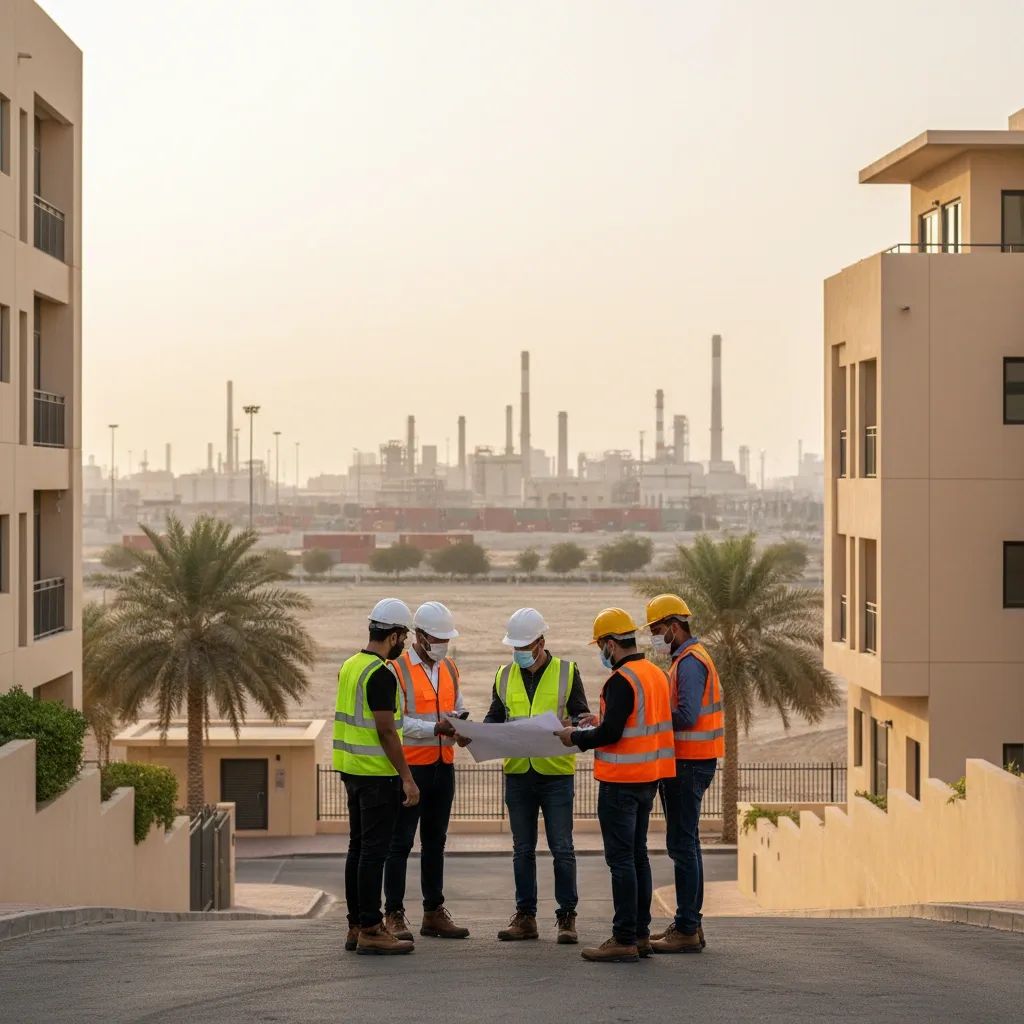
On April 6, a Ghanaian worker at Raneen Systems in Abu Dhabi's ICAD industrial zone suffered moderate injuries when debris from a successfully intercepted aerial threat struck the facility. The incident occurred as the United Arab Emirates air defense network engaged incoming projectiles, neutralizing the threat before it reached its intended target. The worker's injuries, while requiring medical attention and recovery time, highlight an emerging occupational risk for industrial workers in areas proximate to critical infrastructure.
This was not a security failure. The air defense system functioned as designed—the threat was eliminated. The operational challenge, however, is straightforward: when a missile is destroyed mid-air, the fragments must land somewhere. In this case, they landed on a facility where workers were present.
The Broader Context: Recent Interceptions and Debris Incidents
The April 6 incident is part of a documented pattern of interception-related debris events. According to available reports, the United Arab Emirates air defense capabilities have achieved high interception rates in recent weeks, neutralizing sustained waves of incoming projectiles. However, even with successful intercepts, fragments inevitably reach the ground in populated areas surrounding critical infrastructure.
Reports from recent weeks indicate multiple debris incidents have occurred at industrial facilities in ICAD, Musaffah, and KEZAD zones. These incidents have involved workers from various nationalities and have prompted facility managers to reassess workplace safety protocols during high-alert periods. The exact scope and casualty figures spanning this period require verification from official UAE sources for precise attribution.
Workplace Safety Implications
For industrial managers and safety officers, the Raneen Systems incident represents a challenge that traditional occupational safety protocols cannot fully address. Conventional workplace safety measures—hard hats, hearing protection, fall prevention—are not designed to protect against high-altitude debris fields.
In response to recent events, many facilities have implemented practical adaptations:
• Designated shelter-in-place zones within industrial complexes
• Emergency drills coordinated with alert periods
• Timing restrictions on outdoor work during elevated threat windows
• Expanded remote-work policies for non-essential personnel
However, a fundamental constraint persists: critical industrial functions require on-site personnel. Refinery operators, gas technicians, manufacturing supervisors, and logistics coordinators cannot perform essential tasks remotely or indefinitely shelter in place while maintaining production.
Official Communications and Worker Perspective
The UAE Ministry of Interior confirmed on April 6 that the overall situation remains safe and normal activities should resume—guidance necessary for economic continuity and accurate, as the air defense system continues to perform its function effectively.
Residents and workers perceive the situation through both official announcements and direct observation. While air defenses demonstrably work and emergency responders handle incidents professionally, the visible reality of debris events, facility disruptions, and ongoing alert cycles reinforces that the security environment, while managed competently, represents an elevated risk profile compared to Abu Dhabi's historical baseline.
The Underlying Drivers
The regional conflict between Iran and U.S.-allied nations remains unresolved, and Iranian leadership has signaled that retaliatory strikes will continue if provoked further. U.S. and Israeli officials have not indicated policy shifts that would reduce that provocation.
For industrial workers in Abu Dhabi's critical infrastructure zones, this translates to an extended period of elevated occupational risk. For companies operating in ICAD, Musaffah, and KEZAD, it means absorbing increased operational considerations, managing workforce communications, and maintaining safety protocols in an environment where traditional protections have clear limitations.
The UAE's air defense capabilities continue to perform at high technical efficiency. The constraint they cannot eliminate is that successful interception overhead does not prevent debris from descending on populated areas below. Until the regional conflict itself resolves, industrial workers and managers will continue operating in an environment where debris incidents remain a recurring possibility rather than an anomaly.


