
Why This Matters
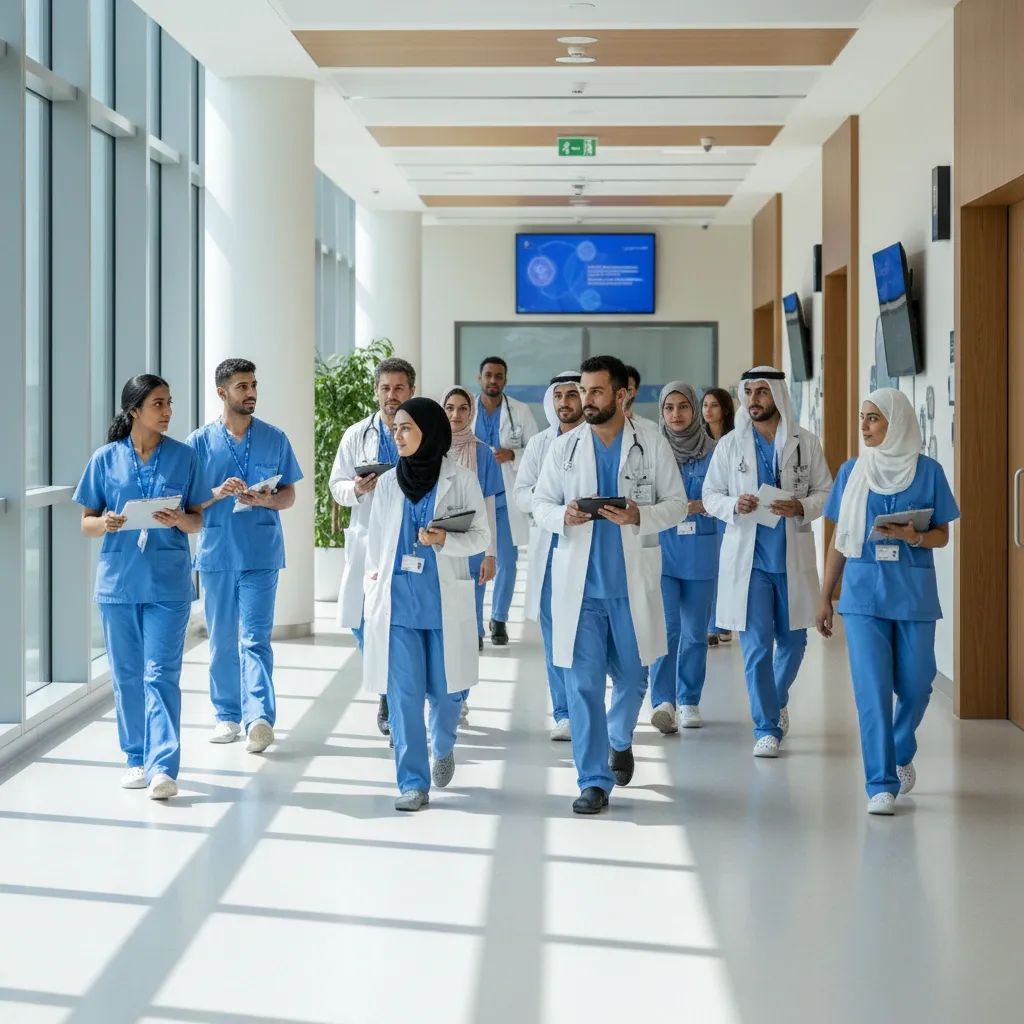
The United Arab Emirates healthcare system has pivoted decisively toward predicting disease before it strikes, fundamentally changing what wellness means for residents and visitors. This isn't incremental improvement—it's a structural shift away from waiting for symptoms and toward intercepting illness at its earliest biological signals. For someone living in the UAE, the practical consequence is straightforward: healthcare is increasingly designed to keep you healthy rather than repair you after you've become sick.
Quick Takeaways:
• Genetic screening is advancing: The UAE is implementing programs like the Emirati Genome Programme to identify hereditary health risks; results guide personalized prevention strategies.
• Early detection technology is expanding: AI-powered diagnostics are being deployed across hospitals to predict disease before symptoms appear, with healthcare providers reporting significantly improved accuracy in screening.
• Your medical records follow you: Patient data now integrates across emirates through platforms like NABIDH in Dubai and Malaffi in Abu Dhabi, eliminating duplicate tests and paper files when you change providers or relocate.
The Quiet Revolution in How Doctors Think
For decades, medicine in the UAE—like most places—operated on a reactive model. You felt sick, visited a clinic, received treatment. That model is fundamentally breaking down. The United Arab Emirates Ministry of Health and Prevention (MoHAP) has committed to an architecture where sensing technologies, data analytics, and artificial intelligence sit upstream of any illness.
What does upstream look like in practice? Walk into a hospital in Dubai or Abu Dhabi today and you'll encounter diagnostic tools that existed only in laboratories five years ago. Major healthcare providers across the UAE are increasingly using AI to analyze patient data and generate predictions about disease risk—in some cases identifying concerns in asymptomatic patients before traditional clinical methods would. These tools are becoming embedded across the healthcare system, fundamentally changing how doctors approach diagnosis and treatment planning.
The Emirati Genome Programme crystallizes this shift most starkly. The initiative aims to sequence DNA and identify hereditary health risks including sickle cell trait, thalassemia carriers, and cardiac genetic mutations—generating personalized preventive roadmaps for residents. It's not diagnosis; it's anticipation. Pharmacogenomics follows: once your genetic profile is known, doctors can prescribe medications matched to your DNA, maximizing efficacy and minimizing adverse reactions before you've taken a single dose.
For expats, the Genome Programme doesn't apply, but the logic permeates the system. Wearables, fitness trackers, and smartwatch sensors now feed into hospital networks. AI algorithms continuously monitor vital patterns—heart rate variability, sleep architecture, glucose trends—to flag deterioration hours or days before a patient would normally seek care. A diabetic in Abu Dhabi with a smartwatch might receive a message from their clinic alerting them that patterns suggest advancing health concerns; intervention now, before more serious complications develop.
The Invisible Infrastructure: Data That Moves with You
One of the most consequential changes for anyone living in the UAE is often invisible. It's called NABIDH in Dubai and Malaffi in Abu Dhabi—the health information exchange platforms that enable seamless data sharing. In practice, it means a radiologist in Dubai can access relevant portions of your medical history from Abu Dhabi instantaneously. Your immunizations, past surgeries, medication allergies, recent lab results—unified in digital records accessible across emirate borders.
This matters acutely for the UAE's mobile population. Expats relocate constantly for work. Families split between Abu Dhabi and Dubai. Previously, each emirate maintained siloed records; you'd repeat X-rays, retake blood work, re-answer medical history questionnaires. Now these systems are increasingly connected. When you move or change hospitals, your data doesn't lag behind.
The efficiency gains are real. Healthcare providers report faster diagnosis times and demonstrably fewer avoidable hospital readmissions—the metric healthcare systems use to detect when patients fell through cracks. For residents managing chronic diseases—diabetes, hypertension, asthma—the integrated data means no gaps in continuity. A patient's glucose log travels with them; a cardiologist inherits complete medication history without relying on patient memory.
Telemedicine fills the remaining friction. The MoHAP virtual hospital allows residents to consult specialists from home using devices that integrate into the patient's digital medical record. Mediclinic, Aster DM Healthcare, and private clinics now offer 24/7 virtual consultations with specialists across various medical disciplines. For elderly residents or those with mobility constraints, the friction of travel—and the delay in care—simply evaporates. A diabetic patient in Ras Al Khaimah can receive remote glucose monitoring and medication adjustment without a two-hour drive to Abu Dhabi.
Insurance providers have adapted. Major insurers now embed telemedicine into international health plans, making virtual consultations financially accessible without out-of-pocket cost. For expats relying on employer-sponsored coverage, the infrastructure is already in place.
Artificial Intelligence and the Speed of Diagnosis
M42, the Abu Dhabi–based healthcare technology company, has developed advanced AI systems for diagnostic screening. For example, AIRIS-TB is an AI system designed to screen chest X-rays for tuberculosis, achieving strong detection rates. These AI platforms automate routine diagnostic review, freeing radiologists and technicians from mechanical scanning to focus on complex cases and clinical consultation. In a healthcare system stretched to serve 10 million people across a UAE more than 80% expat-composed, that automation compounds: healthcare professionals can see more patients with higher diagnostic accuracy and reduced burnout.
AI-powered oculomics represents another emerging frontier. Retinal imaging paired with machine learning can detect systemic diseases—diabetes, hypertension, even early cognitive concerns—before traditional screening would flag them. A resident getting routine eye exams might receive unexpected alerts about metabolic disease or cardiovascular risk, prompting preventive interventions before symptoms surface.
Autonomous ultrasound is in early deployment. Historically, ultrasound requires a trained sonographer; talent is scarce in remote areas of the UAE. AI-guided ultrasound equipment can be operated by less-specialized technicians, democratizing high-quality diagnostic imaging in underserved regions. For residents in Fujairah or Umm Al Quwain, access to advanced diagnostics no longer depends solely on whether a specialist happens to work nearby.
The practical upshot: if you live in the UAE and visit a hospital today, the diagnostic process is increasingly informed by AI-supported analysis. Patients presenting with health concerns will undergo AI-supported assessments and testing—each layer informed by machine learning. Clinicians will have data-driven insights to support their clinical reasoning and diagnostic decision-making.
What This Means for Residents: The Tangible Changes
Preventing rather than treating: The diseases that kill most UAE residents—heart disease, cancer, and diabetes complications—are increasingly caught earlier. Healthcare authorities are using data-driven approaches to detect chronic disease risk patterns, enabling public health campaigns and clinical interventions before people experience serious complications. Cardiovascular disease remains the leading cause of mortality in the UAE, partly because lifestyle risk factors are endemic; but earlier detection of disease risk means more time to intervene with medication or lifestyle change.
Access without geography: Telemedicine and AI-powered diagnostics erode the traditional barrier of distance. A construction worker in a labor camp near Al Dhafra can consult a specialist using his phone. An elderly woman in Abu Dhabi managing chronic heart conditions can transmit daily vitals through her smartwatch, triggering alerts if her condition changes. The healthcare system doesn't wait for admission; it monitors proactively.
Precision in treatment: Advanced surgical technologies at leading UAE healthcare facilities reduce recovery times for many procedures. Minimally invasive approaches mean less tissue damage, faster return to work or family responsibilities. For cancer patients, treatment planning increasingly incorporates AI and data analysis to tailor approaches to individual patient needs rather than one-size-fits-all protocols.
Cost and burden reduction: Early detection of conditions like diabetes or hypertension before complications develop—before kidney failure, blindness, or limb amputation—reduces the total medical and financial burden over a lifetime. Out-of-pocket costs shrink when you avoid hospitalizations. Psychological burden eases when monitoring is remote and clinicians intervene before crises develop. For expats paying private insurance premiums, preventive healthcare potentially lowers long-term costs and reduces the anxiety of managing chronic disease in a foreign country.
The Frontline: Human Workers, Amplified by Technology
Leadership across UAE healthcare emphasizes repeatedly that doctors, nurses, technicians, and support staff remain the irreplaceable human foundation of this system. Technology amplifies their capacity but doesn't replace their judgment or compassion.
In practice, this means a nurse managing remote monitoring for multiple heart disease patients uses AI dashboards to prioritize which patients need phone calls today; the conversations themselves—explaining what the numbers mean, adjusting medications, listening to fears—remain human work. A radiologist interprets imaging flagged by AI as concerning; the machine highlights suspicious areas, but the radiologist's experience and pattern recognition make the final call. A surgeon using advanced platforms still makes every consequential decision; the technology simply executes the surgeon's intent with greater precision.
This human-amplification model is crucial for UAE healthcare's continued advancement. The region faces persistent nursing shortages and workforce pressures. By automating the mechanical and routine, AI enables skilled clinicians to focus on complexity, judgment, and relationships—the distinctly human parts of medicine that neither AI nor technology can replicate.
The Global Stage and Economic Ambition
The UAE positions its healthcare advances as part of broader regional leadership. The country is emerging as a hub for health innovation and collaboration, attracting international partnerships, investment, and pharmaceutical research trials.
Initiatives like the "Future Health – A Global Initiative by Abu Dhabi" position the UAE as a testing ground where novel medicines, diagnostic platforms, and AI systems can be validated and refined. This ambition has material consequences for residents. New medicines and clinical trials reach UAE hospitals earlier than most countries. Patients with serious illnesses gain access to advanced therapies and treatment options. Healthcare innovation is becoming part of the UAE's economic diversification strategy.
Over the past decade, the UAE has invested significantly in AI-based healthcare applications and digital health infrastructure. The Department of Health Abu Dhabi has implemented AI governance frameworks requiring certification and compliance with international standards, ensuring that rapid adoption of cutting-edge technology is balanced with patient safety and data privacy protections.
The Persistence of Inequality and Challenge
Despite rankings and investment, healthcare quality remains uneven across geography and income. Affluent Dubai and Abu Dhabi command world-class facilities; more remote emirates like Fujairah or Umm Al Quwain lag in specialist availability and advanced technology access. Not all residents equally benefit from advancements that require expensive private insurance or out-of-pocket payment.
Non-communicable diseases persist as a massive public health burden. Over half of deaths in the UAE stem from conditions like heart disease, diabetes, and cancer—largely driven by lifestyle: sedentary work environments, dietary patterns heavy in salt and sugar, high tobacco and shisha use. Early detection through AI and genomics provides crucial tools; but without addressing root causes—work culture that discourages physical activity, food systems that make healthy eating expensive, social norms around substance use—the disease burden will continue climbing.
Prevention technology works only when people act on early warning signals. A patient who receives an alert about health risk must then engage with lifestyle change—diet, exercise, stress reduction—over months or years. Behavioral change is slow and individually taxing. Public health campaigns, workplace wellness programs, and food policy can accelerate progress; but technology alone cannot fix problems rooted in behavior and environment.
What to Expect in the Months Ahead
Healthcare in the UAE will continue to deepen its data-driven sophistication. Sensing technologies embedded in wearables will generate richer, more granular health patterns. AI algorithms will become more specialized. Telemedicine will expand into specialty care currently requiring physical presence.
For residents, the immediate practical reality is increasingly clear: the healthcare system is designed to prevent your illness, not treat it after onset. Genetic screening initiatives, AI diagnostics, and continuous remote monitoring are no longer experimental pilots but embedded infrastructure. Whether you're Emirati or expat, wealthy or middle-class, using private facilities or public clinics, the underlying architecture is shifting toward your health rather than your disease.
The question for individuals is simple: Will you engage with these tools? Genetic testing requires accepting personal health information sharing. Wearable monitoring means surrendering daily behavioral data. Remote consultations demand digital literacy and reliable internet. Participating in the system's prevention model isn't passive; it requires active engagement.
For those who engage—who understand the tools available and use them—the UAE healthcare system increasingly offers something rare globally: the genuine possibility of anticipating illness before it arrives, intercepting disease at early stages, and maintaining health rather than perpetually chasing cure after crisis. That's the transformation underway. The question now is whether residents know it's happening and how to participate.


