
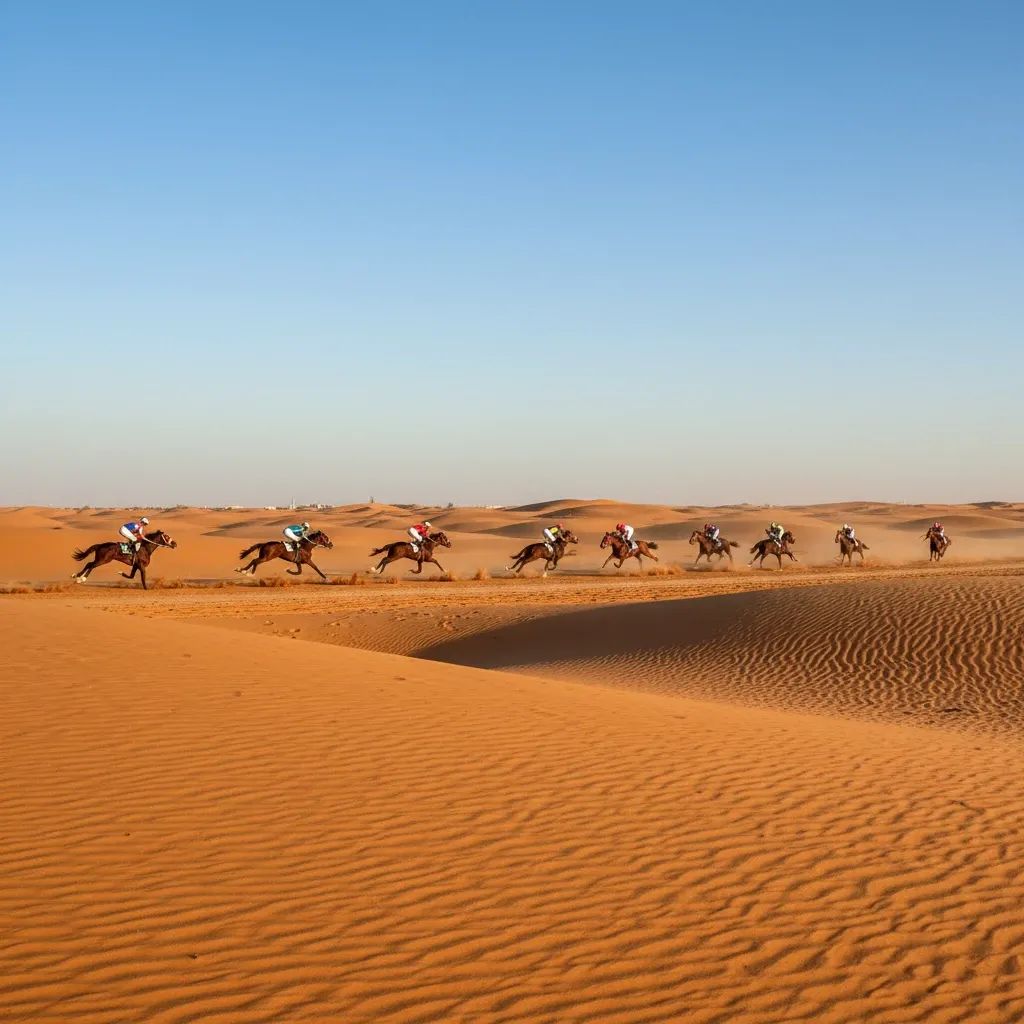
The UAE's equestrian landscape shifted measurably this season when Al Ain Equestrian hosted 123 Arabian horse races—nearly half of all purebred Arabian racing events across the nation. For a venue that operated just five race meetings a decade ago, the expansion signals something larger than administrative growth: a deliberate geographic redistribution of competitive opportunities away from the prestige-dominated Dubai-Abu Dhabi corridor toward a high-frequency developmental circuit anchoring the country's mid-tier racing economy.
Why This Matters
• Operational accessibility surge: Trainers and owners can base operations locally without managing logistics of transport from other emirates, reducing per-horse costs and unnecessary stress on animals.
• Predictable race calendar: 14 scheduled meetings annually create a year-round destination for participants and spectators rather than sporadic event-driven scheduling.
• Economic injection: Regular race meetings support breeding programs, training facilities, and professional livelihoods for trainers and stable staff across the northern emirates.
The Track's Physical Advantage
The Al Ain Racecourse operates a 2,500-meter natural sand surface—the UAE's largest dirt track—engineered specifically for Arabian horse racing. This distinction matters operationally because different competitive circuits demand different track surfaces. The natural dirt creates a foundation for consistent racing operations, attracting trainers who specialize in Arabian racing disciplines.
The venue expanded methodically over the past decade. Where the club once scheduled five race meetings annually, the current calendar now spans 14 full programs per season, with each meeting typically featuring seven to nine races covering distances from 1,000 to 2,000 meters.
What This Means for Residents
Horse owners and trainers operating in the United Arab Emirates now have practical infrastructure advantages that didn't exist five years ago. The expanded race calendar means more start opportunities for young horses, lower entry barriers for trainers launching competitive programs, and year-round engagement possibilities for equestrian participants.
The club's positioning as a high-frequency venue—rather than an occasional prestige destination—creates consistent opportunities for participation. For residents interested in equestrian sport, this represents measurable expansion of accessible infrastructure and competitive pathways.
The Broader Competitive Ecosystem
Al Ain's 47% dominance across purebred Arabian races reflects a deliberate strategic choice: concentrate institutional resources on purebred Arabian flat racing rather than diversify across multiple disciplines. This creates a high-volume, mid-tier ecosystem functioning as a developmental platform for younger horses and emerging trainers.
Other UAE racecourses serve distinct functions within the national racing structure. Meydan Racecourse in Dubai remains the international prestige anchor for Thoroughbred racing. Abu Dhabi Equestrian Club, established 1966, concentrates on elite-tier competition. Sharjah Equestrian & Racing Club emphasizes show jumping and dressage disciplines alongside racing. Al Ain's specialization in Arabian flat racing volume differentiates its role within the competitive landscape, providing accessibility and frequency that complement rather than duplicate existing venues.
Calendar Proliferation and Year-Round Opportunities
The expansion from five to 14 meetings per decade represents a philosophical reorientation toward consistent programming. More race days mean more start opportunities per horse annually, lower entry barriers for trainers launching young animals, and crucially, year-round engagement for Al Ain residents and equestrian participants across the northern emirates.
With 14 scheduled race days distributed across the season, the club functions as a multi-month destination rather than an occasional event venue. Trainers can structure conditioning programs around a predictable calendar rather than feast-or-famine scheduling. This consistency supports ancillary economic activity across the region.
Investment Signals and Institutional Commitment
For United Arab Emirates residents considering involvement in equestrian sport—whether as owners, trainers, or spectators—the club's 47% market share signals institutional permanence. The sustained calendar expansion and infrastructure improvements demonstrate management confidence in long-term viability and growth trajectory.
The consistent programming and competitive focus indicate financial viability grounded in operational performance rather than speculative expansion. The club's positioning as a dedicated Arabian racing platform suggests sustained institutional backing and commitment to serving the regional equestrian community.
What The Numbers Reveal
The 123 races and 47% market concentration represent more than operational volume. They demonstrate that geographic diversification of sports infrastructure produces measurable impact. Rather than concentrating exclusively in prestige venues, distributed investment in high-frequency, mid-tier operations achieves both accessibility and strategic reach across the broader Arabian horse racing community.
For residents and equestrian participants, Al Ain's expanded programming creates tangible opportunities previously unavailable in the northern emirates—more races to enter, more consistent scheduling for training programs, and more accessible participation pathways. The expansion reflects broader recognition that Arabian horse racing thrives through infrastructure investment aligned with participant needs, not exclusively through prestige positioning.


