
Why This Matters
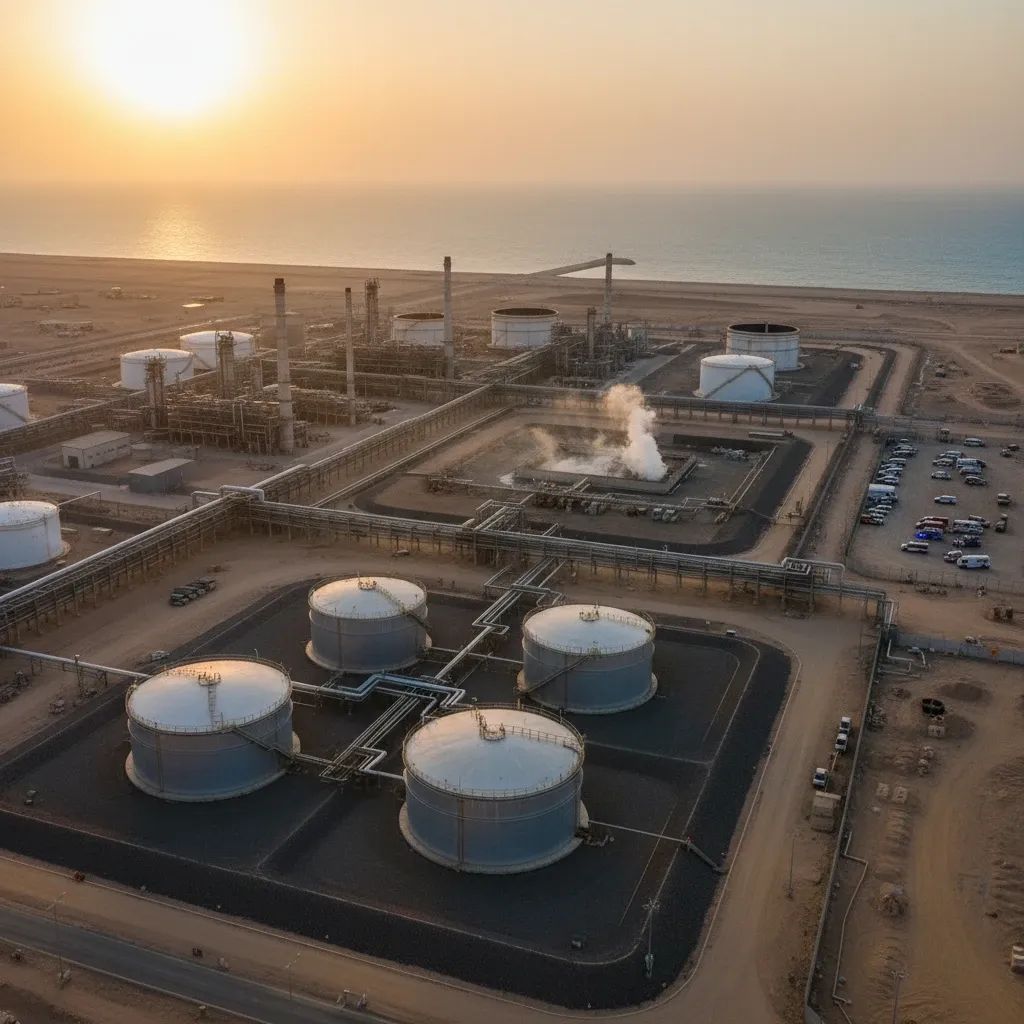
• Habshan temporarily offline: The Middle East's largest gas processing complex suspended operations after debris from intercepted aerial threats triggered a fire—the second shutdown in recent weeks, disrupting domestic supply and export schedules.
• Your energy costs remain stable for now: Petrol remains heavily subsidized, but businesses dependent on stable industrial energy face mounting pressure as uncertainty grows around facility recovery timelines.
• Air defenses successful, infrastructure remains vulnerable: Air defense systems successfully intercepted aerial threats on April 3, yet fragments still reached the critical Habshan facility, exposing gaps in how closely protected the nation's economic backbone really is.
The April 3, 2026 Incident: What Happened
On Thursday, April 3, 2026, the United Arab Emirates faced a significant aerial assault. Air defense systems successfully intercepted incoming aerial threats, though debris from the interceptions struck the Habshan gas complex, triggering a fire at the facility. Authorities responded immediately, and emergency crews extinguished the blaze within hours. Importantly, no injuries were reported from the incident.
The Islamic Revolutionary Guard Corps (IRGC) claimed responsibility for strikes aimed at targets within UAE territory. While regional tensions have escalated with multiple aerial incidents since late February 2026, Thursday's attack marked the second disruption to Habshan operations within a four-week period.
Habshan's Critical Role in UAE Energy Security
The Habshan gas complex handles 6.1 billion cubic feet of gas daily, processing supplies from both onshore and offshore reservoirs. The facility feeds domestic demand and supplies the crude oil pipeline routing to Fujairah, the strategic port engineered to bypass the Strait of Hormuz. When Habshan goes dark, the entire downstream chain contracts.
Thursday's fire forced immediate operational suspension. Emergency crews extinguished the blaze within hours, but damage assessments require time. Engineering teams must inspect processing equipment, verify structural integrity, and clear safety certifications before restart. Based on previous operational suspensions, recovery typically spans 48 to 72 hours if no fresh incidents occur.
The facility's recurring vulnerability raises important questions. A previous incident in March 2026 also forced a temporary shutdown at the same location. Two major incidents at the same critical infrastructure node within four weeks suggests heightened targeting or an inadequacy in existing protective measures. Abu Dhabi National Oil Company (ADNOC) runs the complex with sophisticated protocols, but infrastructure remains exposed to external threats during regional conflict.
Regional Energy Concerns and Global Implications
The Habshan suspension arrives amid broader Middle Eastern tensions. The region has experienced multiple aerial incidents since late February 2026, creating concerns about energy infrastructure stability across the Gulf.
For crude oil, the Strait of Hormuz channels roughly one-quarter of the world's seaborne oil trade—approximately 20 to 25 million barrels daily. The ADNOC currently produces over 4 million barrels per day, targeting 5 million barrels daily by 2027. Prolonged infrastructure disruptions jeopardize those expansion timelines and investor confidence in UAE energy security. Global energy traders watch this space; energy markets reflect concerns about potential supply disruptions.
The UAE has pursued gas self-sufficiency by 2030, with infrastructure expansion projects designed to increase processing capacity. Operational interruptions undermine that strategic objective and force increased reliance on alternative gas sources—an arrangement more costly and less predictable than domestic processing. Each outage effectively impacts long-term self-sufficiency goals.
What This Means for Daily Life and Business in the Emirates
Residents in Abu Dhabi and surrounding areas should understand what Thursday's incident demonstrates: infrastructure vulnerability during regional tensions is a real consideration. For two decades, the nation's energy security has been largely insulated from external threats. Thursday's fire serves as a reminder that even with robust air defenses, risks persist.
Fuel at the pump remains subsidized, so petrol prices will not spike abruptly from this incident. However, prolonged or repeated disruptions could affect government subsidy calculations as replacement supply sourcing becomes necessary.
For business operations, energy reliability matters. Companies paying commercial electricity rates already factor heightened operational risk into planning. Manufacturing facilities, data centers, and industrial processing require stable power supply. Hotels and hospitality operators watch fuel supplies carefully; air conditioning is essential in the UAE. Logistics firms monitor regional conditions carefully; shipping insurance premiums have adjusted to reflect current risk assessments. These costs ultimately affect business operations and consumer services.
ADNOC employees and contractor personnel follow well-established emergency protocols. Thursday's shutdown triggered these procedures without incident. However, repeated disruptions do accumulate stress on equipment maintenance schedules and staff workload. Investors in UAE energy infrastructure watch restoration speed and operational continuity carefully. Confidence in long-term project viability depends on how the nation manages repeated operational challenges.
Defense Capabilities and Strategic Considerations
The United Arab Emirates maintains robust air defense systems, including THAAD and Patriot missile defense capabilities. These systems have successfully intercepted incoming aerial threats, demonstrating strong defensive capability. Yet the incident at Habshan illustrates that even with effective air defense, debris can reach critical infrastructure on the ground.
The nation's geographic position between Western strategic partnerships and regional tensions creates complex security challenges. Defense experts continue to evaluate infrastructure hardening, redundancy measures, and strategic responses to enhance long-term security.
For now, attention focuses on the facility's restart sequence. If conditions remain stable, Habshan could resume normal operations within two to three days, depending on damage assessments and restoration requirements. The facility's recovery will affect domestic energy availability and export schedules in the coming days.


