
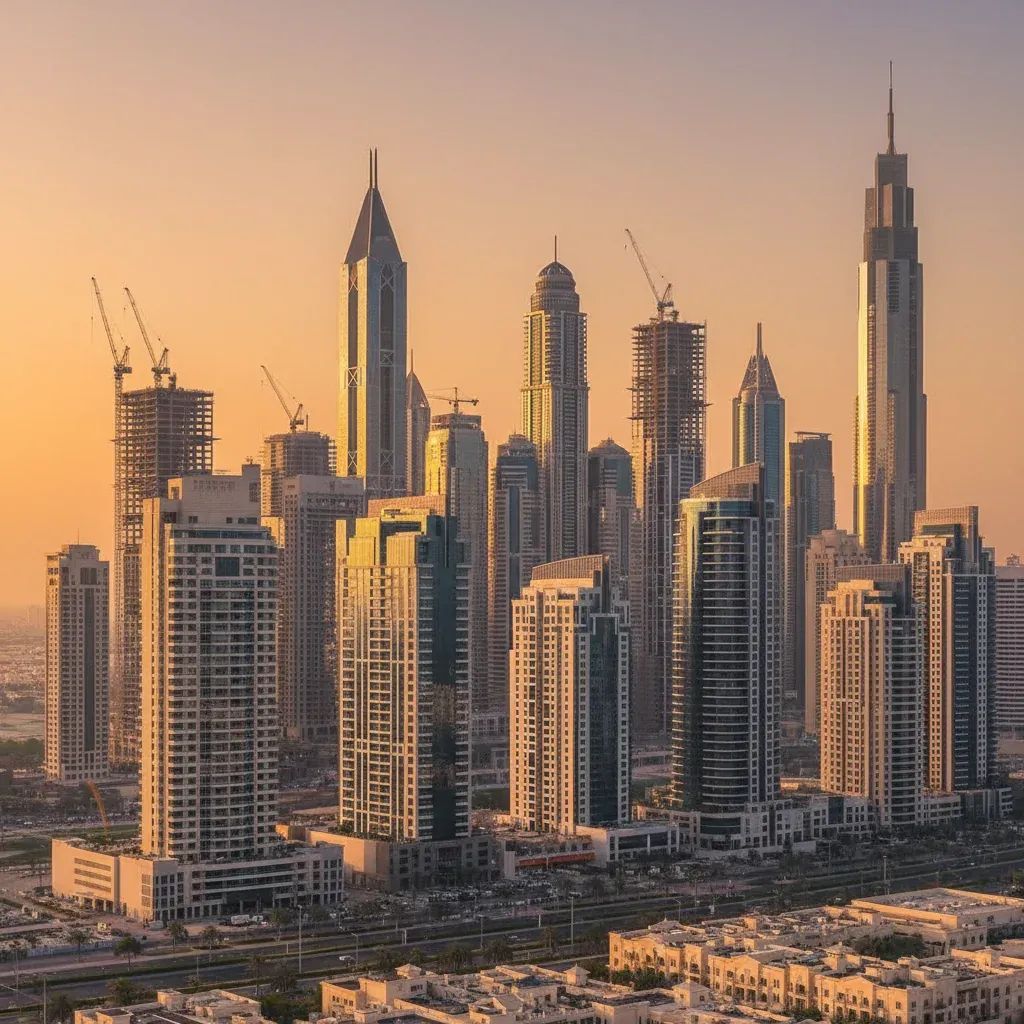
A Turning Point in Dubai's Investment Maturity
Nearly AED 252 billion flowed through Dubai's real estate markets during the first quarter of 2026 — a striking 31% leap from the same period a year earlier. But the headline number masks a more consequential shift: the emirate's property sector has transitioned from post-pandemic recovery into sustained institutional participation, where foreign capital, new investor cohorts, and deliberate policy scaffolding work in concert to underpin growth that outlasts any single market cycle.
Why This Matters
• Foreign investors now command 59% of investment value — up to AED 148.35 billion — signaling deep international trust even amid regional volatility
• Transaction volume surged 6% while values jumped 31%, indicating buyers are making larger, more committed capital bets
• 29,312 new investors entered Q1 2026, a 14% annual increase, representing fresh wealth streams, not recycled capital among existing players
The Investor Transformation Reshaping Dubai's Appeal
The real story beneath the quarterly statistics is demographic. Dubai welcomed 29,312 first-time property participants in the opening three months of 2026 — the largest single cohort influx in recent years. This wasn't a trickle of late adopters; it was systematic capital seeking geographic and regulatory refuge.
The total investor base expanded to 48,448, an 8% expansion, but the composition matters as much as the count. Gone are the days when Dubai's property market relied on a narrow band of speculative traders or regional elites. Today's buyer is more diverse: tech entrepreneurs relocating permanently, multinational families, digital nomads leveraging the long-term golden visa, and family offices deploying wealth preservation strategies across geographies.
Women investors particularly reshaped the landscape. Their portfolio contributions reached AED 32 billion across 15,540 transactions — roughly 9% of total investment value. This proportion, once negligible, now reflects structural progress in financial inclusion and regulatory access that previous cycles never achieved.
GCC nationals contributed AED 12.23 billion through 3,228 deals, up 14% annually, while Arab investors outside the Gulf accounted for AED 12.11 billion via 6,071 transactions. These regional flows underwrite the proposition that Dubai has become less a speculative outpost and more a stable institutional anchor for Middle Eastern wealth management.
Foreign Capital: The Gravitational Center
International investment reached AED 148.35 billion, representing nearly three-fifths of all investment value. The geographic distribution reflects economic geography: Western asset managers seeking yield alternatives to negative real rates in Europe and Japan, Asian family offices diversifying away from domestic property concentration, and Middle Eastern institutions seeking transparent, professionally managed alternatives to less regulated local markets.
Foreign deal flow also accelerated in volume. The number of foreign-originated transactions climbed to 48,445, up 11% annually, indicating not just larger per-transaction sizes but also a broader band of international participants — not just billionaires and mega-funds, but mid-market investors, corporate entities, and international real estate investment trusts recognizing Dubai's value proposition.
This concentration of foreign capital creates both opportunity and resilience. Dubai's property market now operates at institutional scale, demonstrating the emirate's role as a strategic regional hub for international capital and a beneficiary of global diversification patterns. The geopolitical environment during early 2026 provided a significant test of market stability. In early March, following heightened regional tensions, transaction volumes experienced temporary fluctuations — some analytics firms reported modest month-on-month and year-on-year variations — but the underlying institutional infrastructure proved robust. Commercial operations remained normal, government services uninterrupted, and Dubai's sophisticated crisis management apparatus — grounded in advanced digital infrastructure, transparent regulatory frameworks, and proven adaptive capacity — allowed the market to absorb short-term volatility without structural compromise. By quarter's end, recovery was evident, with March transaction activity contributing meaningfully to the quarterly aggregate, demonstrating that any disruption was sentiment-driven and cyclical rather than fundamental. This resilience underscores Dubai's stability as an investment destination and reinforces international confidence in the emirate's capacity to maintain economic continuity even amid regional complexities.
Off-Plan Dominance and Market Confidence
The off-plan (primary) market segment continues to define activity, capturing roughly 70-73% of transaction volume and similar proportions of value. In Q1 2026, off-plan sales generated AED 125.3 billion across 33,793 transactions, increases of 44.4% and 14.6% respectively compared to Q1 2025.
This concentration is not typical speculative excess. Instead, it reflects buyer confidence in developer credibility, regulatory enforcement, and structured payment schedules — confidence that would have been unimaginable during the post-2008 era when construction delays and bankruptcies scarred investor psychology. The Dubai Land Department's contemporary framework has changed the risk calculus. Mandatory escrow protections, transparent pricing schedules, and predictable enforcement mechanisms have reduced information asymmetry and allowed buyers to price pre-completion risk more rationally.
Ready (completed) properties generated AED 126.7 billion during the quarter, growing at a more modest 9.2% annual clip — a deliberate divergence from off-plan's explosive momentum. This suggests that buyers increasingly prefer to discover pricing and upside during construction phases rather than purchasing completed units at crystallized valuations. The shift signals market maturity: off-plan investing is no longer a gamble on exotic projects but a disciplined capital deployment strategy where timing, developer track record, and planned community amenities drive decision-making.
Residential Leadership, Commercial Momentum
Residential transactions dominated the quarter, with 46,145 deals contributing AED 151.13 billion. This persistent residential primacy reflects consistent demand from owner-occupants, yield-focused investors, and lifestyle-driven buyers seeking both primary residences and income-generating assets.
Commercial real estate, though smaller in absolute volume at 1,599 transactions, generated AED 24.6 billion — a healthy indicator that office, retail, and industrial segments remain active despite hybrid work trends disrupting corporate office demand globally. The durability of commercial investment suggests that Dubai's status as a regional trade and logistics hub continues to generate genuine tenant demand and diversified capital deployment.
Average prices per square foot advanced 12.5% year-on-year to AED 1,758, while some villa segments in gated communities experienced sharper appreciation closer to 19%. This uneven price trajectory reveals that location premium, exclusivity, integrated amenities, and architectural distinction now command disproportionate value relative to raw square footage.
The Luxury Inflection
The luxury segment — properties exceeding AED 3 million or serving ultra-high-net-worth clientele — recorded AED 87.71 billion, a 26% annual surge that outpaced aggregate market growth. This outperformance reflects sustained appetite among international wealth managers, family offices, and UHNWI individuals for tangible assets perceived as politically and economically stable.
Branded residences partnered with globally recognized hospitality groups — Armani, Versace, and similar collaborators — have become status markers and investment vehicles simultaneously. Buyers purchase not merely square meters but curated lifestyle integration, architectural heritage association, managed services, and built-in resale positioning unavailable in standardized residential towers. Gated communities offering wellness facilities, private schools, retail attractions, and security perimeters have similarly commanded premiums from families and individuals prioritizing integrated lifestyle coherence and privacy alongside investment returns.
What This Means for People Living in Dubai
For residents and long-term stakeholders in the emirate, Q1 2026's trajectory carries three tangible implications.
On Affordability: Property prices and rental rates will likely remain under persistent upward pressure. The influx of 29,312 new investors and expanding investor base to 48,448 implies accelerating competition for available inventory, particularly at entry-level price points. Mid-market buyers — the demographic most sensitive to price changes — are experiencing compressed negotiating power and constrained choice. Rental markets have followed the same trajectory, with credible sources reporting annual increases in the 8-12% range across key residential neighborhoods, outpacing wage growth for many local workforce segments.
On Homeownership Pathways: The Dubai Real Estate Strategy 2033 explicitly targets homeownership rates of 33% — substantially above current estimates of 18-22% — implying deliberate policy intent to shift from investment-heavy orientation toward genuine owner-occupancy. Government initiatives supporting this transition include accelerating mortgage-backed transaction growth (which reached AED 16.43 billion in February 2026 alone) and targeted financing access for long-term residents holding valid residency permits. For prospective owner-buyers, the pathway is clarifying: off-plan projects with structured payment schedules offer lower entry barriers than ready purchases, though rigorous due diligence on developer track records and verified project timelines remains essential.
On Rental Yields: Dubai maintains yield appeal relative to major global cities. Gross rental yields in prime residential areas typically hover around 4-5.5% annually — substantially above London, New York, or Sydney — while capital appreciation potential persists. However, intensifying competition erodes yield margins. Vacancy rates are ticking upward in secondary neighborhoods as new off-plan completions supply incoming units, creating downward pressure on rents. Selective property selection anchored on location momentum, amenity differentiation, and developer credibility is increasingly critical for investors seeking durable returns.
Market Resilience in a Dynamic Regional Environment
Early 2026 presented tests of Dubai's market stability amid regional developments. During the February-to-March period, regional security dynamics created temporary uncertainty in financial markets. Dubai's real estate sector, like regional markets broadly, experienced a brief reassessment phase in early March.
Transaction velocity initially moderated. Some market analysts noted early March variations in transaction values and volumes. Premium-location properties saw modest pricing adjustments as market participants adopted a cautious stance. Buyer activity paused for reassessment, and brokerages shifted focus toward volatility scenarios.
Yet the institutional architecture held firm. Commercial operations remained normal, government services uninterrupted, and Dubai's advanced management systems — grounded in sophisticated digital infrastructure, transparent regulatory frameworks, and adaptive capacity — enabled the market to absorb short-term fluctuations without structural impact. By quarter-end, March transaction activity, while moderating from earlier months, still contributed positively to quarterly results, indicating disruption was sentiment-driven and temporary rather than fundamental.
For residents and investors, the episode reinforced an established pattern: regional developments occur periodically, but Dubai's economic model demonstrates engineered resilience. The city's proven capacity to navigate the 2008 financial crisis, 2020 pandemic disruption, and early-2026 market adjustments offers compelling evidence that short-term market convulsions are distinct from long-term structural stability. Dubai's track record demonstrates reliable institutional capacity and consistent operational continuity.
Strategic Architecture: D33 and Real Estate Strategy 2033
The Dubai Real Estate Strategy 2033, nested within the broader Dubai Economic Agenda D33, provides institutional scaffolding for this cycle's durability. The framework targets:
• AED 1 trillion in total market value by 2033 (compared to AED 917 billion in 2025, implying 9% annualized growth)
• 70% increase in transaction volume over the decade
• AED 73 billion real estate contribution to Dubai's GDP — roughly double current levels
• 33% homeownership rates, materially above current estimates of 18-22%
The broader D33 Economic Agenda allocates AED 99.5 billion for government expenditure in fiscal 2026 and envisions 100 transformational projects reaching fruition. Real estate functions as a deliberate economic lever, complementing digital transformation, trade expansion, and foreign direct investment attraction. This isn't rhetorical signaling; it's budget-backed, measurable intention with quarterly tracking and performance accountability.
Indicators of Sustainable Maturity
Several qualitative signals suggest the market has transitioned from post-pandemic recovery into durable institutional maturity:
Regulatory Sophistication: The Dubai Land Department's digitized systems and centralized data repositories have introduced genuine transparency. Market participants — brokers, investors, developers — now operate with real-time visibility into transaction flows, price movements, and inventory turnover. This visibility reduces information asymmetry and enables more disciplined capital allocation across investor cohorts.
Developer Standards: Credible developers now operate under mandatory escrow arrangements, transparent pricing, and detailed disclosure requirements. This elevated institutional standards by creating entry barriers for marginal operators while rewarding established firms with proven delivery records. The natural result is an industry pruning that favors institutional confidence and reduces tail risks associated with developer collapse or project abandonment.
Investor Diversification: The market's reliance on a narrow buyer base has fragmented. The 29,312 new investors in Q1 2026 represent 14% cohort growth distributed across geographies (domestic, GCC, Arab, broader international), investor types (HNWIs, UHNWIs, families, entrepreneurs, institutions), and motivations (capital preservation, yield, lifestyle, succession planning). This diversification is a structural stabilizer; no single shock can dislodge the entire market.
Infrastructure Connectivity: Systematic metro expansion, road modernization, and integrated commercial hubs are progressively unlocking previously secondary areas. This geographic distribution reduces concentration risk in established neighborhoods while creating emerging submarkets where younger, price-sensitive buyers can access affordability without sacrificing connectivity or amenity access.
Sustainability and Smart Living Expectations
Sustainability has evolved from marketing novelty into buyer expectation. Eco-friendly buildings, green certifications, smart home technology, and wellness amenities are increasingly standard in new launches rather than premium additions. The shift reflects both regulatory nudging — the Dubai Clean Energy Strategy 2050 and associated building codes — and organic demand from younger, environmentally conscious investor cohorts now entering the buyer pool.
The Real Estate Evolution Space (REES) initiative, leveraging artificial intelligence and centralized market data, is systematically enhancing market transparency and accelerating decision-making velocity. Machine learning algorithms now predict neighborhood price trajectories, identify emerging submarkets, and optimize portfolio construction — capabilities previously reserved for large institutional players, now democratized across the investor spectrum.
The Outlook for Stakeholders
Dubai's Q1 2026 performance crystallizes a market operating at scale: AED 252 billion in transaction value, 60,303 completed deals, 29,312 new investors, and foreign capital comprising 59% of investment value collectively describe an asset class that has transitioned from cyclical boom-bust dynamics toward durable institutional participation.
For residents contemplating purchase or rental commitments, the trajectory suggests continued price appreciation and rental pressure, tempered by incoming supply from maturing off-plan projects and gradual policy initiatives supporting homeownership. Strategic entry points persist for those prioritizing emerging neighborhoods, credible developers, and properties aligned with sustainability and technology trends — areas where demand is shifting structurally rather than episodically.
For investors, the opportunity lies in recognizing that Dubai's market has evolved beyond frontier-market exoticism. It's now a mature, diversified, institutional asset class competing for capital alongside London, Singapore, and Toronto. Returns will likely moderate from pre-2023 levels, but risk has declined correspondingly. The winning strategy emphasizes quality over volume, long-term hold over rapid exit, and differentiated assets over commodity residential units.
For policymakers and developers, Q1 results validate the strategic direction embedded in D33 and the Real Estate Strategy 2033. The market responds positively to transparency, infrastructure investment, and regulatory sophistication — precisely the levers these strategies activate. Sustained momentum requires continuing along this path rather than pursuing short-term supply expansion or speculative incentives.
Dubai's real estate sector has matured. It's no longer a narrative of dramatic surges and sudden collapses, but instead a steady, diversified engine of wealth creation, capital preservation, and urban development — unglamorous in its consistency, but profoundly valuable in its reliability.


