
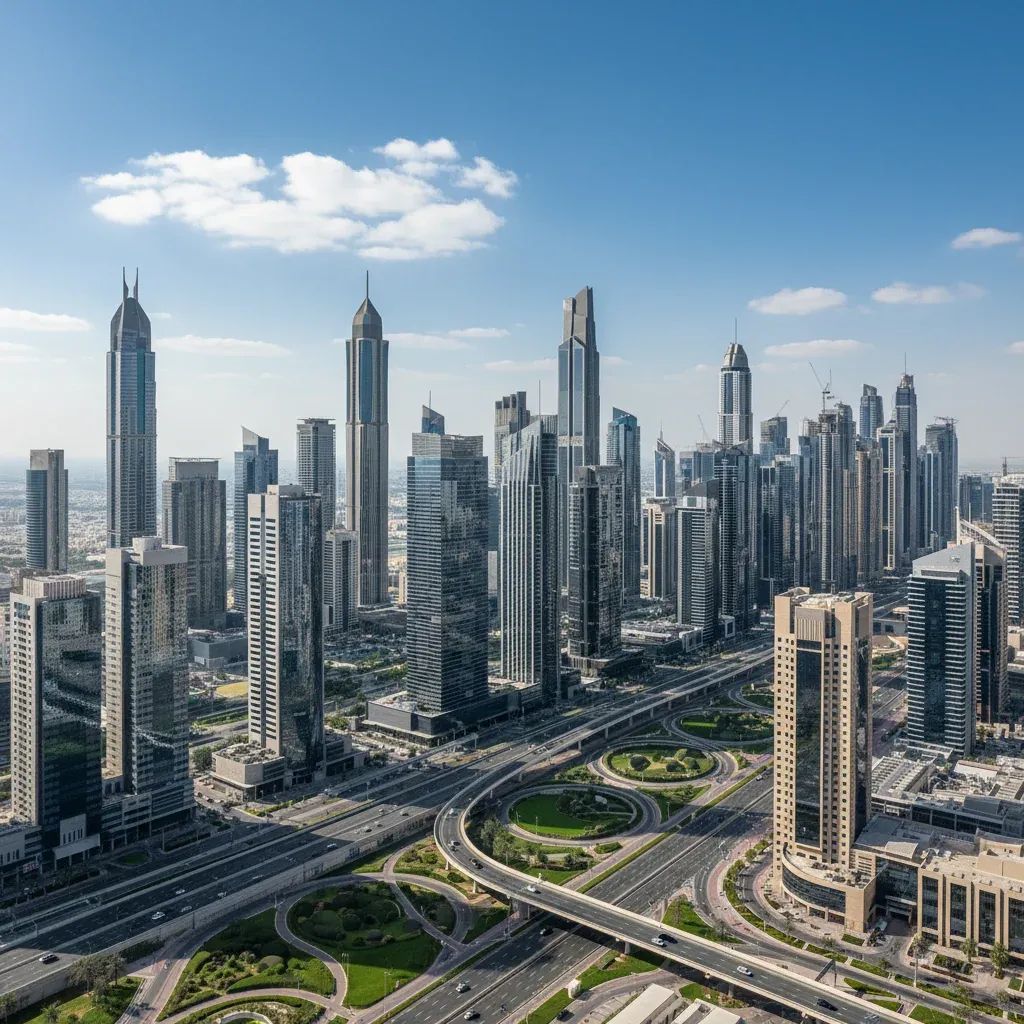
The United Arab Emirates' commercial property sector has reached a milestone not witnessed since 2014, with office transactions in Dubai closing out 2025 at $3.57 billion—a figure that eclipses the previous year's total by 102% and signals a seismic shift in how investors, multinational corporations, and local entrepreneurs view the emirate's business landscape.
Why This Matters
• Office prices now average AED 1,951 per sq ft, up 26% year-on-year—the highest valuation in over a decade.
• Rental rates in DIFC surged 35%, and Downtown Dubai saw 33% hikes, far outpacing the citywide average of 23%.
• Off-plan office deals exploded by nearly 700%, offering buyers staggered payment plans and capital appreciation potential before handover.
• More than 53,000 new companies registered with the Dubai Chamber of Commerce in the first nine months of 2025, fueling unrelenting demand for Grade A workspace.
A Supply Crunch Meets Explosive Demand
Only 36% of the office inventory originally scheduled for delivery in 2025 materialized by the third quarter, according to market trackers. The shortfall has kept occupancy above 90% in prime districts and pushed sales prices into territory not charted since the mid-2010s. Secondary-market offices hit AED 1,685 per sq ft in Q3, a 19% annual jump, while average rents climbed to AED 255 per sq ft by year-end—up 32.4% from December 2024.
The tight supply story is especially acute in the Dubai International Financial Centre and Downtown Dubai, where landlords hold most of the leverage. Lease renewals in DIFC often come with double-digit percentage increases, yet tenants frequently opt to renew rather than hunt for scarce alternatives or pay the 20% to 30% premium commanded by new contracts. Meanwhile, areas such as Barsha Heights recorded 33% rent growth, benefiting from spillover demand when core business districts ran low on available stock.
The Off-Plan Phenomenon
Developers captured this momentum by launching a wave of office projects on flexible payment schedules, waiving Dubai Land Department fees, and in some cases guaranteeing initial rental yields. Off-plan transactions rocketed by nearly 700% compared to 2024, with Q3 alone logging a 464% increase. The pricing advantage is substantial: off-plan units typically trade 15% to 30% below completed equivalents, granting buyers the chance to lock in appreciation as construction advances.
Analysts attribute the off-plan surge to a widening gap between what the market needs and what is ready for immediate occupancy. First-time investors and expatriates drawn by 10-year Golden Visa eligibility for property purchases above AED 2 million view these pre-delivery opportunities as a hedge against further price escalation. Escrow protections administered by the Real Estate Regulatory Agency have reinforced confidence, making off-plan commitments less speculative than in previous cycles.
What This Means for Tenants and Occupiers
For companies scouting workspace, the dynamics are stark. High-grade buildings with energy-efficient layouts, ESG certifications, and advanced connectivity infrastructure command premium rates, and landlords face little pressure to negotiate. The business services sector alone accounted for 41% of total demand in the first three quarters of 2025, and multinational firms continue to establish or expand regional headquarters in Dubai, viewing the city as a regulatory-friendly alternative to Hong Kong and London amid those markets' prolonged downturns.
RERA introduced a Rental Index in March 2024 to cap renewal increases at 20% when current rents sit significantly below prevailing benchmarks, yet the regulation does not suppress new-lease pricing. Tenants signing fresh agreements in DIFC or Downtown Dubai often confront rates that exceed renewal figures by a wide margin, creating a two-tier pricing structure that rewards incumbents but challenges newcomers.
Relocations from costlier or less stable jurisdictions have accelerated. The UAE's GDP is projected to expand 4.5% in 2025, and more than 260 foreign companies joined the Dubai Chamber of Commerce roster in the first nine months alone. Each arrival increases competition for the finite stock of world-class office space, reinforcing the landlord-favorable environment that has persisted throughout the year.
Regional and Global Context
Dubai's 102% sales surge and 700% off-plan leap outpace most peer markets in the Gulf Cooperation Council. Riyadh achieved 98.5% Grade A occupancy by Q4 2025, and Abu Dhabi posted 97% occupancy for top-tier assets, yet both cities anticipate substantial new supply by 2027 that could ease pricing pressure. Kuwait City's occupancy rebounded to 87%, driven by stronger economic activity, though rents remain modest by Dubai and Riyadh standards.
On the global stage, Manhattan recorded 41.9 million sq ft of leasing activity in 2025—the busiest year since 2019—but overall vacancy sits near 14.8%, nearly double pre-pandemic norms. Singapore's Core CBD Grade A segment delivered a 2.9% rent gain with vacancy at 5.2%, a picture of stability rather than explosive growth. London's vacancy rate hit a 20-year high of 10.6% in early March as new completions flooded the market, while Hong Kong's Grade A rents are forecast to decline 7% to 9% amid an availability rate approaching 22%.
Against this backdrop, Dubai stands out for the convergence of constrained supply, robust business formation, and investor appetite that treats the emirate as a safe harbor. The city's legal framework—transparent title registration, streamlined permitting, and progressive visa policies—reinforces its appeal to capital seeking yield and growth in an uncertain geopolitical climate.
Outlook and Developer Response
Market observers expect similar patterns to persist into 2026, with off-plan launches continuing to absorb demand that ready inventory cannot satisfy. Developers are prioritizing smart-building technology, ESG compliance, and flexible floor plates to attract tenants willing to pay for modern amenities. Payment plans stretching beyond handover remain common, lowering the barrier to entry for small and mid-sized investors who might otherwise be priced out.
High-quality completed stock will stay constrained unless a significant wave of deliveries arrives ahead of schedule—a scenario that current construction timelines make unlikely. Buyers and tenants alike are recalibrating strategies: investors hunt for pre-delivery discounts and capital-appreciation plays, while occupiers weigh the cost of premium locations against the operational advantages of proximity to clients, regulators, and talent pools.
The AED 13.1 billion in office sales recorded in 2025 represents more than a cyclical rebound; it reflects structural shifts in how global enterprises allocate capital and where they anchor operations. For residents and business owners in the United Arab Emirates, the message is unambiguous: workspace has become a scarce, high-value commodity, and those who delay decisions risk facing even steeper costs as the next wave of multinational expansions takes shape.


