
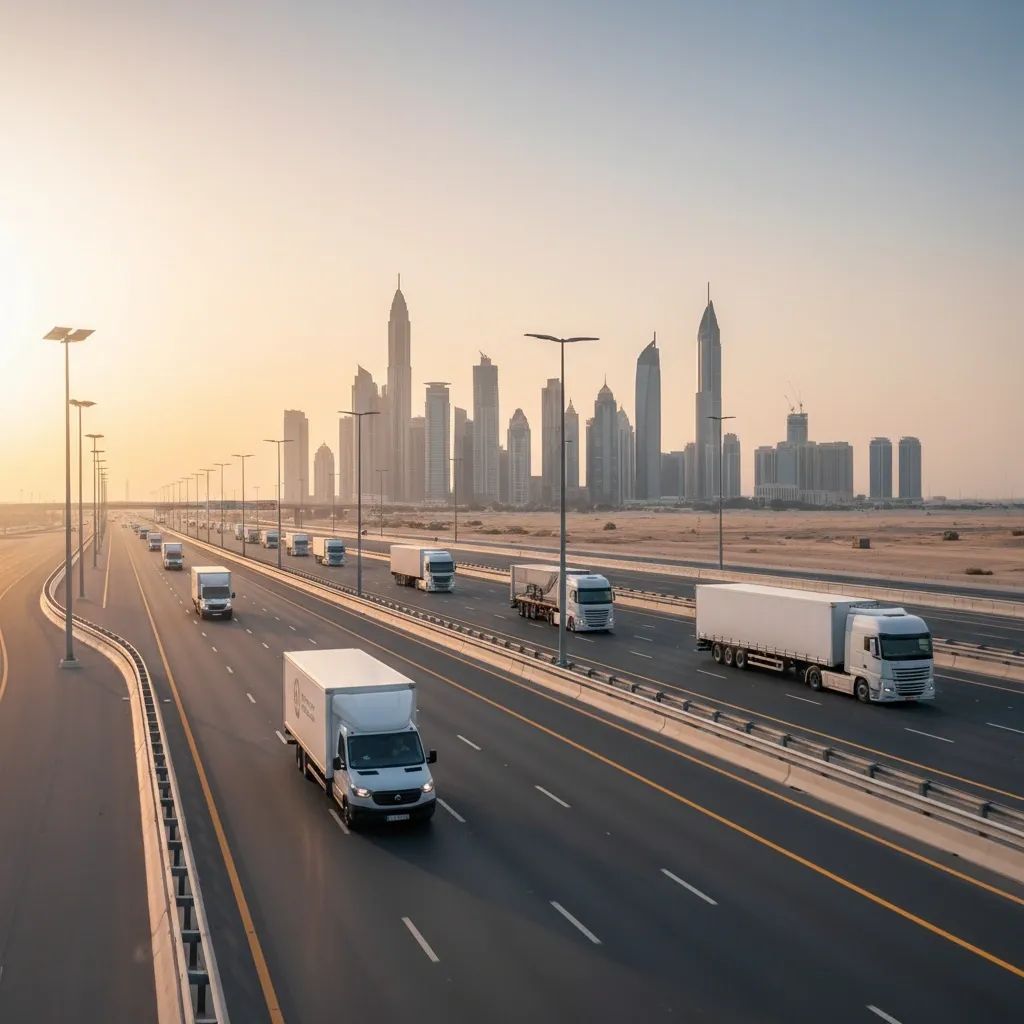
The United Arab Emirates Roads and Transport Authority has recorded a 40% rise in licensed commercial transport companies in 2025, driving the sector’s annual revenues beyond AED 8.4 billion and setting the stage for faster, greener logistics across the emirate.
Why This Matters
• 40% more companies licensed in 2025 spurs competition and lower delivery rates.
• 500,000+ vehicles registered – one for every six residents – easing cargo bottlenecks.
• AED 8.4 billion annual economic input strengthens the United Arab Emirates’ GDP.
• New digital portal reduces licensing approval from weeks to days.
Growth Fueled by Digital Transformation
The United Arab Emirates Roads and Transport Authority points to an accelerated shift towards digital operations as a core driver behind the 25% spike in commercial vehicles this year. From a streamlined digital licensing portal that cuts approval times, to the award-winning Logisty platform for route optimisation and customs clearance, technology has compressed bureaucratic hurdles. Meanwhile, booming demand for app-based delivery services has prompted entrepreneurs to add trucks and vans faster than ever before.
Piloting Autonomous Heavy Vehicles
Under Law No. 9 of 2023, the RTA rolled out executive regulations defining six classes of self-driving logistics rigs and mandating ten technical safety standards. Five designated freight corridors—linking Jebel Ali Port, Al Maktoum International Airport, the rail terminal at Jebel Ali, Dubai Investments Park and Ibn Battuta Mall—now host live trials. Companies operating these vehicles must meet 14 operator obligations, from real-time data logging to secure over-the-air software updates.
Expanding a Greener Last-Mile Network
As part of the Commercial & Logistics Land Transport Strategy 2030, the RTA partnered with Terra Tech Ltd to establish 36 battery-swapping stations for electric delivery bikes in neighbourhoods such as Karama and Business Bay. Private operators like Wize contribute another 61 hubs, while ENOC Group readies additional locations. Each e-bike switching from petrol can cut up to 4 tonnes of CO₂ annually, a meaningful drop in urban emissions.
What This Means for Residents and Businesses
• Faster deliveries: Higher fleet density and smart routing make same-day or two-hour time slots routine.
• Lower shipping costs: More competition in freight translates to reduced rates for e-commerce and small traders.
• Cleaner neighbourhoods: Electric fleet growth eases air pollution and noise along residential streets.
• New roles: Demand rises for EV technicians, data analysts and remote vehicle supervisors as tech reshapes logistics.
Outlook to 2030 and Strategic Goals
The RTA anticipates the sector’s direct GDP contribution doubling to AED 16.8 billion by 2030, powered by 75% technology adoption, a 30% carbon reduction mandate and a 10% boost in operational efficiency. Continued collaboration between the United Arab Emirates Roads and Transport Authority and private partners, along with ongoing regulatory fine-tuning, will be key to sustaining this growth trajectory and cementing Dubai’s position as a global logistics powerhouse.


