
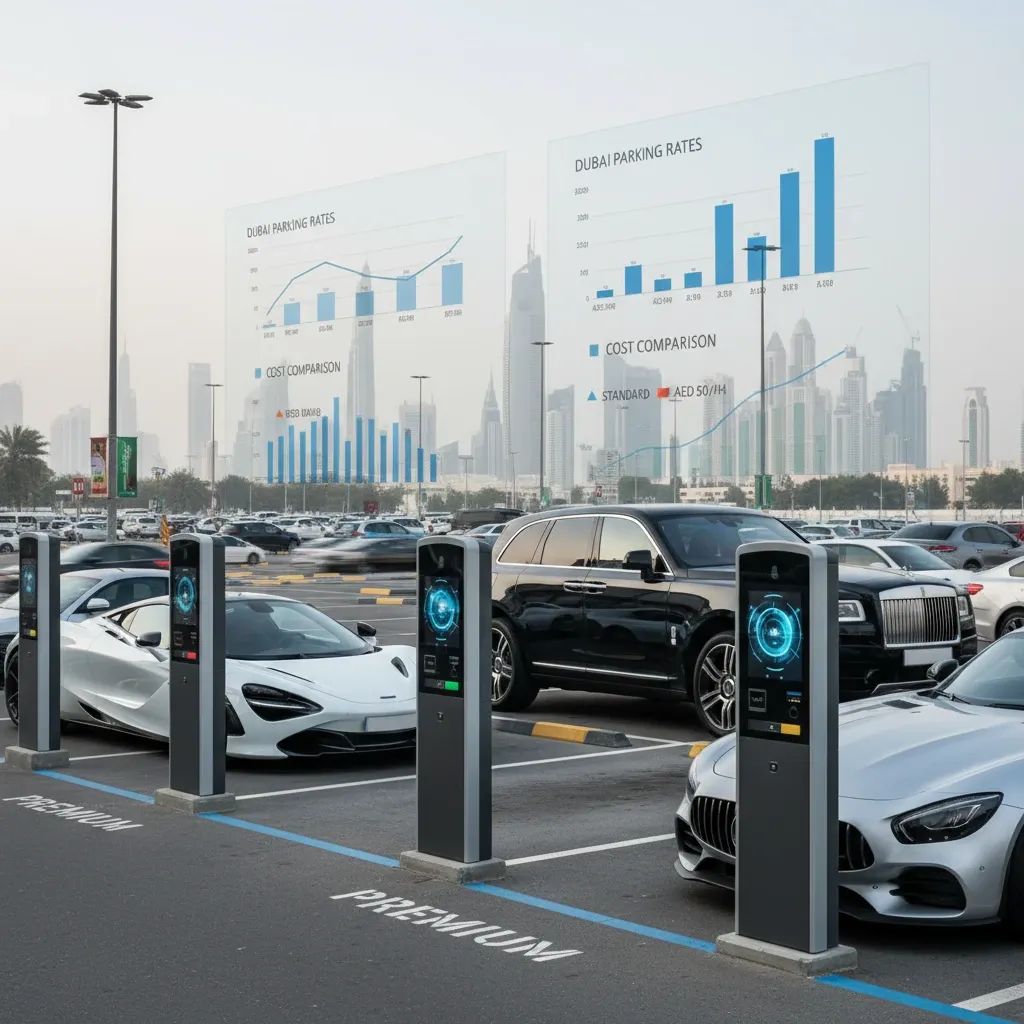
Dubai's parking business delivered strong financial results in 2025. Parkin Company PJSC, which operates every major paid parking facility across the emirate, reported a AED 625.5 million net profit in 2025—a 48% increase from the previous year—on revenues of AED 1.326 billion. For residents and commuters, these results reflect significant tariff changes that will impact daily parking costs.
Key Takeaways
• Parking fees have increased significantly: The weighted average hourly rate jumped 51% to AED 3.03 following tariff changes in April 2025, with peak-hour rates now reaching AED 25 per hour in some zones during major events.
• Enforcement technology has expanded: Parkin operates 27 smart inspection vehicles equipped with automated number plate recognition cameras that scanned 17.5 million license plates in Q4 2025 alone—a 154% increase—enabling faster violation detection.
• Subscription adoption has grown substantially: 89,300 seasonal cards were active by year-end, up 140% year-on-year, as commuters increasingly opt for fixed monthly rates rather than daily parking fees.
• Shareholders will receive dividends in April: Shareholders will receive AED 343.7 million in cash dividends (subject to approval), reflecting strong cash generation.
How the 51% Rate Increase Affects Your Parking Costs
In April 2025, Parkin introduced a tiered pricing model that restructured how parking fees are charged. The system designates approximately 40% of public parking spaces as "Premium," located within 500 meters of metro stations, in high-density commercial zones, or at major traffic nodes. These spaces charge higher hourly rates, particularly during 8–10 AM and 4–8 PM peak commute times.
The weighted average hourly tariff increased 51% to AED 3.03 by Q4 2025. For practical budgeting: a commuter parking 22 days monthly in a premium zone during peak hours now faces approximately AED 1,320 to AED 1,650 in monthly costs. In contrast, a monthly subscription costs AED 450–600, making subscriptions financially advantageous for frequent parkers.
Should You Choose a Subscription? Calculate your average monthly parking usage. If you park more than 15 times monthly, a subscription typically saves money compared to daily rates. Parkin offers 18 subscription types ranging from one-month to annual plans, all purchasable through web or mobile app with payment options including SMS, WhatsApp, Apple Pay, NOL card, and credit cards.
Understanding Your Parking Options
Parkin's rate structure now includes distinct zone classifications. Premium zones command higher rates during peak hours, while standard zones offer lower rates. Off-peak hours (typically late evening and early morning) charge reduced rates across all zones. To find your parking zone classification and current rates, check Parkin's mobile app or website, which provide zone maps and hourly rate schedules.
Subscription Types Available: Parkin offers multiple plans suited to different commuting patterns:
• Daily passes for occasional parkers
• Monthly subscriptions for regular commuters
• Annual subscriptions offering the lowest per-month cost
• Corporate permits for business employees
• Resident permits for residential zone parking
• Visitor and contractor permits for specific use cases
Each subscription type comes with designated parking zones and usage restrictions. Compare total annual costs before choosing between subscription types and daily parking.
The Business Behind the Numbers
Parkin's operating performance in 2025 reflects strong business results. The fourth quarter generated AED 389.4 million in revenues, up 47% year-over-year, with net profit climbing 53% to AED 183.6 million. The EBITDA margin remained at 60%, indicating efficient operations.
The company's revenue comprises three primary streams: Public parking fees contributed AED 144.5 million in Q4 (a 29% increase), while enforcement fines reached AED 127.1 million (a 65% increase). A third stream—developer-owned parking management—added AED 28.1 million (a 38% increase). This diversified revenue structure provides business stability.
How Enforcement Technology Works
Parkin operates a fleet of 27 smart inspection vehicles equipped with automated number plate recognition (ANPR) cameras. These vehicles scan license plates and cross-reference payment records in real time, enabling rapid violation detection. This technology operates 24/7 without fatigue.
The company issued approximately 810,200 violations in Q4 2025, up 59% year-over-year. Quarterly totals show consistent growth: Q1 (569,000), Q2 (660,000), Q3 (682,000), and Q4 (810,200). Between 80–84% of violations relate to public parking zones. Enforcement revenue grew 65% in Q4 2025 to AED 127.1 million.
What This Means: Overstay violations are now detected quickly through automated systems. Violations generate timestamped evidence, and drivers cannot meaningfully dispute automated records. This enforcement approach significantly reduces the probability of undetected parking violations.
Portfolio Expansion and Future Pricing
Parkin's portfolio reached approximately 229,000 paid parking spaces by year-end 2025, an 11% expansion from the previous year. Public parking spaces increased 5% to 193,200, while approximately 22,600 new spaces were added across all categories, including areas like International City and Discovery Gardens.
For 2026, Parkin plans measured expansion, targeting 5,500–7,500 additional public spaces. Management projects public parking revenue between AED 560–610 million, enforcement fines of AED 420–460 million, and seasonal card revenues of AED 260–280 million, suggesting continued revenue growth.
Key Practical Information for Residents
Current Rate Summary:
• Premium zone peak hours: up to AED 25/hour (during major events)
• Average weighted hourly rate: AED 3.03
• Monthly subscription (typical): AED 450–600
• Monthly cost for 22 daily peak-hour trips in premium zones: AED 1,320–1,650
When to Choose a Subscription:
• You park more than 15 times monthly
• You park primarily during peak hours (8–10 AM, 4–8 PM)
• You prefer payment predictability
• You want to avoid overstay penalties
When Daily Parking May Be Preferable:
• You park fewer than 8 times monthly
• You primarily park during off-peak hours
• You use various parking zones unpredictably
• You have irregular commuting schedules
Finding Zone Information:
• Access zone maps through Parkin's official mobile app
• Check current hourly rates on Parkin's website
• Use the rate calculator to estimate your monthly costs
• Compare subscription options before purchasing
Investment Performance and Market Position
Parkin operates with exclusive rights to Dubai's paid public parking network, enabling consistent profitability. The company's AED 625.5 million net profit on AED 1.326 billion revenue reflects this market structure. Management's proposed AED 343.7 million dividend payout indicates confidence in sustained cash generation.
Additionally, Parkin signed a memorandum of understanding with Saudi Arabia's BATIC Investment and Logistics Company, signaling potential expansion to other Gulf markets where parking infrastructure is less developed.
Looking Ahead: 2026 and Beyond
Growth projections indicate continued expansion driven by planned portfolio additions, sustained tariff levels, and further subscription adoption. However, future growth rates will likely moderate as tariff elasticity limits emerge and infrastructure capacity approaches saturation in high-demand zones.
For residents, staying informed about subscription benefits, understanding zone classifications, and calculating personal break-even points will help optimize parking expenses in the evolving Dubai parking landscape.


