
Fuel Costs Climbing While Crude Sits Abundant—The Infrastructure Crisis Nobody Planned For
The real energy crisis unfolding this March isn't about oil running out. It's about the machinery that transforms raw crude into the jet fuel powering aircraft from Dubai International and the diesel filling trucks crossing the UAE-Saudi border. Global refining infrastructure is breaking under the weight of demand, and the gap between what the world pumps from the ground and what it can actually process has created a peculiar economic squeeze: crude oil remains relatively stable while jet fuel has reached $174 per barrel and diesel prices are up approximately 50% year-on-year. For anyone in the UAE who travels, ships goods, or relies on imported products, this means a slow but steady erosion of wallet space over the coming months.
Why This Matters
• Refining bottlenecks, not crude shortages, are the genuine constraint limiting fuel supply and driving prices skyward despite abundant oil reserves globally.
• Airlines, logistics firms, and importers across the UAE face sustained margin pressure as fuel surcharges become normalized rather than temporary add-ons.
• Structural underinvestment in refining capacity means relief is measured in years, not quarters—pricing pressure will likely persist through 2026 and beyond.
A System Under Strain: Why Crude Abundance Doesn't Equal Fuel Availability
The disconnect between crude benchmarks and refined product prices reveals an uncomfortable truth about modern energy systems: having the raw material is not the same as having the finished product. According to Argus Media analysis, if crude oil had tracked the price trajectory of European jet fuel, Brent crude would currently trade well above current levels. This divergence isn't theoretical—it reflects real scarcity in the production chain.
The Strait of Hormuz remains the world's most critical petroleum corridor, with 15 million barrels of crude flowing through daily alongside 5 million barrels of refined products. Yet despite this throughput, the market faces a paradox. Crude tankers sit offshore with available storage capacity while refineries operate at maximum utilization and still cannot meet global demand for diesel, jet fuel, and gasoline. The problem is not geological; it is industrial.
Modern refinery construction has essentially stalled in developed economies. A single greenfield refinery costs $8-15 billion and requires a decade of planning, regulatory approval, and construction before the first barrel rolls off the line. Environmental regulations have tightened the investment case, particularly in Europe and North America. Simultaneously, older refineries—aging facilities designed for a different era of crude supply and product demand—have been decommissioned rather than upgraded. The United States refining sector hasn't added meaningful new capacity in 15 years. Europe faces similar constraints.
Demand Hasn't Stopped; Supply Cannot Keep Pace
Global aviation recovered faster than capacity could adjust. Post-pandemic demand for international travel and air freight created a surge in jet fuel consumption that caught refineries flat-footed. Concurrent industrial recovery in emerging economies meant simultaneous demand spikes for diesel across transportation, construction, and power generation sectors. The system simply lacks the installed capacity to respond.
Global refining policy decisions have accelerated the crunch. Historically, certain markets exported substantial volumes of refined diesel and gasoline to international markets, acting as a supply valve during regional shortages. Currently, refined product exports are constrained, limiting additional volume precisely when global demand needs it most.
Red Sea shipping disruptions amplified the problem. Houthi operations have forced vessels to reroute around the Cape of Good Hope, adding approximately two weeks to transit times from Asian refinery hubs to European and African markets. The extended voyages increase shipping times and insurance costs. For shipments rerouted around Africa rather than through the Suez route, transit times and associated costs have increased measurably.
Who Benefits From the Squeeze—And Who Pays
Integrated refiners with modern, flexible infrastructure have engineered substantial windfall margins. Companies like Spain's Repsol and Finland's Neste operate sophisticated facilities capable of processing diverse crude grades and rapidly shifting between product types. They purchase crude at global benchmarks and sell refined products at significantly elevated margins. The gap between their input costs and output revenues has widened substantially.
Conversely, smaller refiners, regional operators, and integrated energy companies without flexible refining capacity experience margin compression. They face elevated crude input costs while competing against each other for limited sales opportunities.
The true burden falls on end consumers and businesses dependent on fuel-intensive operations. Airlines absorb fuel costs by layering surcharges onto tickets and freight rates. Logistics firms operating across the UAE and regional markets pass higher diesel costs upstream to shippers and downstream to end consumers through elevated transport fees.
The Ripple Effect for People and Businesses in the UAE
The United Arab Emirates economy is woven through global energy markets. Higher refined fuel costs translate into immediate, tangible impacts on everyday life.
Aviation becomes more expensive. Emirates, Etihad Airways, and flydubai operate long-haul networks with inherently high fuel consumption. Rising jet fuel costs force carriers to implement fuel surcharges—often $20-80 per ticket depending on route and class of service. Cargo operations face steeper charges. Businesses shipping perishables, machinery, or time-sensitive goods from UAE markets to Europe or North America see logistics bills climb incrementally. A family booking a holiday flight or an executive making a business trip will encounter additional fees itemized as fuel surcharges.
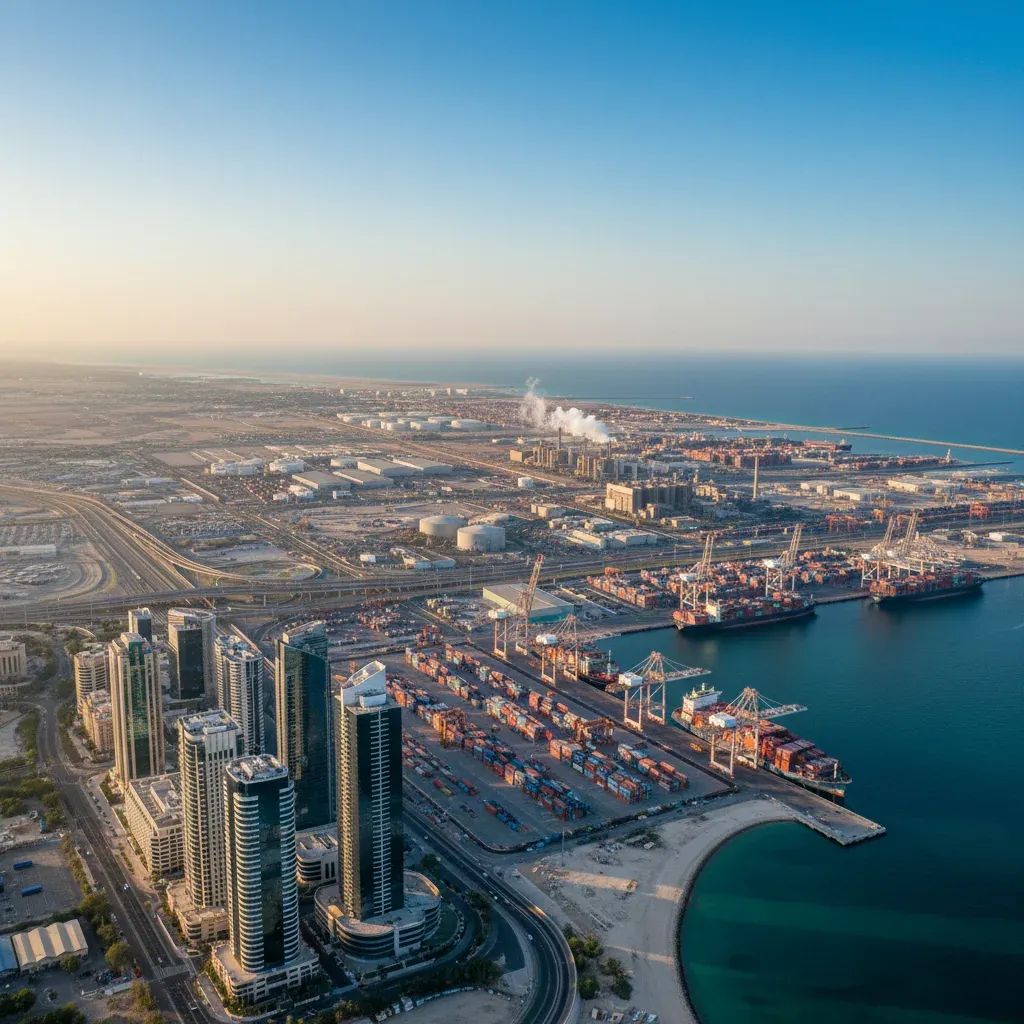
Shipping costs inflate. The UAE's role as a re-export hub for Africa and South Asia depends on cost-competitive logistics. Jebel Ali Port and Khalifa Port handle goods moving across continents, with many shipments routed through Red Sea alternatives due to Suez disruptions. Higher fuel costs for the extended voyages add measurable expense to container shipping. Importers and retailers pass these costs forward, with impacts visible in pricing for imported goods.
Trucking operations across the UAE and bordering regions face sustained pressure. Diesel prices at pumps remain elevated globally, and regional fuel costs for freight operations have climbed substantially. Companies operating logistics networks in the UAE, Saudi Arabia, and Oman adjust pricing to reflect fuel cost reality, eventually visible to consumers through higher prices for imported goods.
Consumer pricing edges upward. Electronics, machinery, perishable food products, textiles—anything moving through complex international supply chains—feels cost pressure. The compounding effects of higher shipping, extended transit times, and elevated insurance costs gradually work through retail channels and consumer prices.
For UAE-based investors, energy sector exposure offers tactical advantages. Holdings in ADNOC or energy-focused investment vehicles benefit from current elevated margins. As long as refining bottlenecks persist, dividend yields and fund returns in the energy sector remain supported.
When Does This Resolve?
Industry consensus points to mid-2026 as the earliest realistic date for meaningful relief, driven by seasonal refinery maintenance cycles freeing up capacity. However, this assumes no demand spikes or additional supply disruptions materialize. Global demand for jet fuel remains robust as aviation continues post-pandemic growth. Maintenance schedules are fixed—refineries cannot arbitrarily extend downtime without risking equipment damage and extended shutdown costs.
Geopolitical factors offer no comfort. Red Sea shipping disruptions show no resolution timeline. Refined product exports remain constrained. New refinery capacity in Western markets faces regulatory opposition, capital constraints, and extended construction timelines. Asian refinery operators are already running at high utilization rates with limited slack for additional production.
The Practical Takeaway for UAE Residents
Energy markets do not respond to political announcements or social media declarations. They respond to physical constraints—the finite capacity of refineries to transform crude into usable fuel, the availability of transportation, and the balance between supply and demand. For the next 12-18 months, residents and businesses should anticipate that fuel-dependent services will remain elevated in cost.
Practical steps worth considering: review transportation and logistics contracts to understand fuel surcharge mechanisms; evaluate hedging options if your business faces sustained fuel cost exposure; adjust travel budgets to account for ongoing surcharges on airfare; and monitor imported good pricing for pass-through effects from higher shipping costs. The refining crisis will not evaporate because markets wish it away. Relief arrives only when global refining infrastructure catches up to demand—a process measured in years and billions of dollars of capital investment, not months.


