
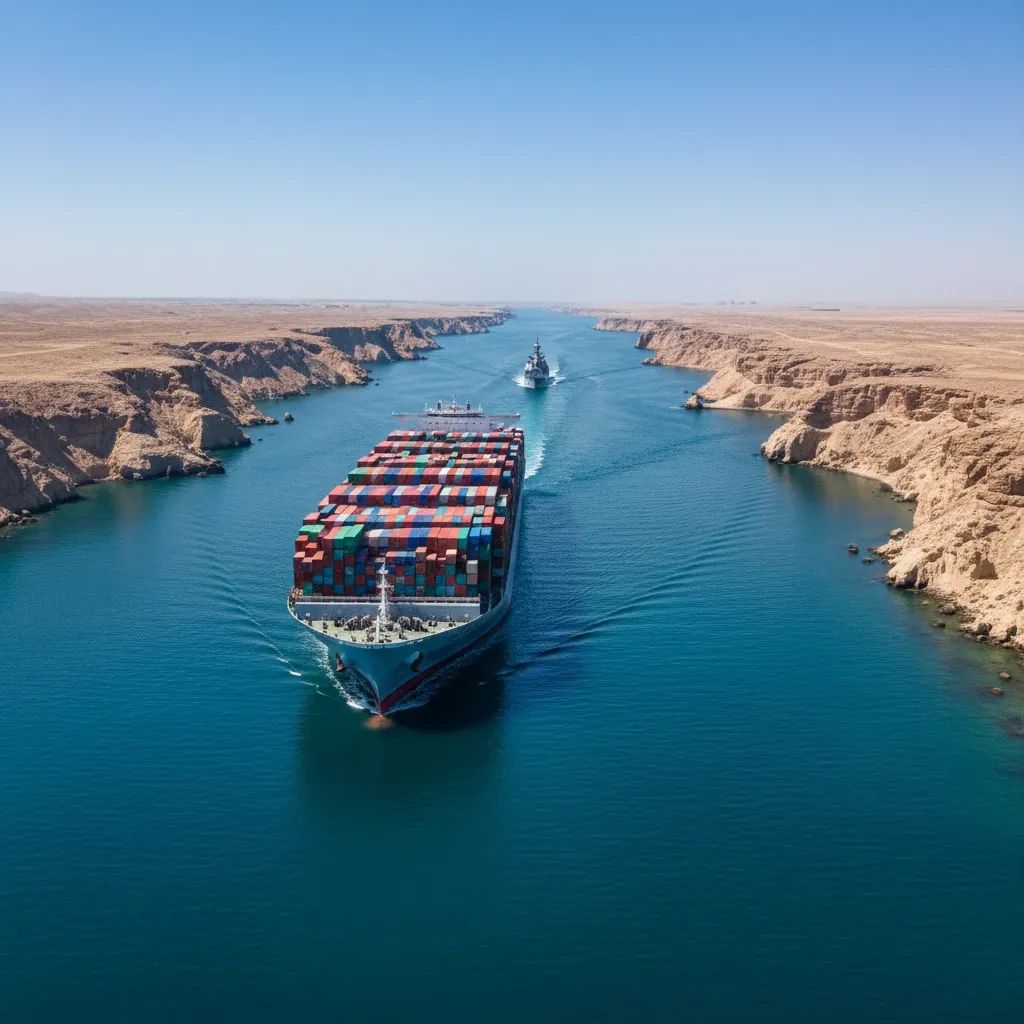
The Strait Situation: Why Britain's Naval Move Matters to UAE Residents
Britain is repositioning military assets in response to shipping disruptions through the Strait of Hormuz, a waterway critical to regional commerce. The United Kingdom Ministry of Defence has moved HMS Dragon, an air-defence destroyer, from the Eastern Mediterranean toward the Persian Gulf—signalling readiness to join international efforts to restore maritime stability, should diplomatic conditions allow.
What's Actually Confirmed
• The UK and France are coordinating on potential escort operations in the Strait of Hormuz
• A ceasefire brokered in April 2026 currently holds but remains fragile and unformalized
• Current disruptions have already affected shipping costs and insurance premiums for companies operating through the strait
• Any multinational escort mission would begin only "when conditions allow," according to official statements—no deployment timeline is confirmed
Why This Matters for the UAE
The Strait of Hormuz channels roughly 21% of global maritime trade by tonnage. When tensions spiked in April 2026, with missile exchanges and tanker seizures, insurance premiums for vessels in those waters doubled within days. Shipping companies rerouted around Africa, adding weeks to Asia-Europe routes. Dubai port operators reported reduced throughput, while fuel prices climbed sharply.
For UAE-based businesses—whether operating through Port Rashid, sourcing components from Asia, or managing just-in-time manufacturing—Hormuz disruptions translate directly into operational costs and supply-chain delays.
A credible international escort presence would theoretically restore underwriter confidence in the waterway, though any actual cost reductions remain speculative at this stage. The real near-term benefit is reduced uncertainty: companies and insurers would gain clarity on whether chaos or stability will prevail.
The Diplomatic Reality: Fragile, Not Resolved
The ceasefire holding since April persists not from resolved disputes but from mutual exhaustion. A two-week truce brokered by Pakistan has been extended twice but never formalized into binding agreement. Fundamental conflicts remain entirely unresolved.
US Secretary of State Marco Rubio has stated Washington awaits Iran's "serious offer" that could transition pause into negotiation. Iranian officials say they will respond "at the appropriate time" without committing to external timelines.
Four core disagreements persist: freedom of navigation (the US maintains naval blockade; Iran restricts transit), nuclear capacity (conflicting demands on enrichment levels), economic leverage (frozen assets and sanctions), and a formal 60-day ceasefire framework to enable deeper talks.
For any escort mission to operate, Iran must accept that international presence is neutral stewardship rather than encirclement. This acceptance remains diplomatically uncertain.
What UAE Businesses Should Monitor Now
Official Guidance: The UAE Federal Transport Authority will publish updated transit advisories and operational protocols as international coordination develops. Companies operating maritime trade should enable notifications through official channels.
Insurance Market Movements: London and regional underwriters regularly publish premium adjustments. Informed operators should track quote changes and request formal rate confirmations from brokers in early June, before potential demand surges.
Diplomatic Signals: Public statements from Tehran's diplomatic corps indicating preliminary acceptance of escort frameworks would suggest progress. Absence of such statements indicates persistent resistance.
Operational Readiness: Official announcements on deployment timelines—currently nonexistent—would provide clarity on when escort services might actually begin.
The Broader Picture
Britain's participation reflects London and Paris recognizing that maritime stability in contested zones requires active commitment. However, any sustained high-intensity operation would depend on substantial allied contributions and formal Iranian acceptance. The current posture is preparatory, not confirmatory.
For the UAE and broader Gulf region, the outcome will determine whether international cooperation can restore commercial predictability or whether great-power competition will increasingly disrupt the shipping infrastructure upon which regional prosperity depends.


