Japan's Prime Minister will propose an energy security framework at the G7 summit in the French Alps next week, focusing on three key principles: free and transparent trade, standardized strategic reserves, and institutionalized dialogue between energy producers and consumers.
Why This Matters for UAE Residents
The proposal arrives amid ongoing Middle East tensions that have raised concerns about energy supply disruptions. Oil prices have remained elevated, and market uncertainty continues to affect energy costs globally. For residents of the United Arab Emirates, how the G7 responds to energy security challenges could influence fuel prices, electricity costs, and the broader business environment.
Japan's Three-Point Framework
Prime Minister Sanae Takaichi will present a proposal addressing three distinct areas:
Transparent Trade: Japan is advocating for concrete mechanisms to ensure free and open energy markets, including coordinated efforts to maintain shipping security and real-time data sharing on production, inventory, and supply movements. This aims to reduce price inflation driven by uncertainty rather than actual supply constraints.
Strategic Reserves: Japan will push for the International Energy Agency's 90-day net import standard as a benchmark for all G7 members and developing energy-importing nations. This ties to Japan's POWERR Asia initiative, designed to help regional countries build sustainable energy stockpiles without straining government budgets.
Producer-Consumer Dialogue: Tokyo proposes standing mechanisms for early warning systems, alternative route identification, and pre-agreed coordination protocols between major producers and consumers. This framework would create predictability rather than allowing each supply concern to escalate into geopolitical tension.
The UAE's Strategic Position
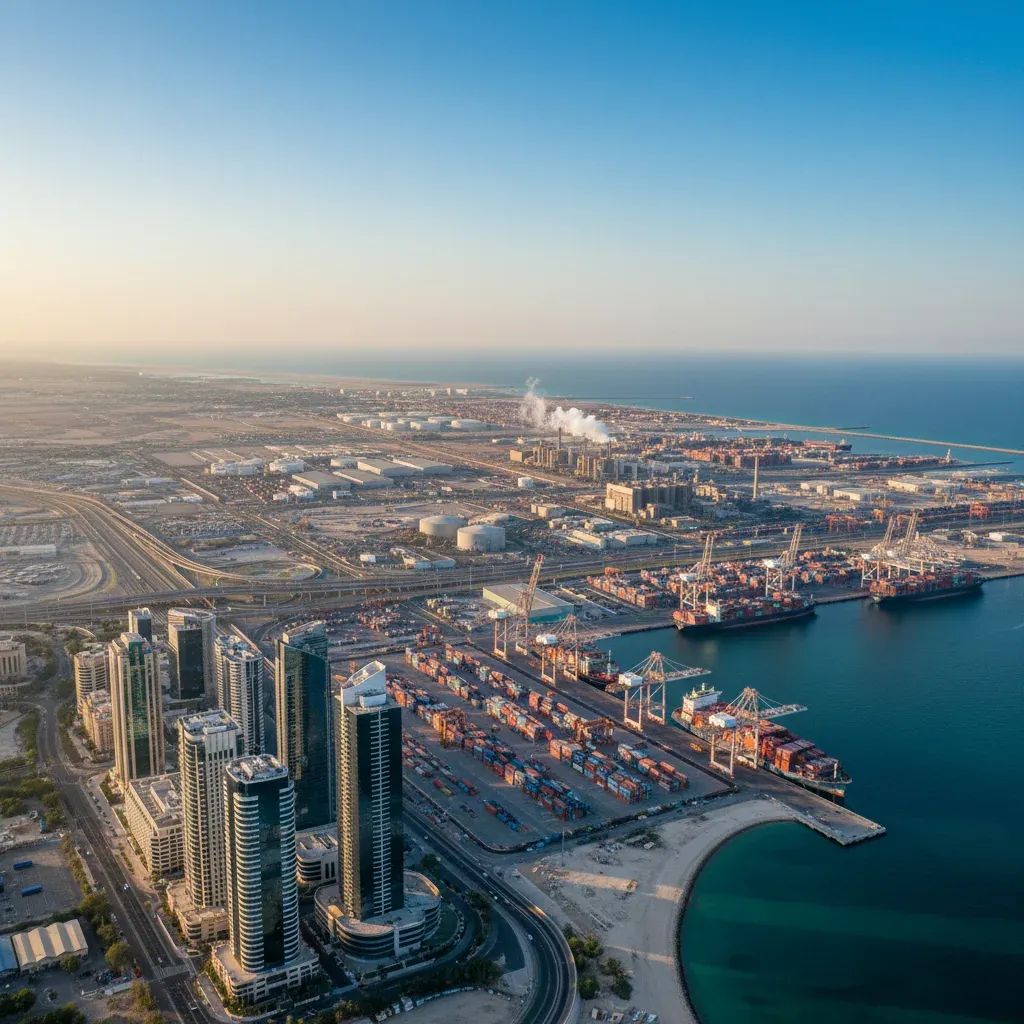
The United Arab Emirates occupies a significant position in this discussion. As a major oil exporter, the UAE's energy exports and pricing stability are directly affected by global supply frameworks. In recent years, the Emirates has pursued a dual strategy: maintaining hydrocarbon production while aggressively expanding clean energy capacity beyond 7.7 GW of renewable energy, with targets exceeding 23 GW by 2031.
Masdar, the national clean energy company, is deploying capital internationally to reach 100 GW of renewable projects globally by 2030. If Japan's framework gains traction and encourages systematic reserve management and price stability, UAE energy exports could face steadier long-term demand. Conversely, if the framework reduces extreme price volatility, it may moderate the premium periods that historically accompany supply disruptions.
The proposal's emphasis on supply route diversification—reducing reliance on the Strait of Hormuz—aligns with UAE interests in building redundancy into global energy logistics. A less critical single chokepoint reduces geopolitical vulnerability for all participants.
Implications for Residents and Businesses
For people living in the UAE, the practical impact depends on implementation. Energy bills for residents have been affected by global supply concerns. If the G7 framework succeeds in creating more predictable energy markets, that stability could benefit households and businesses through reduced cost volatility over time.
For businesses, supply chain certainty matters most. Whether energy costs remain elevated but predictable, or continue experiencing sharp swings, clarity enables better planning and investment decisions. The G7's indication that clean energy infrastructure will be treated alongside traditional energy security could also create financing and partnership opportunities for the UAE's expanding renewable sector.
What Remains Uncertain
Real implementation challenges persist. Strategic reserve coordination requires sustained government commitment during periods of apparent stability, when emergency measures seem less urgent. Producer-consumer cooperation depends on alignment of interests across nations with competing geopolitical priorities.
Russia continues pursuing independent energy strategies, and OPEC members hold divergent views on demand recovery and price management. Whether these competing interests can align behind Japan's framework—or whether geopolitical divisions will limit its effectiveness—remains an open question.
The Outlook
Japan's proposal represents a shift from crisis response toward systematic risk management. Rather than reacting after supply shocks occur, nations would build buffers continuously and coordinate responses earlier. Whether governments maintain the discipline to sustain such a framework during calm periods will ultimately determine its effectiveness.
For the United Arab Emirates, the summit's outcome will influence whether energy exporting becomes a more stable, rules-based business or whether geopolitical concerns continue creating market volatility. Long-term stability generally serves producers by supporting investment and diversification—the path the UAE appears to have chosen through its renewable energy expansion. Japan's proposal offers one potential framework to support that strategy.