The United States Central Command has intensified its enforcement of Iran port restrictions, marking a critical inflection point for supply chains dependent on the Strait of Hormuz—the chokepoint through which one-fifth of global petroleum flows and a artery sustaining the United Arab Emirates economy. On Friday, American naval forces immobilized the Mozambique-flagged tanker Lavine after repeated crew defiance, while boarding and inspecting the Comoros-registered Charminar in the Arabian Sea, signaling a shift toward more aggressive maritime policing across the region's most contested waterways.
Why This Matters
• Fuel and transportation costs in the UAE are directly linked to Strait stability: Disruptions in this corridor translate swiftly into petrol price fluctuations and higher logistics expenses for imported goods.
• Insurance and shipping premiums have climbed in recent weeks: Maritime insurers have recalibrated risk premiums for vessels transiting these waters, with costs eventually reaching consumer prices across retail and hospitality sectors.
• Supply chain unpredictability will likely persist through autumn: Businesses operating from the United Arab Emirates must budget for extended transit times and factor heightened maritime risk into operational planning.
The Escalation Tempo and Its Context
The latest boarding and disabling operations reflect a deliberate enforcement posture that has materialized over recent weeks. Since CENTCOM reactivated its blockade on July 14, American naval assets have engaged in enforcement operations across the region. Historical data from the blockade's first iteration, which ran from mid-April through mid-June, shows American forces redirected over 140 compliant vessels while immobilizing 9 non-compliant ones. The first phase peaked dramatically on May 22 when the U.S. Navy turned away 94 vessels in a single week—an unsustainable surge that revealed the operational limit of both enforcement capacity and merchant risk tolerance.
The dramatic reduction in maritime traffic—from the 94-vessel daily peak in May to significantly lower baseline levels—demonstrates how blockade psychology operates. Shipping firms have internalized the risk and largely abandoned the Strait outside of explicitly approved corridors. The current blockade phase involves fewer confrontations because most commercial actors have already decided the Strait presents elevated risk.
How Economic Friction Reaches Households and Businesses in the UAE
For the United Arab Emirates, the blockade's mechanics are no longer abstract maritime politics. They are manifesting as measurable costs embedded in everyday transactions.
Energy pricing operates on global supply perception. When the Strait becomes restricted, global oil traders immediately reassess available inventory. Refineries worldwide compete for supplies routed through alternative corridors, potentially bidding up prices in the process. That pressure flows into Dubai's refined product markets and eventually to petrol stations where residents fill vehicles. Supply-side disruptions in this critical corridor can translate to noticeable household budget impacts across the United Arab Emirates population.
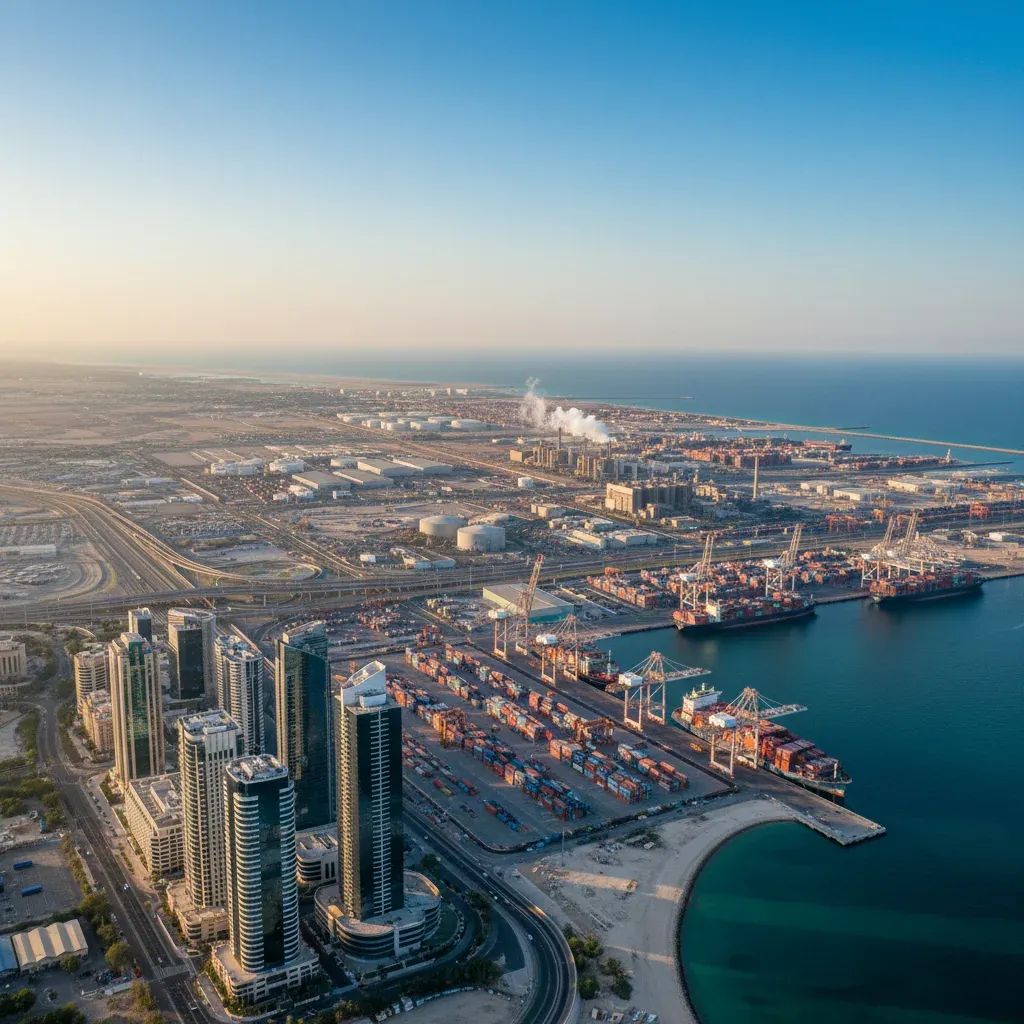
Shipping logistics have become more complex. Maritime insurers have recalibrated risk assessments for any vessel routing through the Strait. A container bound for Jebel Ali Port now faces insurance cost adjustments contingent on the vessel's routing, age, and flag of registry. These incremental costs flow into the cost structures of importers, who distribute them across their supply chains, eventually reaching retail shelf prices for imported goods—food products, electronics, clothing, construction materials. For United Arab Emirates consumers, this appears as gradual price adjustments rather than shocking spikes.
Supply chain timing has become unpredictable. Logistics operators based in the United Arab Emirates and managing regional distribution now face routing dilemmas. Direct Strait transits offer speed but carry elevated risk of inspection delays or diversion. Alternative routes through the Suez Canal add transit time to journeys. Companies with time-sensitive cargo face a challenging choice between risk and delay. Construction projects waiting on materials, retailers managing inventory, manufacturers stocking components—all now operate under dampened timing confidence. This unpredictability imposes real costs through inventory management, project scheduling, and customer service challenges.
The Broader Regional Military Landscape
The blockade enforcement operates within a complex regional security environment. Intelligence assessments indicate that tensions across the region remain elevated, with multiple parties asserting authority over key maritime corridors. For shipping operators, navigating these waters requires managing multiple risk factors simultaneously. Yemen-based maritime incidents have been reported separately, adding another layer of complexity to alternative routing options through the Red Sea.
Diplomatic Channels Remain Active Despite Military Operations
Beneath the military operations, diplomatic efforts continue at multiple levels. Oman has been involved in regional diplomatic discussions regarding potential mechanisms for maritime stability and territorial clarification. These negotiations have not yet produced breakthroughs, but the fact that discussions continue at all suggests diplomatic engagement remains part of the regional calculus.
The United Arab Emirates government maintains strategic interests in rapid de-escalation. Extended disruption threatens investor confidence and economic stability—both foundational to the nation's regional and global standing. Emirati diplomacy could prove instrumental in facilitating communication between regional and international stakeholders, positioning the UAE as a constructive voice in regional maritime policy discussions. The incentive structure supports active Emirati engagement in de-escalation efforts.
Operational Adjustments Spreading Across Economic Sectors
Aviation operators based in the UAE are reviewing fuel cost scenarios given regional uncertainties. Airline margins on international routes depend critically on fuel efficiency and pricing predictability. Regional volatility affects jet fuel costs and operational planning, influencing per-seat profitability calculations for carriers competing on price-sensitive routes.
Construction companies with projects requiring imported materials are communicating with supply partners regarding potential delivery timing adjustments. Some operations are reviewing procurement strategies to account for maritime uncertainties.
Retail operations are managing inventory planning more carefully, accounting for extended supply chain timing. This increases working capital management complexity and influences operational planning.
For UAE-based logistics firms, the operational environment has become more complex. Route planning now requires evaluating multiple options—primary corridors alongside alternatives—with different risk and timing profiles. Freight operators are transparently communicating potential timing adjustments to clients and managing expectations around delivery windows.
The Waiting Period and What to Monitor
Current assessments suggest this maritime situation will persist through the autumn months, barring significant diplomatic breakthrough or material policy shifts. The underlying issues between key parties remain unresolved, suggesting continued enforcement operations and operational uncertainty.
Energy markets will remain subject to supply-side concerns. Any escalation or significant incident in critical maritime corridors could trigger price volatility. Conversely, any diplomatic progress could produce market corrections.
Supply chain planning horizons should extend through the autumn at minimum. Organizations managing logistics into or out of the United Arab Emirates should account for elevated Strait complexity and budget operational considerations accordingly.
Residents should anticipate gradual rather than dramatic economic effects. Price adjustments will likely be modest and gradual; import costs will adjust over time; delivery timelines may extend. The cumulative effect is measurable over months rather than sudden.
The maritime situation is ultimately a geopolitical problem unfolding at regional and international levels. Its most immediate consequences, however, are economic and operational—tangible realities for businesses and households across the United Arab Emirates. How residents and organizations adapt over the coming weeks will determine whether the disruption becomes merely operationally inconvenient or more structurally significant to regional economic performance.