
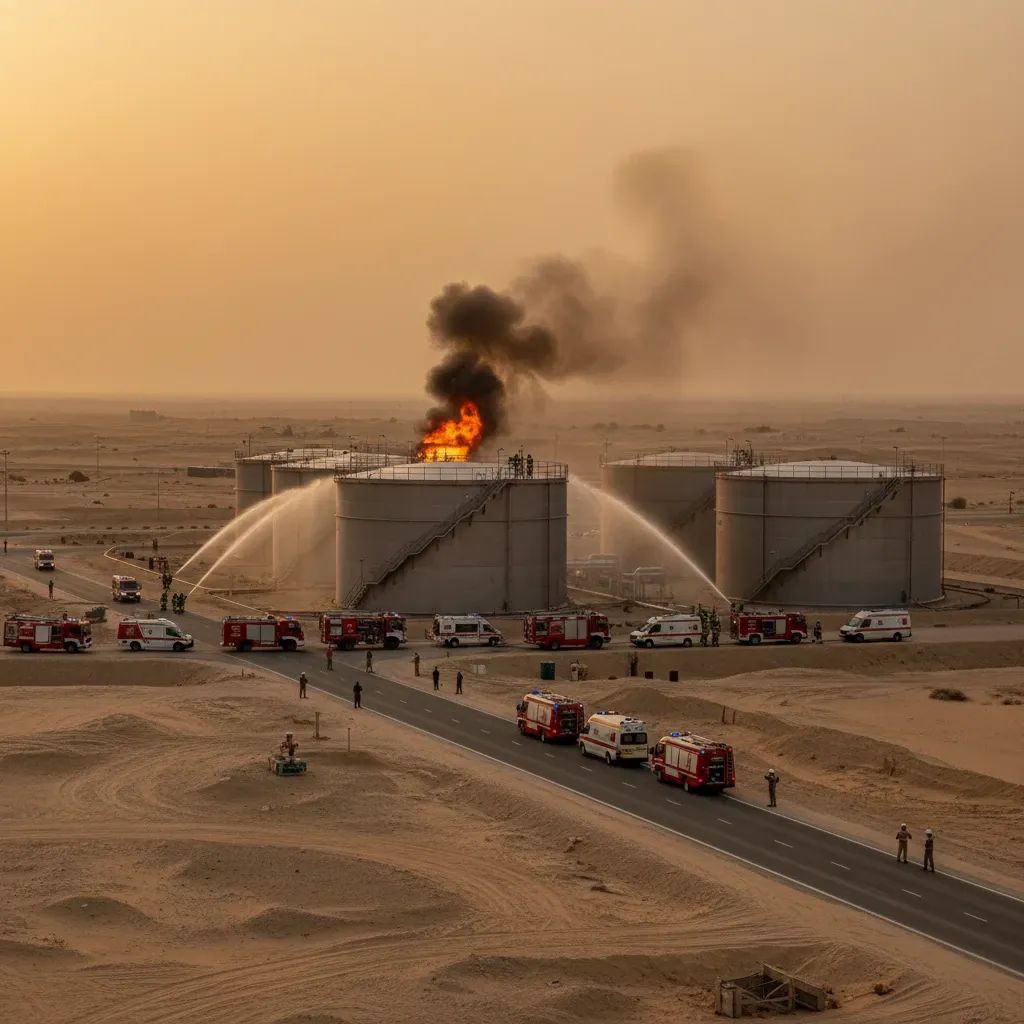
Two expatriates have been killed by shrapnel from a ballistic missile intercepted over Abu Dhabi, with three others injured in the incident. A Pakistani national and an Indian national died when air defense systems successfully intercepted an incoming missile, but the falling debris from the interception caused civilian casualties. The incident highlights a real risk that residents in the United Arab Emirates face during periods of regional missile activity.
The Immediate Facts
Air defense systems in the Emirates operate to protect against incoming ballistic threats. When these systems successfully intercept missiles, the resulting debris falls to the ground below. Unlike direct missile strikes, which can be targeted, falling shrapnel from air defense operations disperses across populated areas with limited predictability. Today's casualties underscore that defensive operations, while necessary, carry civilian risks that deserve practical attention.
What This Means for Expatriate Workers
The two deceased individuals came from India and Pakistan—nations representing the largest expatriate populations in the Emirates. The injured included nationals from the UAE, Jordan, and India. This incident affects the millions of migrant workers employed across construction, healthcare, hospitality, finance, retail, transportation, and skilled trades throughout the Emirates.
Workers in outdoor sectors—construction sites, port facilities, industrial zones, and labor housing—face the most direct exposure during missile incidents, not because they are targets but because their workplace locations place them in populated areas where defensive operations occur. Many expatriate workers, particularly labor migrants, may not be familiar with appropriate safety responses during missile alerts, as they may not have experienced similar situations in their home countries.
Practical Safety Guidance
When ballistic missile threats are detected and air defense systems engage, the appropriate civilian response is to move indoors immediately, away from windows and exterior walls, and away from rooftops or open spaces. Most buildings provide basic structural protection; the priority is getting inside and away from exposed areas.
Employers in labor-intensive sectors should ensure their workers understand these basic procedures and know where to shelter if alerts occur during working hours. Clear communication about what to do during missile warnings can make a significant difference.
Insurance and Compensation Questions
Families of the deceased and injured now face questions about financial recovery. Many expatriate health and life insurance policies contain exclusions for war-related injuries or military operations, which may affect claims. Affected families should contact their country's consular offices immediately to understand available support and compensation pathways. The UAE government has provided financial assistance and repatriation support in previous security-related incidents, though specific procedures and eligibility should be confirmed through official channels.
Individuals concerned about insurance coverage should review their policies directly and consult with their employers or insurance providers about what protections may apply to incidents of this nature.


