
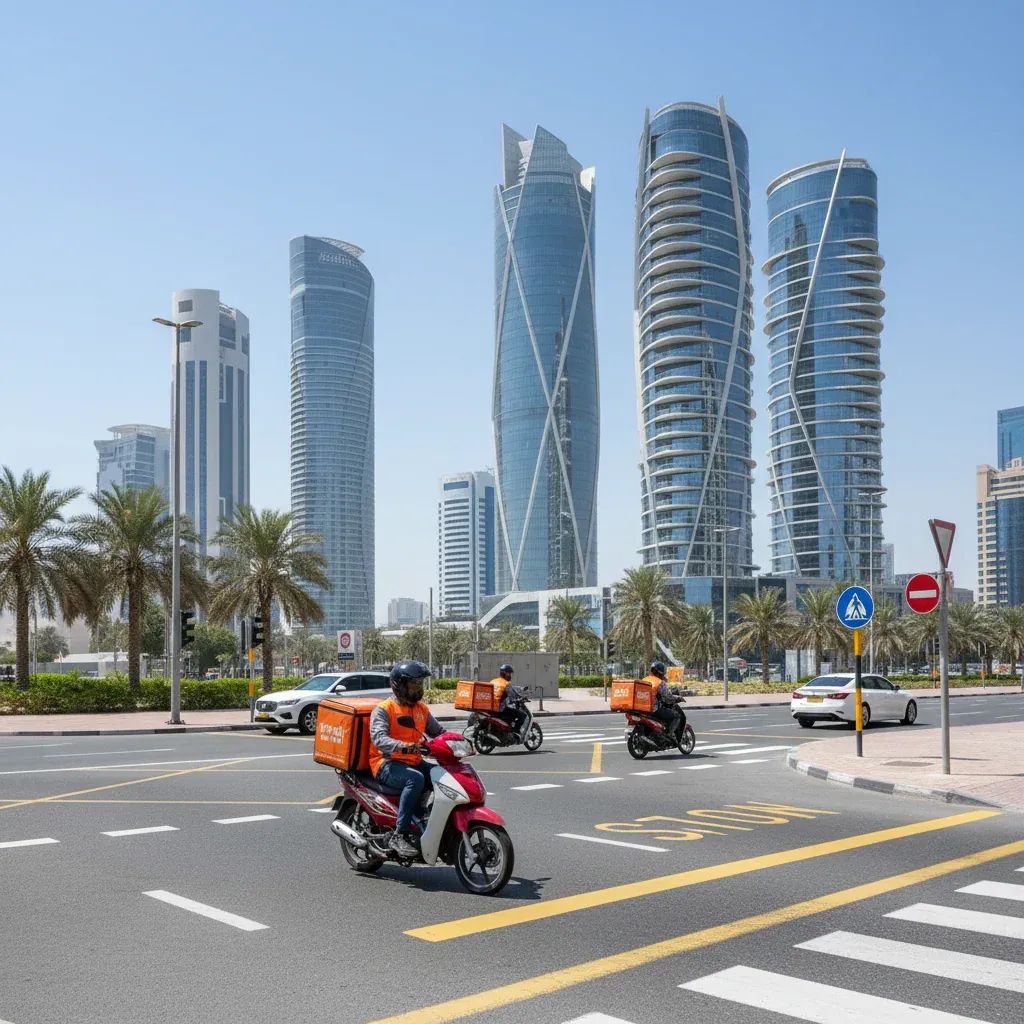
Delivery Motorcycles Face New Road Restrictions Across Abu Dhabi: What Changes Starting May 15, 2026
The Abu Dhabi Integrated Transport Centre (AD Mobility) is implementing a decisive shift in how two-wheeler deliveries operate within the emirate: starting May 15, 2026, motorcycles will be barred from high-speed arterial routes and a critical stretch of Sheikh Zayed Road that connects key urban nodes. The restriction applies to any corridor where traffic legally moves at 120 km/h or faster, plus the thoroughfare between Sheikh Zayed Bridge and Sheikh Zayed Tunnel. For residents, riders, and logistics operators, this represents a structural reorganization of how packages, meals, and goods flow through Abu Dhabi's sprawling geography.
Why This Matters
• Delivery windows may extend: Cross-city orders could face longer wait times as platforms redirect two-wheeler traffic to slower secondary roads, though exact impact remains to be determined.
• Consumer costs may shift: Industry observers suggest potential surcharges to offset longer routes and increased operational overhead, though specific figures have not been officially confirmed.
• Safer high-speed corridors: The ban removes a collision-prone vehicle type from roads designed for larger, faster traffic—directly tackling documented safety concerns.
• Fleet electrification accelerates: Companies are expected to pivot investments toward electric micro-vans and cargo e-bikes to absorb volume and meet emerging regulatory timelines.
The Safety Rationale Behind Regulatory Action
Abu Dhabi's decision does not emerge from abstract caution. Across the United Arab Emirates, the delivery motorcycle fleet has expanded significantly in recent years. Collision data from neighbouring emirates indicates rising safety concerns on major arterials where motorcycles operate alongside higher-speed traffic.
Dubai and Sharjah have recently implemented lane-restriction policies limiting two-wheeler access on multi-lane motorways, reflecting broader regulatory focus on delivery-bike safety. When such policies were activated, accident reductions fell short of initial projections in some cases, partly because motorcycles remained on certain roads. Abu Dhabi's approach is categorical rather than remedial: eliminate motorcycles from high-speed corridors entirely instead of limiting where they position within a lane. This reflects a regulatory philosophy prioritizing direct intervention over graduated restrictions.
Mapping the Operational Disruption
Consider logistics reality. Talabat, Deliveroo, Noon, and smaller platforms now face a geometric dispatch problem: Which vehicle type serves which geography? High-speed routes that historically stitched distant zones together must now rely on alternative vehicles. Motorcycles will operate in service roads, residential streets, and zones where speed limits cap at 100 km/h or below. This partitioning will require delivery algorithms to adapt and may increase fleet complexity.
A practical example clarifies the potential impact. A restaurant in Mussafah receives a lunch order for an office tower near Abu Dhabi International Airport. Previously, a motorcycle rider could use Sheikh Zayed Road directly. Under the ban, the same delivery will require either a van—consuming more fuel and potentially increasing operational costs—or a rider navigating alternative routes through residential neighbourhoods where average speeds are lower.
Logistics operators anticipate operational adjustments, with platforms likely facing pricing decisions: passing increases to customers or narrowing service guarantees. Early signals suggest platforms have begun updating fee schedules and revising delivery-promise cut-offs, though the full financial impact remains uncertain as the May 2026 implementation date approaches.
The Compliance Infrastructure Tightens
All motorcycles registered in Abu Dhabi must be listed on the ASATEEL platform with mandatory GPS tracking units (OBU devices). This requirement dates to mid-2023, but enforcement shifts dramatically from May 15, 2026 onward. Regulators will cross-reference live GPS telemetry against road classifications and speed limits, automatically flagging any bike entering a prohibited corridor. The penalty structure mirrors existing frameworks: AED 500 initial violation, followed by permit suspension for repeat offenders. Riders who accumulate multiple infractions face professional licence suspension, effectively barring them from delivery work across platforms until re-certification occurs.
Delivery companies are rolling out mandatory training modules addressing new road bans, compliant alternative routes, and safe-riding protocols on narrower service roads. Employers face collective liability if riders generate multiple violations, creating organizational pressure to educate staff comprehensively before the cutoff date. Sophisticated platforms are deploying GPS-integrated route apps to riders, ensuring navigation guidance is readily available.
How Abu Dhabi's Delivery Fleet Will Transform
The delivery motorcycle market in Abu Dhabi is substantial, though exact figures remain proprietary. Industry observers note that absorbing rerouted volume will likely demand fleet modernisation across the sector.
Delivery companies are accelerating adoption of electric micro-vans, three-wheeled cargo e-bikes, and hybrid fleets. Regional sustainability initiatives are creating momentum for these vehicle substitutes. AD Mobility has indicated that zero-emission vehicles may receive expedited permitting and favourable regulatory treatment, incentivizing early adoption while pressuring laggards.
Several platforms are piloting cargo e-bikes on service-road networks, transporting moderate payloads at controlled speeds. These vehicles may sidestep traditional motorcycle classifications under UAE traffic law in certain contexts. For short-haul, high-frequency deliveries—groceries and parcels within 3 km—such alternatives could offer operational efficiency. Abu Dhabi is simultaneously exploring distributed micro-fulfillment centres strategically positioned across the emirate, reducing travel distances for all vehicle types.
Worker Protection and Infrastructure Expansion
The restriction implicitly acknowledges that delivery riders labour under demanding conditions, especially during Abu Dhabi's summer months when temperatures rise significantly. AD Mobility has announced plans for designated parking and rest infrastructure equipped with shade structures, charging facilities, and water access, plus additional facilities in Al Ain. Air-conditioned rest stops with basic amenities are planned in phased rollouts beginning May 2026, serving to provide riders refuge during peak hours.
Insurance premiums for delivery companies have been affected by collision claims in the industry. Demonstrating compliance with ASATEEL tracking may allow platforms to negotiate adjustments in insurance costs, potentially offsetting some operational increases.
What Happened Elsewhere: Regional and Global Precedents
Abu Dhabi's move sits within a broader regulatory wave across emirates and globally. Dubai and Sharjah have imposed restrictions on two-wheeler access to certain high-speed lanes, reflecting rising collision concerns. Saudi Arabia has signalled caution about expanding motorcycle-delivery operations absent stronger regulatory oversight. Internationally, city approaches vary significantly based on governance models and infrastructure capacity.
London and Paris are phasing out petrol motorcycles entirely by 2030, redirecting last-mile traffic toward electric bikes and small cargo vans. Singapore invested in dedicated bike parking infrastructure to prevent informal parking congestion. New South Wales, Australia mandates safety training and personal protective equipment for all riders—a legal requirement. São Paulo, Brazil experimented with motorcycle-only lanes but discovered limited success; bikes generated ongoing congestion and safety friction despite dedicated space.
Cities that imposed restrictions without alternative infrastructure—parking facilities, training programmes, and vehicle transition support—reported operational disruption. Those pairing constraints with infrastructure investment, training programmes, and transition support achieved smoother adaptation.
Implications for Abu Dhabi Residents, Riders, and Businesses
For Regular Customers
If you rely on delivery services, be aware that the May 2026 implementation may affect delivery patterns and costs over the coming year. Review your delivery platform's fee structures as policies evolve. Off-peak ordering may continue to offer faster service. Some platforms may offer incentive programmes for advance bookings or bundled orders as they manage the operational transition.
For Delivery Riders
Confirm your ASATEEL registration and OBU GPS tracker installation well before May 15, 2026; riders without compliant equipment will face permit issues. Attend company-sponsored training sessions to master compliant routes and avoid violations. Familiarize yourself with Abu Dhabi's speed-limit road classifications to ensure routes comply with regulations. The restriction is permanent, so investing time now to understand alternative routing is prudent.
For E-Commerce and Delivery Businesses
Begin planning operational adjustments now, with over a year until implementation. Renegotiate service-level agreements with logistics partners and stress-test supply chains. Small retailers dependent on rapid delivery should reset customer expectations transparently. Opportunities exist for businesses investing in alternative last-mile solutions.
AD Mobility has stated the ban is permanent, not a trial programme. Quarterly traffic-data reviews may extend or refine the list of restricted roads if metrics warrant adjustment, but the foundational restriction stands. Abu Dhabi is committed to reshaping its last-mile delivery ecosystem—with implementation beginning May 15, 2026.


