
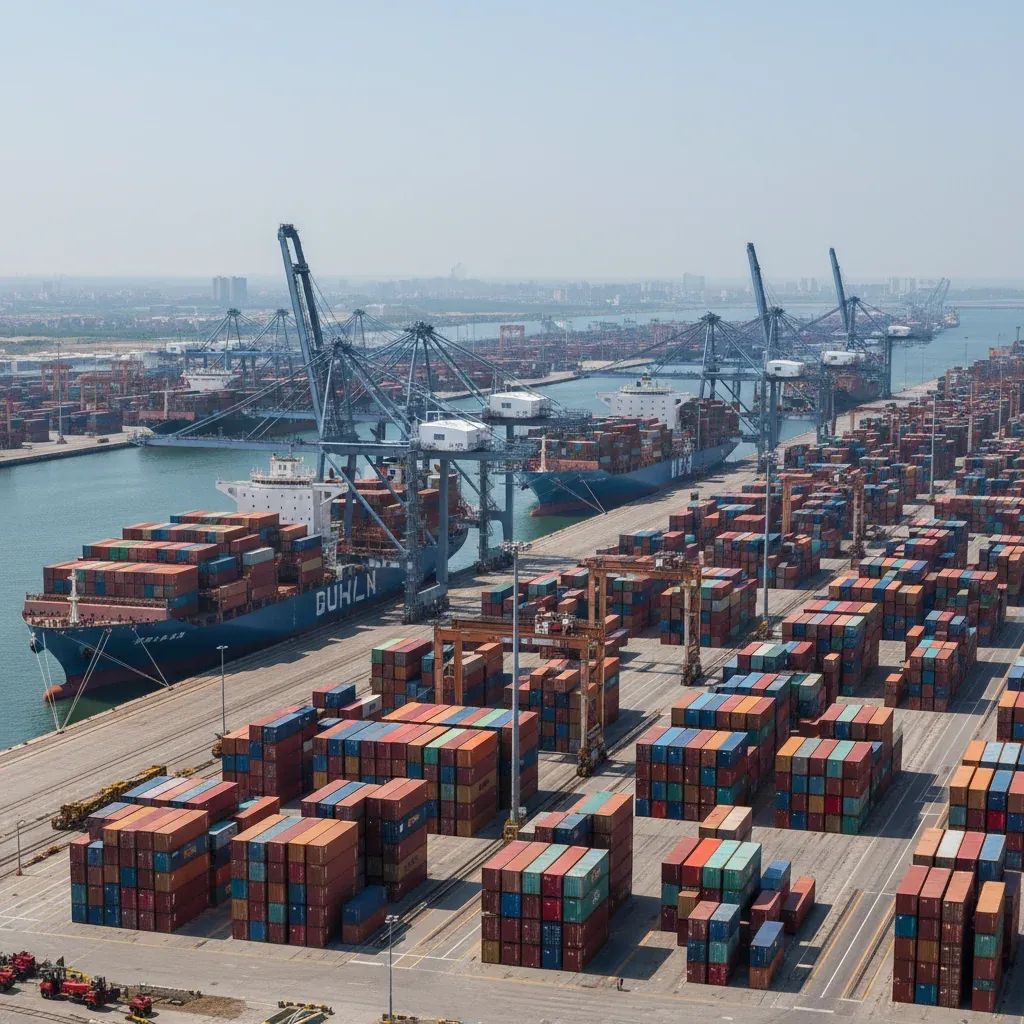
The United States Treasury Department has signaled that a global tariff increase to 15% will take effect within days, a move that will ripple through import-dependent economies and supply chains tied to the United Arab Emirates. Treasury Secretary Scott Bessent confirmed on March 4 that the Trump administration intends to raise the existing 10% temporary levy to 15%, using emergency trade powers that bypass immediate congressional approval.
Why This Matters
• Imported goods costs: Consumer electronics, automobiles, and industrial inputs sourced from the U.S. or transiting through American ports will face immediate price pressures. For U.S. households, estimates suggest an additional $600 annual burden from these tariffs, though costs for UAE importers will vary depending on product category and supply chain positioning.
• Supply chain uncertainty: The 150-day temporary window for these tariffs creates volatility for businesses negotiating contracts or managing inventory throughout the rest of 2026.
• EU likely exempt: The European Union anticipates maintaining its current 10% rate, preserving preferential access for goods flowing through Dubai and Abu Dhabi re-export hubs.
• Inflation pressure: U.S. producer price increases from tariffs are estimated to contribute a 0.5% to 0.6% uptick to inflation, affecting dollar-denominated contracts and currency stability for UAE businesses.
Legal Detour Behind the Tariff Shift
The unusual tariff maneuver stems from a February 2026 Supreme Court ruling that struck down the administration's earlier use of the International Emergency Economic Powers Act (IEEPA) to impose duties. That decision invalidated hundreds of millions of dollars in tariff collections and forced a judge to order refunds to companies that had already paid.
In response, President Donald Trump pivoted to Section 122 of the Trade Act of 1974, an emergency provision that permits the president to impose tariffs for 150 days without waiting for congressional authorization. Section 122 is designed as a short-term tool for urgent trade situations, allowing rapid action when normal legislative processes would be too slow. The administration rolled out a 10% global tariff on February 24, and now plans to elevate that rate to 15% before the end of this week.
The temporary nature of Section 122 authority means the White House is simultaneously exploring more durable legal frameworks, including Section 301 (which targets unfair trade practices) and Section 232 (which addresses national security threats). Both mechanisms could allow Washington to re-establish tariffs at previous levels or higher once the 150-day clock expires in late July.
Who Gets a Pass
Not every trading partner will face the full 15% burden. Canada and Mexico remain exempt for goods that comply with the US-Mexico-Canada Agreement (USMCA), a carve-out that protects North American automotive and agricultural exports. Similarly, textiles and apparel from Dominican Republic-Central America Free Trade Agreement (CAFTA-DR) members entering duty-free are shielded from the surcharge.
The European Union, United Kingdom, and Switzerland are expected to retain favorable treatment, particularly for civil aviation products covered by the 1979 Agreement on Trade in Civil Aircraft. EU officials have publicly stated they anticipate exemption from the 15% hike, keeping their effective rate at 10%. However, the European Parliament has paused ratification of a broader July 2025 trade deal with Washington, citing legal uncertainty over how the new Section 122 tariffs interact with the agreed-upon 15% ceiling on most EU industrial goods.
Certain product categories are also excluded regardless of origin: critical minerals, fertilizers, agricultural commodities, electronics, passenger vehicles, pharmaceuticals, aerospace components, and informational materials. Steel, aluminum, copper, lumber, and automobiles already subject to existing tariffs are not hit with the additional surcharge.
What This Means for UAE-Based Businesses
For companies in the United Arab Emirates that import American machinery, technology, or consumer goods, the tariff increase adds a cost layer that will likely be passed through the supply chain. Distributors and retailers in Dubai and Abu Dhabi should anticipate price adjustments on everything from industrial equipment to branded electronics.
Firms engaged in re-export trade through UAE free zones need to pay close attention to origin documentation. Goods originally manufactured in the EU, Canada, or Mexico may retain exemptions, but only if they meet the relevant trade agreement criteria. Misclassification or incomplete paperwork could result in the full 15% duty being applied at U.S. ports.
The 150-day window also introduces contract risk. Businesses negotiating long-term purchase agreements with U.S. suppliers should include tariff adjustment clauses or lock in pricing before the rate change takes effect. If the administration extends or replaces Section 122 tariffs with Section 301 or Section 232 measures later in 2026, rates could climb further or become permanent.
Action Steps for UAE Businesses
To navigate the tariff changes effectively, UAE-based importers and traders should take the following immediate steps:
Immediate Documentation Review: Audit your current U.S. import portfolio. Identify which products fall into exempt categories (electronics, pharmaceuticals, aerospace) and which face the full 15% surcharge. Verify that re-exported goods have complete origin certification to claim exemptions.
Supplier Contract Renegotiation: Contact U.S. suppliers to discuss tariff adjustment clauses or fixed-price locks before the rate goes into effect. Clarify in contracts who bears the tariff cost and whether prices should be renegotiated if rates change further in July.
Re-Export Compliance Verification: For free zone operations, ensure that goods from USMCA countries (Canada, Mexico) or EU suppliers have proper documentation proving their origin. Incomplete paperwork can result in tariffs being applied even to exempt goods.
Currency and Hedging Considerations: Monitor dollar strength relative to the dirham. Consider hedging strategies for businesses with dollar-denominated expenses, as a stronger dollar will increase purchasing costs for U.S. goods. Review pricing strategies for revenue streams in other currencies to protect margins.
Inflation and Currency Spillover
The tariff's inflationary impact will ripple through global supply chains. U.S. producer cost increases feed into higher prices for American goods, potentially strengthening the dollar as the Federal Reserve adjusts monetary policy to counter inflation.
For UAE importers and investors holding dollar-denominated assets, a stronger dollar means increased purchasing costs for U.S.-origin goods and potential currency volatility against the dirham, which is pegged to the dollar. Companies with revenue in other currencies but expenses in dollars will face margin compression.
The risk of sustained inflation also looms if trading partners retaliate. China, the European Union, and Canada have all signaled willingness to impose countermeasures, which would further disrupt supply chains and elevate costs across multiple sectors.
The Bigger Trade Policy Picture
The tariff hike is part of a broader "America First" agenda outlined in the U.S. Trade Representative's 2026 Trade Policy Agenda, submitted to Congress in early March. Priorities include advancing the Agreement on Reciprocal Trade (ART) program, enforcing existing trade deals, securing critical supply chains, and reviewing the USMCA.
On China, the administration is focused on ensuring reciprocity and balance, a stance that could lead to additional targeted tariffs or investment restrictions. For the UAE, which maintains robust trade ties with both Washington and Beijing, navigating this bifurcated landscape will require careful diplomatic and commercial balancing.
The European Union's hesitation to ratify its July 2025 trade pact with the U.S. reflects broader uncertainty. Brussels wants clarity on how the new Section 122 tariffs align with the agreed 15% ceiling, especially since combining the 10% surcharge with existing most-favored-nation duties can push effective rates above 15% for some products. Existing tariffs on steel and aluminum remain in force, and the suspension of the de minimis exemption (which previously allowed duty-free entry for goods under $800) adds another layer of compliance complexity.
Planning for the Next 150 Days
With the 15% tariff set to go live this week, businesses in the United Arab Emirates should immediately review their U.S. import portfolios using the action steps outlined above, assess exposure to non-exempt product categories, and explore alternative sourcing from countries with preferential trade status. Legal and logistics teams need to coordinate on customs documentation to maximize eligibility for exemptions.
The 150-day countdown also creates a window for advocacy. Industry groups and chambers of commerce may find opportunities to petition for product-specific exclusions or participate in public comment processes if the administration pursues Section 301 or Section 232 actions later this year.
For now, the message from Washington is clear: the tariff regime is in flux, legal authority is contested, and the economic cost will be distributed unevenly across countries, sectors, and supply chains. UAE-based firms with exposure to U.S. trade should prepare for higher costs, tighter margins, and a volatile policy environment that may last well beyond the summer.


