
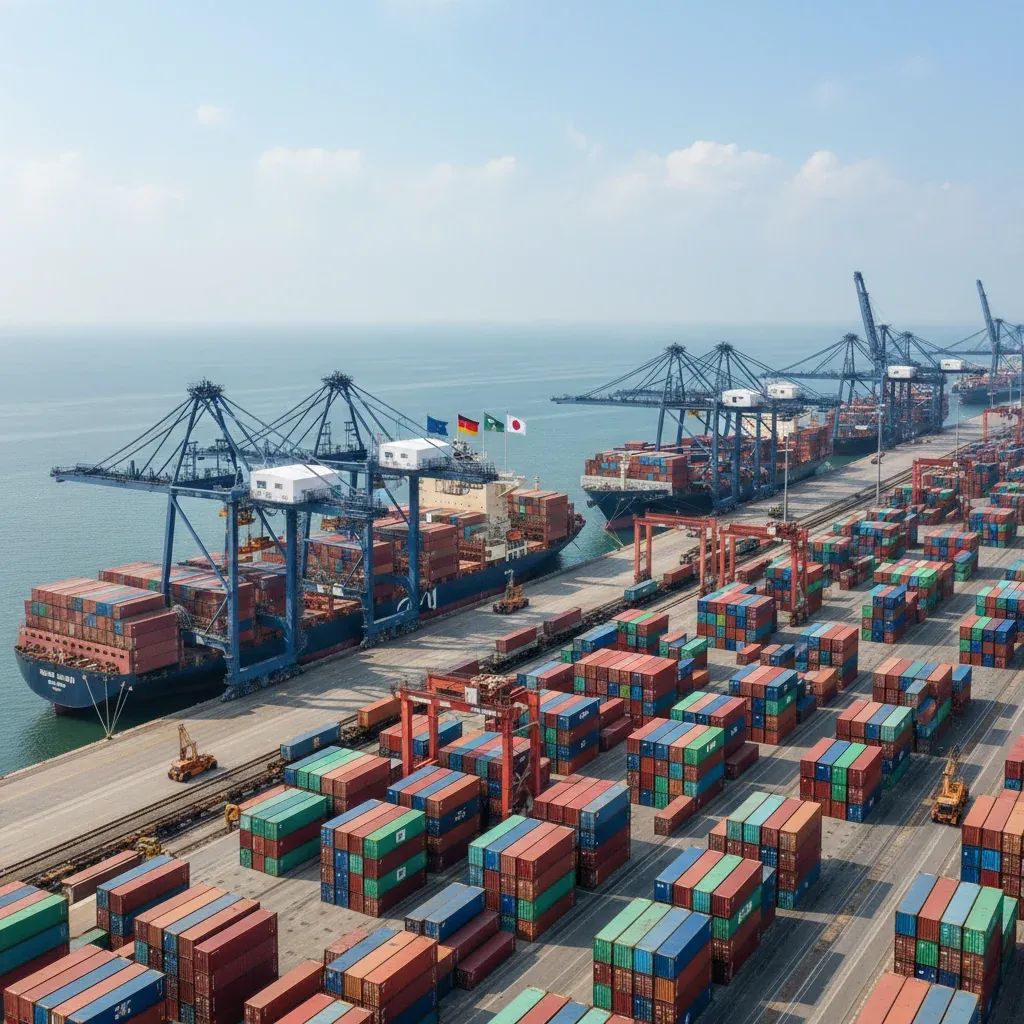
Trump Escalates US Import Tariffs to 15% Following Court Setback
The United States administration under President Trump has imposed a 15% baseline duty on all imported goods, effective immediately, after the Supreme Court rejected his previous tariff approach. The move uses Section 122 of the Trade Act of 1974, a Cold War-era provision that permits temporary tariff actions for a fixed 150-day period—ending in mid-July 2025.
The Legal Context:
Three weeks ago, the U.S. Supreme Court ruled against the administration's prior tariff authority, determining it had exceeded constitutional limits when imposing duties without explicit congressional approval. The court's decision invalidated the previous tariff regime and forced the administration to seek an alternative legal basis.
Section 122 provides a narrow window: the administration can impose duties up to 15% for exactly 150 days before requiring congressional action or automatic expiration. The administration initially announced 10% on February 20, then raised it to the 15% ceiling two days later. Unlike the prior approach, this regime has explicit statutory authority, making legal challenges more difficult.
Key Details for the 150-Day Period:
• Tariffs remain in force until mid-July 2025 unless Congress intervenes
• The uniform 15% rate applies across most imported goods
• Trade agreements including USMCA (Canada-Mexico goods) remain exempt
• Congressional action—either to extend or allow expiration—becomes necessary at the deadline
Relevance for UAE Businesses and Trade Relationships
United Arab Emirates companies with direct trade relationships to the United States face meaningful implications, though the primary impact falls on U.S. importers and consumers rather than UAE residents' household costs.
Indirect Supply Chain Effects:
• UAE-based traders sourcing American goods or components will face higher acquisition costs as U.S. suppliers pass through tariff expenses
• Companies exporting finished goods to U.S. markets may see reduced demand if U.S. consumer purchasing weakens due to higher prices
• Logistics operators handling UAE-US trade routes will experience margin pressure from reduced import volumes and renegotiated pricing
Sourcing Advantages:
• Businesses with USMCA-compliant supply chains—drawing from Canada or Mexico—avoid the tariff burden, creating competitive advantages over purely U.S.-sourced competitors
• Firms with existing pre-tariff supply agreements may enjoy temporary cost advantages until renegotiation occurs
• Companies positioned in sectors exempted from previous Section 232 national security tariffs (steel, aluminum, vehicles) see no net tariff increase
International Response and Broader Trade Dynamics
China, the European Union, and Canada have announced retaliatory tariffs targeting American agricultural exports and industrial goods. For UAE-based traders and intermediaries, this creates both challenges and opportunities—potential price volatility in key commodity markets and opportunities for arbitrage across supply chains.
The 150-day timeline creates immediate uncertainty for multinational supply chains. Procurement teams cannot commit to long-term contracts without clarity on whether tariff rates will expire, continue, or escalate further.
Timeline and Next Steps
Congress must act before mid-July 2025 to either extend the tariff authority or allow it to expire. The administration could also launch new investigations targeting specific countries under different legal authorities, creating additional tariff layers.
For UAE-based businesses with U.S. trade exposure, the next 150 days represent a contingency-planning period. Companies should:
• Assess direct exposure to higher U.S. import costs
• Evaluate alternative sourcing options, particularly USMCA-compliant suppliers
• Monitor contract renegotiation timelines with U.S. partners
• Prepare contingency plans based on Congressional action in mid-July 2025
The central question for global markets remains unchanged: whether Congress will extend temporary tariff authority, negotiate permanent arrangements, or allow the provision to expire. Until that decision, uncertainty will shape business planning across the UAE's trade-dependent economy.


