
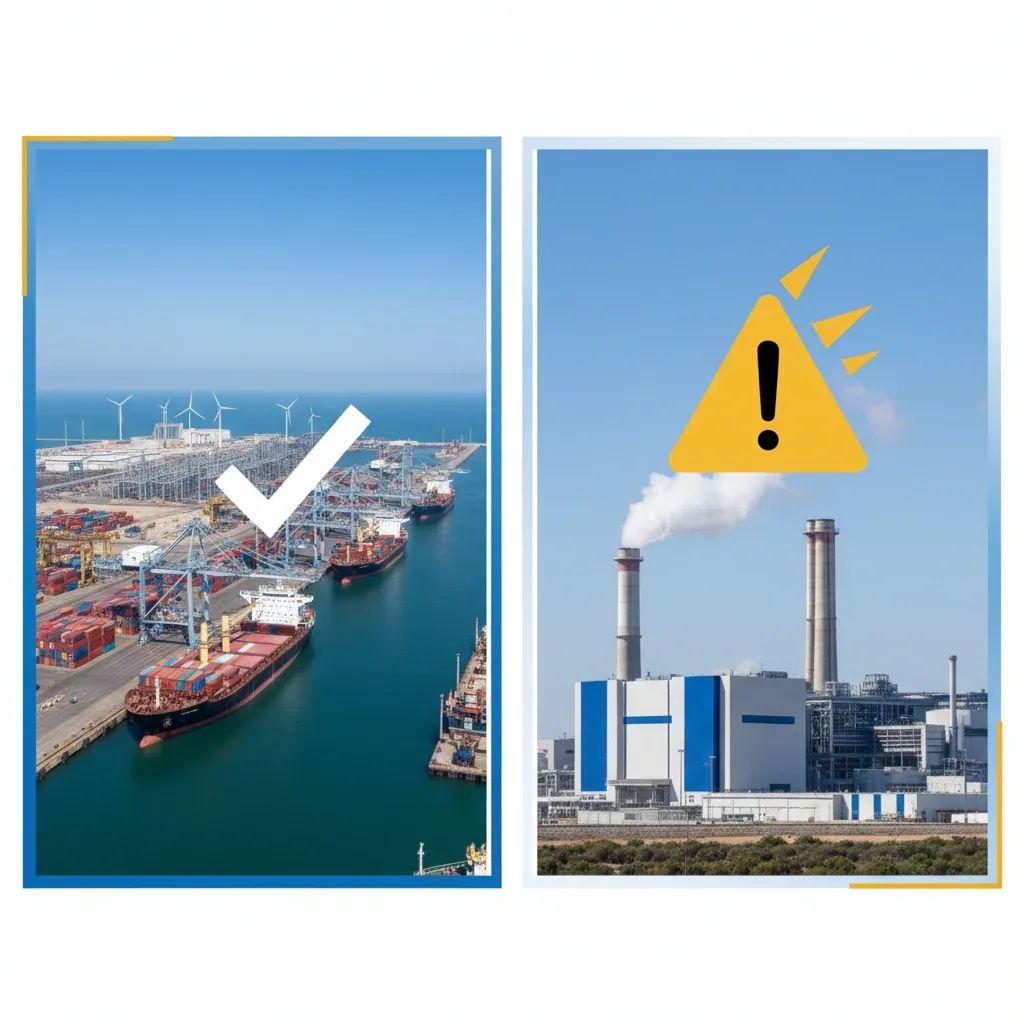
The United Arab Emirates and its Gulf neighbors benefit from strategic exemptions on hydrocarbon exports that form the backbone of regional trade with America, shielding much of the energy sector from Washington's latest tariff measures. A temporary 15% global import surcharge took effect on February 24, and because energy products are explicitly exempt, the direct hit to GCC economies remains limited—though challenges persist in other sectors.
Why This Matters
• Energy exports exempt: Oil, natural gas, and petroleum products—representing roughly 70% of Gulf exports to the US—face zero new tariffs under the Section 122 surcharge.
• Steel and aluminum still taxed: The United Arab Emirates and Bahrain continue to face existing 25% duties on metal exports under separate national security rules.
• 150-day window: The temporary surcharge expires in mid-2026, but targeted sector-specific tariffs could follow by year-end.
The Supreme Court Decision and Policy Shift
On February 20, the US Supreme Court invalidated emergency tariffs previously imposed under the International Emergency Economic Powers Act, ruling that the statute did not authorize trade duties. The White House responded within hours, pivoting to Section 122 of the Trade Act of 1974 to impose a temporary global surcharge that applies to most imports for 150 days. The final implementation landed at 15%.
The move represents a recalibration of American trade policy, replacing broad emergency measures with a more legally defensible—though equally protectionist—framework. For the United Arab Emirates Ministry of Economy and its counterparts across the Gulf, the shift signals that while the immediate threat is contained, the underlying trajectory toward trade protectionism in Washington remains unchanged.
What the Tariffs Actually Cover (and Don't)
The 15% surcharge applies broadly but comes with notable carve-outs. Energy and energy-related products are explicitly exempt, as are critical minerals, metals used for currency and bullion, and certain agricultural and pharmaceutical goods. Products already subject to Section 232 national security tariffs—including steel and aluminum—are excluded from the new surcharge to avoid double taxation, though those 25% duties remain firmly in place.
For the United Arab Emirates, which ships substantial volumes of aluminum and steel to American markets, the distinction is critical. The existing 25% levy on steel and aluminum, imposed in March 2025 under Section 232 national security provisions, remains in effect separately from the February 2026 changes and continues to suppress competitiveness for UAE exporters. Bahrain faces similar challenges in the aluminum sector, where Gulf producers have built significant global market presence.
The energy exemption is the real protection. Hydrocarbon exports constitute the vast majority of what the Gulf sends to America, meaning the direct revenue impact of the Section 122 surcharge is close to zero. Non-oil exports from Saudi Arabia, for example, account for just 3% to 4% of total shipments to the US, and many of those categories—fertilizers, chemicals, and base metals—also enjoy exemptions or existing tariff treatment.
Impact on Residents and Investors
For United Arab Emirates expatriates and business owners, the immediate takeaway is reassurance: the core export engine is intact. Companies involved in energy, petrochemicals, and downstream oil products face no new barriers to the American market. However, those operating in manufacturing sectors tied to aluminum, steel, or industrial components should prepare for sustained cost pressure and potential margin compression.
Investors watching regional equities should note that while the tariff news is broadly neutral for oil majors and state-owned energy firms, diversification plays—particularly in metals and advanced manufacturing—remain exposed to Washington's protectionist trade measures. The United Arab Emirates stock exchanges have so far absorbed the news without significant volatility, reflecting the market's view that hydrocarbon revenues remain the primary driver of fiscal stability.
For residents employed in non-oil sectors, the longer-term risk lies not in today's tariffs but in the next wave. The US administration has signaled plans to accelerate investigations under Section 301 (unfair trade practices) and Section 232 (national security), which could yield targeted duties on chemicals, electronics components, and other products by late 2026. These are precisely the sectors where the United Arab Emirates has invested heavily as part of its diversification strategy.
The Saudi Investment Model: Economic Positioning as Strategic Tool
Saudi Arabia has emerged as a case study in how Gulf states can navigate the new American trade environment. The Kingdom's near-$1 trillion investment commitment in the US—including a landmark artificial intelligence partnership and defense procurement deals—has deepened economic interdependence. By strengthening bilateral economic ties, Riyadh has effectively positioned itself to maintain favorable treatment amid broader trade tensions.
This strategy underscores a Gulf calculation: that strategic investment in the US economy can secure preferential access or at least limit exposure to punitive trade measures. For the United Arab Emirates, which has similarly increased its US investment footprint in sectors ranging from real estate to technology, the lesson is clear—economic interdependence matters alongside trade flows.
The Aluminum and Steel Challenge for UAE Exporters
While energy exemptions dominate the narrative, the 25% tariffs on steel and aluminum remain a persistent challenge for United Arab Emirates-based exporters. These duties, imposed in March 2025 under Section 232 national security provisions, supersede preferential treatment under free trade agreements, including those enjoyed by Bahrain and Oman.
The United Arab Emirates plays a significant role in global aluminum markets. State-backed producers such as Emirates Global Aluminum (EGA) and other major exporters ship substantial volumes to North America. The 25% tariff has already forced many exporters to reroute shipments to Europe and Asia, incurring higher logistics costs and eroding profitability. Bahrain, another major aluminum exporter, faces identical pressures.
UAE free zones, including the Jebel Ali Free Zone and Hamriyah Free Zone, handle a portion of these metal exports, but companies must ensure full compliance with US rules of origin to avoid retroactive penalties. Goods originating outside the UAE cannot be re-exported through these zones to sidestep tariffs.
There is no indication that Washington intends to reverse these metal tariffs. If anything, the administration's emphasis on reshoring industrial capacity and reducing reliance on foreign supply chains suggests the duties will persist.
What Comes Next: Section 301 and 232 Investigations
The temporary nature of the Section 122 surcharge—150 days—means the trade policy landscape will shift again by mid-2026. The White House has already signaled intent to move toward targeted, sector-specific tariffs under Section 301 and Section 232.
Section 301 targets unfair trade practices, including subsidies, intellectual property theft, and market access barriers. Section 232 focuses on national security considerations, a standard that has been applied to everything from steel to semiconductors. For the United Arab Emirates, the risk is that sectors tied to economic diversification—petrochemicals, advanced manufacturing, specialized chemicals, logistics—could be swept into new investigations.
The Gulf's role as a "re-export hub" could also draw scrutiny. The US is conducting transshipment audits to verify that goods originating from third countries are not routed through UAE free zones or Saudi Vision 2030 economic zones to circumvent tariffs. Exporters caught violating origin rules face retroactive penalties and potential trade restrictions.
The Broader Trade Environment: Indirect Risks
While direct tariff exposure is limited, the United Arab Emirates and its Gulf neighbors remain vulnerable to macroeconomic consequences from escalating trade tensions. A global slowdown triggered by tit-for-tat tariffs between the US, China, and Europe could depress oil prices, which in turn affect fiscal planning, budget balances, and capital spending across the Gulf.
The Gulf's dollar-pegged currencies add another exposure layer. Trade policy uncertainty can affect currency markets and complicate monetary policy for central banks that maintain fixed exchange rates.
Oil market sensitivity remains the greater vulnerability. Trade tensions disrupt growth expectations, and lower global demand translates directly into softer crude prices. For the United Arab Emirates, where hydrocarbon revenues fund a significant portion of government spending despite diversification efforts, this indirect channel carries greater impact than the tariff rate on any single export category.
Opportunities for UAE Businesses Amid Supply Chain Shifts
The reconfiguration of global supply chains presents openings for United Arab Emirates-based businesses. As American importers seek alternatives to Chinese and European suppliers, the Gulf's relatively favorable tariff treatment for energy products and strategic location position it as a cost-competitive partner.
Beyond fossil fuels, the United Arab Emirates could expand exports in categories like fertilizers, chemicals, textiles, plastics, and specialized industrial inputs—sectors where American buyers are actively diversifying sourcing. Companies in these non-metal, non-energy categories should verify their product classification to confirm tariff eligibility.
The Gulf's deepening investment ties with the US also create reciprocal opportunities. Joint ventures in technology, renewable energy, and infrastructure not only serve diplomatic purposes but also open doors for United Arab Emirates firms to access American markets through partnerships rather than pure export channels.
Trade Agreements and Their Limitations
Bahrain and Oman maintain bilateral free trade agreements with the United States, though recent tariff measures have in some cases superseded the preferential treatment these agreements offer. The United Arab Emirates, which does not have a standalone FTA with the US, relies instead on the US-GCC Framework Agreement for Trade, Economic, Investment and Technical Cooperation, signed in 2012. This agreement fosters dialogue and cooperation but does not grant sweeping tariff exemptions.
The absence of a comprehensive FTA has not harmed the United Arab Emirates in the current tariff environment, given that energy exemptions apply regardless of treaty status. However, as Washington moves toward more targeted trade measures, the lack of a formal agreement could leave United Arab Emirates exporters with less recourse to challenge specific duties.
Comparing the Gulf to Wider Middle Eastern Exposure
Other Middle Eastern nations experienced a more dramatic impact in February 2026. Countries like Iraq, Syria, Libya, Algeria, and Tunisia previously faced reciprocal tariffs as high as 41% under the now-invalidated emergency measures. For them, the 15% Section 122 surcharge represents a de facto reduction in trade barriers, at least temporarily.
Israel and Jordan, which maintain established free trade agreements with the US, retain preferential access that largely insulates them from the new surcharge. This comparison highlights that the United Arab Emirates, while not facing the worst tariff exposure, has achieved relative protection through product exemptions and strategic positioning rather than through comprehensive trade agreements.
Strategic Guidance for UAE Residents and Businesses
Plan for sustained tariff exposure. The 150-day sunset clause on the Section 122 surcharge should not signal a return to the pre-2025 trade environment. Trade protectionism is the new baseline, and United Arab Emirates exporters should anticipate persistent tariffs in key sectors.
Diversify market exposure. Reliance on the US market, particularly in non-oil goods, carries elevated risk. European and Asian buyers offer alternative demand channels, and United Arab Emirates firms should accelerate efforts to deepen those relationships.
Prioritize compliance and origin verification. Transshipment audits are intensifying. Companies routing goods through United Arab Emirates free zones must ensure full compliance with rules of origin to avoid retroactive penalties. Proper documentation and supply chain transparency are essential.
Consider strategic partnerships. The Saudi model—using large-scale US investment to secure favorable treatment—offers a blueprint. United Arab Emirates firms with the capital and strategic vision to deepen American partnerships may find that economic interdependence enhances long-term market access.
What Happens at the 150-Day Mark
Mid-2026 will bring clarity—or further shifts in policy. If Congress extends the Section 122 surcharge, it becomes a semi-permanent fixture. If the White House moves to targeted tariffs under Section 301 and 232, the trade landscape fragments further, with each sector subject to separate assessment.
For now, the United Arab Emirates can take measured comfort in its energy-sector insulation. But the broader trajectory—Washington's pivot toward strategic trade protectionism, supply chain reshoring, and the use of trade measures as foreign policy tools—poses challenges that no single exemption can fully address. The question for UAE businesses is not whether new tariffs will come, but which sectors will face scrutiny next and how to prepare accordingly.


