
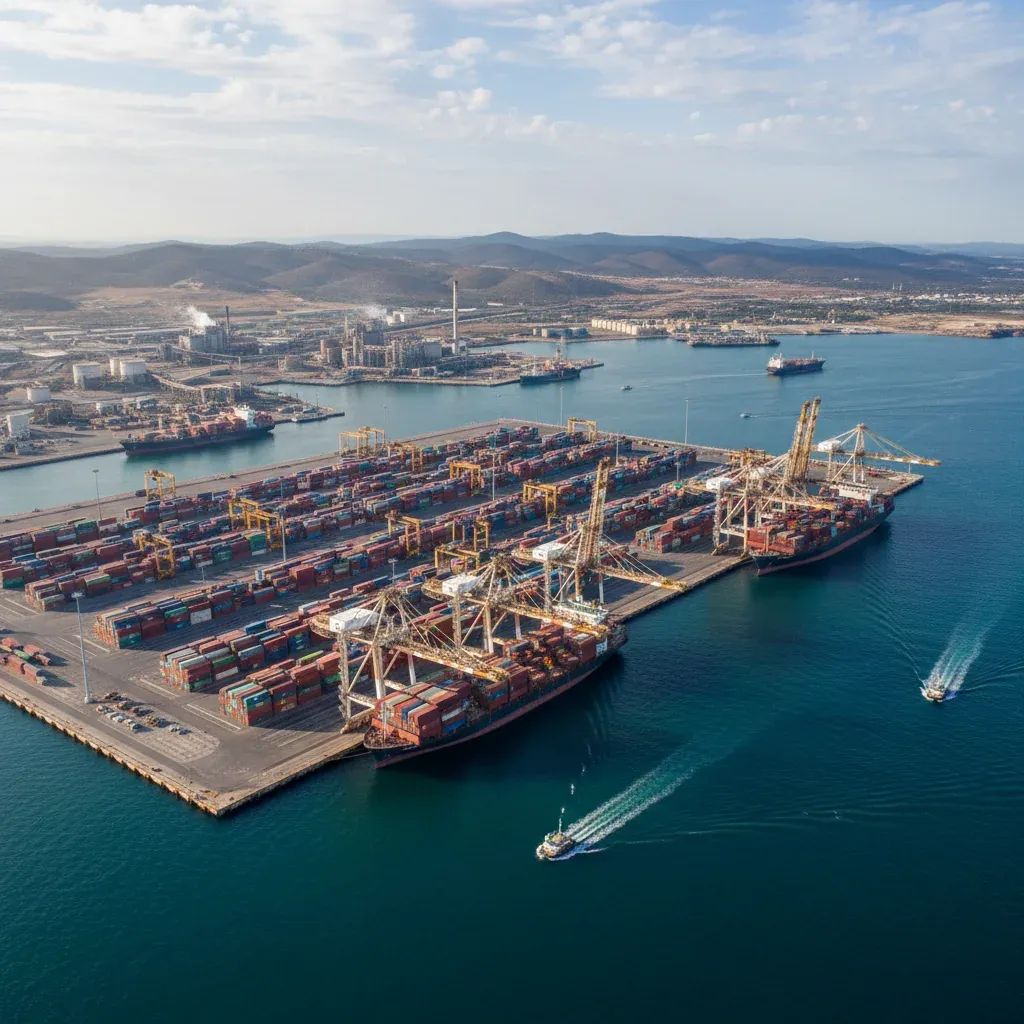
Zimbabwe has emerged as an increasingly significant trade partner for the United Arab Emirates, with bilateral commerce expanding substantially over recent years. On Monday, UAE Minister of State Sheikh Shakhboot bin Nahyan Al Nahyan met with Zimbabwean President Emmerson Mnangagwa in Harare to formalize and strengthen the economic partnership between the two nations.
Why This Matters
• Trade has grown significantly to approximately $7 billion in 2026, representing substantial expansion from earlier years.
• The UAE and Zimbabwe have developed a major commercial relationship focused on natural resources and agricultural products.
• A Comprehensive Economic Partnership Agreement (CEPA) is expected to be ratified within weeks to months, which will eliminate tariffs and formalize investment frameworks.
• The partnership reflects the UAE's broader strategy of strengthening economic ties across Africa through trade and investment.
The Core Partnership
Eight years ago, the economic relationship between the two nations was considerably smaller. The United Arab Emirates Embassy opened in Harare in 2019, signaling formal diplomatic presence. Zimbabwe opened a reciprocal mission in Abu Dhabi two years later.
The growth in bilateral trade reflects complementary economic interests. Zimbabwe possesses significant reserves of minerals critical for global energy transition, including lithium and platinum. The United Arab Emirates, with its sophisticated trading infrastructure and access to global markets through Dubai's commercial hubs, provides a gateway for these resources.
Beyond minerals, agricultural trade has also developed, with Zimbabwe supplying horticultural products and seasonal vegetables to Emirates markets.
Strategic Significance: Why the Partnership Works
For Zimbabwe, the relationship with the UAE provides access to international markets and trading infrastructure. As a landlocked nation, Zimbabwe benefits from the UAE's position as a global trading hub and its connections to Asian and Middle Eastern markets.
For the United Arab Emirates, the partnership addresses strategic economic interests. The Emirates imports the majority of its food supplies and seeks to diversify agricultural sourcing to reduce dependency on traditional suppliers. Access to Zimbabwe's agricultural sector supports this objective. Additionally, Zimbabwe's mineral resources align with the UAE's positioning as a commodity intermediary and its commitments to supporting global energy transition.
Both nations have publicly stated trade targets for 2026, indicating confidence in the partnership's trajectory.
The Formal Framework: CEPA Development
The Comprehensive Economic Partnership Agreement (CEPA) represents the formal architecture of the partnership. Once ratified, expected within weeks to months, it will convert existing commercial flows into binding legal frameworks. The agreement will eliminate tariffs, simplify customs procedures, and establish formal dispute resolution mechanisms.
For Zimbabwean exporters, the CEPA provides United Arab Emirates market access with transparent, non-discriminatory terms. For UAE-based importers and traders, it ensures supply stability and predictable pricing in raw materials and agricultural products.
Bilateral Engagement and Zimbabwe's Strategy
President Mnangagwa has positioned this partnership within Zimbabwe's "engagement and re-engagement policy," a deliberate strategy to develop pragmatic economic relationships with trading partners worldwide. The UAE relationship represents one component of Zimbabwe's broader diversification of international commercial ties.
The ministerial visit signals that the partnership has moved from routine bilateral commerce to portfolio-level diplomatic attention within the UAE government, reflecting its importance to national economic strategy.
Looking Forward
The high-level meeting between Minister Shakhboot and President Mnangagwa formalizes and strengthens an economic partnership that both nations view as strategically significant. As the CEPA progresses toward ratification, the framework will provide greater certainty for businesses in both countries seeking to expand commercial operations.
This partnership demonstrates how complementary economic interests—Zimbabwe's resource endowments and agricultural capacity, combined with the UAE's trading infrastructure and market access—can create mutually beneficial commercial relationships across different regions and development levels.


