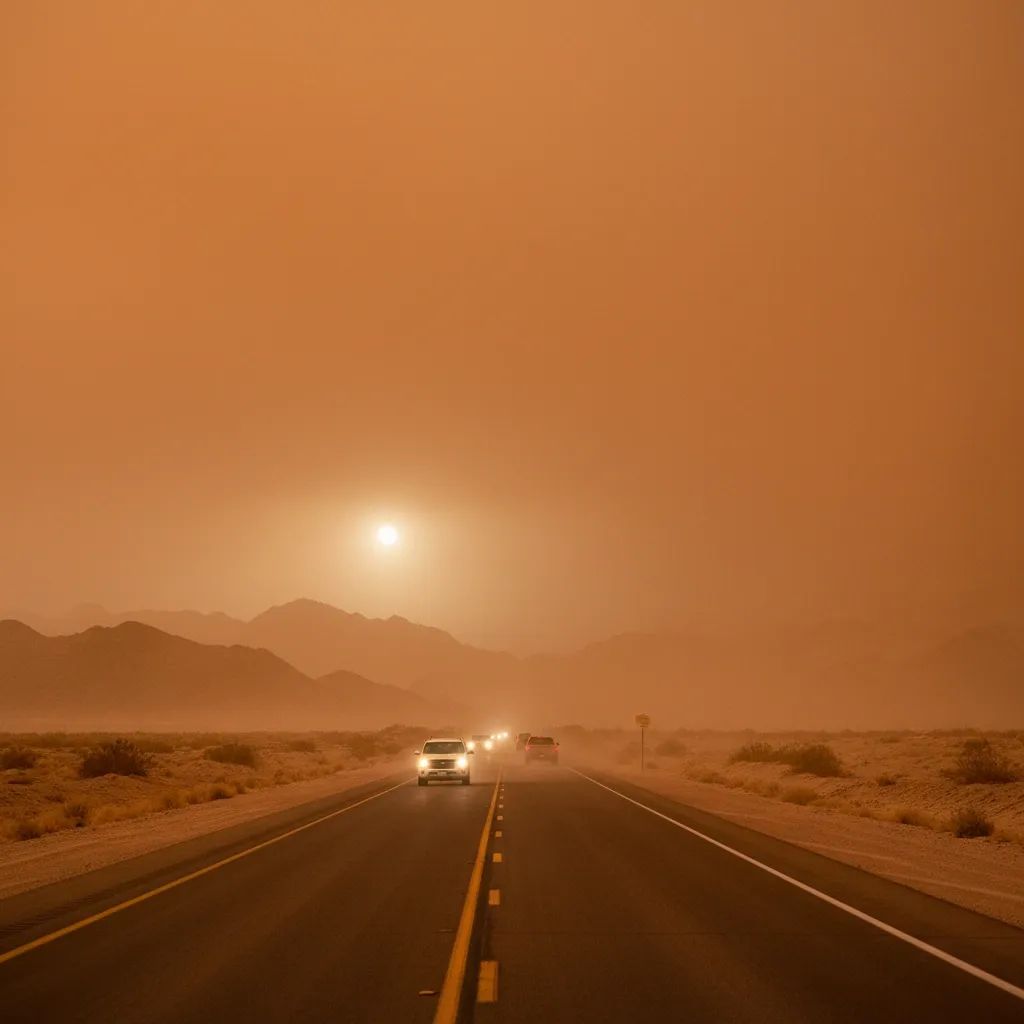
Residents across the United Arab Emirates should prepare for degraded driving conditions as the National Centre of Meteorology forecasts moderate winds capable of lifting loose sand across major roadways and reducing visibility to potentially hazardous levels. What appears as "fair weather" in the meteorological sense—clear skies and moderate temperatures—masks a practical hazard: airborne dust particles that will complicate traffic flow and elevate accident risk from dawn through evening.
Why This Matters
• Wind gusts will reach 40 km/h between midday and late afternoon, coinciding with peak commute windows when visibility degrades most severely.
• Dust reduces tire grip on asphalt and extends stopping distances, making vehicle control more challenging during braking.
• Vehicle sensors and cameras may experience reduced effectiveness when overwhelmed by particulates, potentially limiting automated safety assistance during the most challenging period.
Meteorology Behind the Conditions
The atmospheric setup driving the dusty forecast originates thousands of kilometers away. South-westerly and north-westerly winds will sweep across the UAE with initial velocities of 10 to 25 km/h, but afternoon heating will accelerate gusts to 40 km/h—the critical threshold when suspended dust becomes visually disruptive. This follows the classic Shamal wind pattern, the Arabian Peninsula's signature summer phenomenon originating over southern Iraq and Kuwait where loose soils blanket the landscape.
By the time these wind systems reach the Emirates, they carry accumulated fine particles gathered during their northwestward journey. The combination of June's extreme heat—typically exceeding 40°C during daylight hours—bone-dry earth, and sparse vegetation creates ideal conditions for dust to lift and remain suspended. June through September represents the peak window for dust activity driven by extreme heat, dry air masses, and regional pressure differentials.
The Road Safety Reality
The forecast does not translate to catastrophic danger—the UAE's road infrastructure and driver training routines handle such conditions regularly. But safety concerns remain genuine when motorists underestimate dust's effects. Sand coating asphalt reduces tire grip, affecting stopping ability when combined with visibility constraints. Drivers may not see threats clearly, and when they detect a problem and brake, their vehicles require longer distances to respond.
Chain-reaction collisions can spike during dust events because drivers fail to maintain safe separation or react with delayed responses to brake lights ahead. Modern vehicles equipped with lane-keeping assist, adaptive cruise control, and collision-warning systems may experience reduced effectiveness when cameras and radar sensors encounter heavy airborne particles.
Abu Dhabi Police and Dubai's Roads and Transport Authority have issued consistent guidance for such conditions. The essentials: reduce speed meaningfully, maintain a minimum 4-second gap behind the vehicle ahead, and use low-beam headlights. High beams must be avoided entirely because they reflect off dust particles and paradoxically reduce visibility for oncoming drivers. If visibility deteriorates significantly—a rare but possible scenario—the only safe action is to exit the roadway to a secure location away from traffic and switch off all lights. Resuming travel remains inadvisable until horizontal visibility improves substantially.
Preparation Steps Worth Taking
Before the commute, spend 10 minutes checking your vehicle. Windshield wipers, headlights, brakes, and tire tread should all function properly. The air filter is your first line of defense—a clogged filter forces the air conditioning system to work harder while delivering less dust protection.
During your drive, close all windows and operate your air conditioning on recirculation mode rather than pulling outside air. This prevents sand infiltration and maintains cleaner cabin air throughout your journey. Passengers with respiratory sensitivities—the elderly, young children, or those with asthma—should consider wearing N95 masks if conditions prove particularly severe.
After the weather event passes, schedule a thorough vehicle cleaning. Sand buildup in air intakes and engine compartments degrades performance over time and can clog ventilation systems. Rinsing your car's exterior removes fine particles that cause paint oxidation if left untreated.
Marine and Tidal Considerations
Arabian Gulf waters will shift from light conditions to occasionally rough seas as afternoon wind speeds peak, warranting caution for any recreational boating or maritime operations. High tides occur at 4:02 PM and 2:11 AM, with low tides expected at 9:14 AM and 7:55 PM. Coastal construction crews, fishing operations, and water sports should account for these tidal windows when planning activities.
The Oman Sea, sheltered by the Hajar mountain range's natural barrier to the east, will maintain calmer overall conditions. High tides there arrive at 11:58 AM and 10:53 PM, with low tides at 5:50 PM and 5:42 AM. Navigational concerns along the eastern coastline prove substantially less acute than Gulf-facing areas.
A Seasonal Pattern to Recognize
This weather event fits within a broader summer pattern. June through September represents the peak window for dust activity driven by extreme heat, dry air masses, and regional pressure differentials. Some meteorological studies note dust activity in spring months as well, but the National Centre of Meteorology confirms summer as the most consistent period for severe conditions. This seasonality demands practical planning: construction schedules, outdoor events, and travel should factor in that June through August carry elevated dust risks compared to other months.
Air quality deterioration during these events can affect respiratory health, particularly for vulnerable populations.
Navigating the Forecast Practically
Most residents will experience the day as a standard early summer day—hot, breezy, and visually clear to the naked eye in many areas. But elevated dust loads and variable wind gusts demand extra caution on roads and heightened attention to vehicle maintenance. Anyone commuting between emirates should budget additional travel time, particularly between 12:00 and 18:00 when wind intensity peaks.
Inform someone of your intended route and expected arrival time before departing. Carry a fully charged mobile phone. Avoid unnecessary travel if feasible. If driving is unavoidable, remain alert, maintain speeds appropriate for conditions, and resist the urge to overtake—visibility variations mean other drivers may behave unpredictably.
The patterns are familiar to residents accustomed to Gulf summers, but the safety considerations remain worth taking seriously. Dust-related hazards occur year after year because drivers may psychologically downgrade forecasts labeled "fair weather" into assumptions of safe driving conditions. This forecast demonstrates why meteorological summaries can be misleading: the sky will be fair, but the air will carry suspended sand, and road conditions will demand respect and caution.