
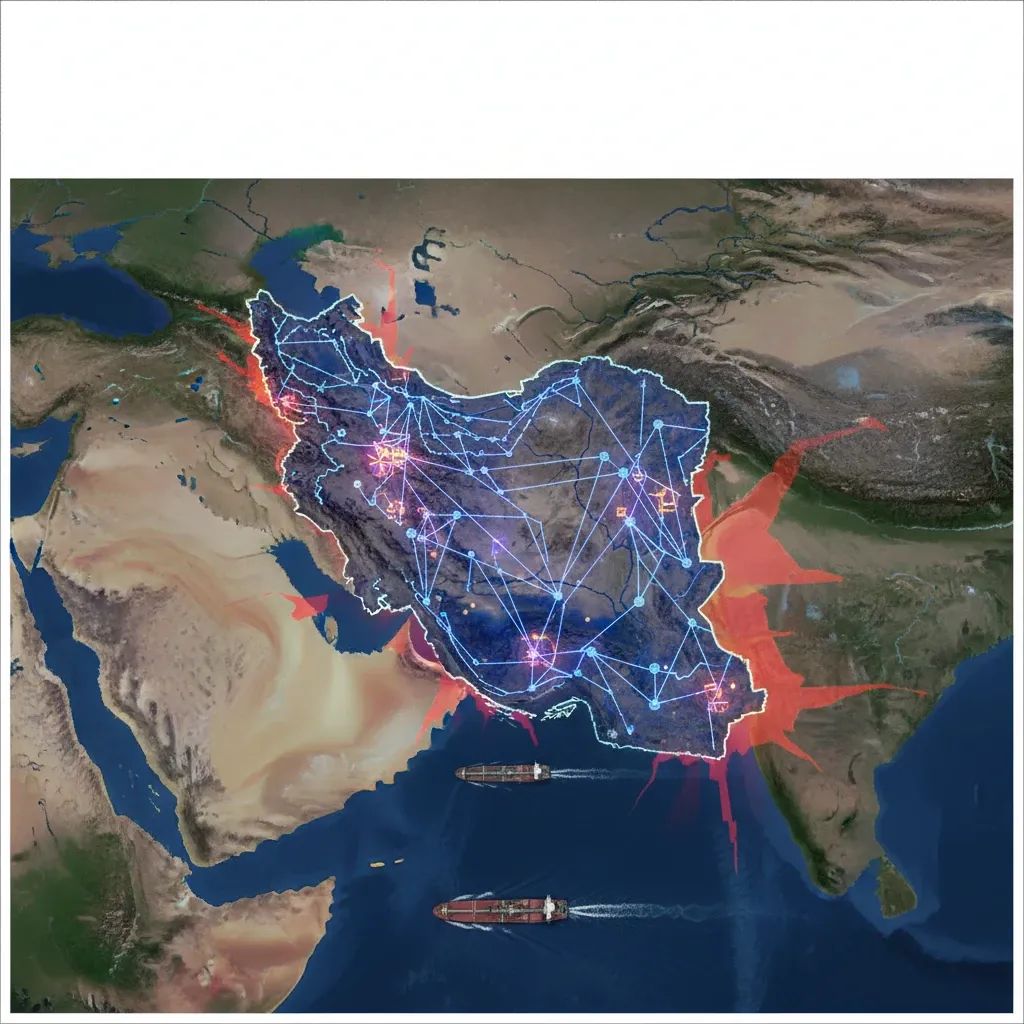
The Trump administration has presented Iran with a 15-point proposal via Pakistani intermediaries. Tehran has not yet accepted or rejected the plan, which aims to halt hostilities in the Middle East. For residents and businesses in the United Arab Emirates, a nation acutely exposed to regional instability and energy corridor disruptions, the success or failure of this plan will determine everything from fuel prices to security protocols in the coming months.
Impact on the UAE
The proposal carries immediate consequences for energy security, sanctions policy, military presence, and regional stability. The framework mandates the Strait of Hormuz remain a free maritime zone, critical for UAE ports and LNG exports. Approximately 25% of UAE's crude oil imports transit this waterway, making maritime stability essential for the nation's energy independence.
If Iran secures full sanctions relief, regional trade flows and financial markets could shift dramatically by mid-2026. The plan also calls for Washington to close primary US military bases in the region—a reversal that would reshape Gulf security architecture and accelerate UAE's bilateral defense partnerships.
A month-long ceasefire is on the table, potentially ending strikes that have already forced Emirates and Etihad to reroute dozens of daily flights away from Iranian airspace. Direct routing restoration could cut travel times to Europe and Asia by up to 90 minutes, reducing operational costs for UAE carriers.
The Framework: What Washington Is Demanding
The United States Department of State delivered the proposal in March 2026, building on earlier nuclear negotiations from May 2025 that collapsed after Israeli airstrikes targeted Iran's Natanz and Fordow facilities. At its core, the plan seeks to dismantle Iran's nuclear and regional military infrastructure in exchange for sanctions relief and security guarantees.
Nuclear Disarmament
Iran must cease all uranium enrichment on its territory and ship existing stockpiles abroad. Key installations at Natanz, Isfahan, and Fordow would be decommissioned, centrifuges destroyed, and the International Atomic Energy Agency granted unrestricted access to all nuclear sites. The proposal demands Iran commit in writing to never pursue nuclear weapons—a red line for Washington since the collapse of the Joint Comprehensive Plan of Action (JCPOA), the international nuclear agreement abandoned in 2018.
Missile Limits and Proxy Withdrawal
While a final decision on Iran's ballistic missile program remains deferred, the framework calls for a five-year suspension of missile development, with future arsenals restricted to defensive ranges and quantities. More controversially, Tehran must halt financing and arming proxy groups across Lebanon, Yemen, Iraq, and Syria—a demand that strikes at the heart of Iran's regional influence strategy.
Maritime and Sanctions Provisions
The Strait of Hormuz, the chokepoint through which roughly 21% of the world's oil transits, would be declared a free international waterway. In return, the United States would lift all nuclear-related sanctions, though human rights penalties would remain. Iran would also receive support for its civilian nuclear plant at Bushehr, with the UN "snapback mechanism"—which automatically reinstates sanctions if Iran violates terms—permanently removed.
What Washington Is Offering
The Trump administration has signaled unprecedented concessions. Beyond full sanctions relief, the United States would provide security guarantees against further attacks and begin closing its primary Middle Eastern military installations—a move that would fundamentally alter the Gulf's security landscape. President Trump announced a five-day pause in planned strikes on Iranian energy sites in late March, framing the halt as a gesture to allow Tehran time to respond.
Tehran's Response: Denial and Counter-Demands
Iranian officials deny direct negotiations with Washington, insisting only indirect messages have been exchanged through Pakistan, Turkey, and Egypt. The Iranian Parliament Speaker dismissed Trump's claims of "very good and productive conversations" as premature, while state media accused the White House of postponing strikes merely to calm US financial markets.
Mohsen Rezaei, a senior military adviser, stated that any resolution must include reparations for damages inflicted by US and Israeli strikes, while President Masoud Pezeshkian conditioned any ceasefire on an immediate halt to hostilities and guarantees against future aggression. Iran has flatly rejected demands to halt uranium enrichment, viewing the program as central to its energy independence and regional stature.
Supreme Leader Ali Khamenei's office suggested a willingness to sign a nuclear deal for swift sanctions removal—but only if accompanied by an end to what Tehran describes as Washington's "maximum pressure" rhetoric.
The Diplomatic Reality: Stalled Progress Amid Active Warfare
Despite optimistic White House statements, the conflict remains active. Iranian missile barrages have targeted Israel, Gulf Arab states, and northern Iraq in recent weeks, while US and Israeli warplanes continue sorties over Tehran and military installations. The United States Department of Defense has deployed additional troops to the Middle East, and commercial aviation has rerouted flights away from the Strait of Hormuz corridor.
Diplomats familiar with the talks note that the 15-point plan closely mirrors the May 2025 proposal, which fell apart after Israel destroyed key Iranian nuclear facilities. Some observers believe portions of the framework are now outdated, given the extent of damage to Iran's enrichment capacity and the reported Israeli assassinations of top Iranian negotiators—raising questions about who in Tehran holds the authority to finalize any agreement.
Analysts also suggest that US negotiators may have been inadequately prepared for the technical complexities of nuclear diplomacy, contributing to impatience that ultimately led to military escalation rather than sustained dialogue.
International Reactions: A Fractured Coalition
The Trump administration's approach has divided allies. While Israel has coordinated joint strikes with Washington, and Albania's Prime Minister Edi Rama voiced public support, key European powers have declined participation.
France, Germany, and the United Kingdom issued a joint statement condemning Iranian attacks on regional targets but emphasized they "cannot approve of strikes conducted outside international law." French President Emmanuel Macron called the war "unlawful and unnecessary," while Spain denied the United States permission to use its bases for operations against Iran, labeling the strikes "unjustified and dangerous."
Russia has condemned the campaign as aggression and warned of nuclear proliferation risks, offering diplomatic support to Tehran without direct military involvement. China echoed calls for de-escalation, stressing respect for Iranian sovereignty and rejecting the use of force.
In the Gulf, reactions have been cautious. While regional governments share Washington's concerns about Iranian nuclear ambitions, many fear being drawn into a broader conflict that could destabilize energy exports and tourism. NATO Secretary General Mark Rutte described Europe as "supportive" of US actions, though this contrasts sharply with individual member states' explicit non-involvement.
Impact on Residents and Business
For expatriates, investors, and logistics operators in the United Arab Emirates, the outcome of this diplomatic gambit carries immediate consequences:
Energy costs: A sustained ceasefire and reopening of the Strait of Hormuz could stabilize regional fuel prices, which have spiked by approximately 18% since February according to regional energy indices. Failure to reach agreement risks further supply disruptions for UAE's fuel-dependent economy and power generation sector.
Flight operations: Emirates and Etihad have already rerouted dozens of daily services away from Iranian airspace. A formal truce would restore direct routing through UAE airspace to European and Asian hubs, cutting travel times by up to 90 minutes and reducing operational costs.
Financial markets: UAE-based funds with exposure to regional equities have seen volatility tied to strike announcements. Sanctions relief for Iran could unlock new trade opportunities but also complicate compliance frameworks for multinationals operating in Dubai and Abu Dhabi.
Security posture: The proposed closure of US bases would shift defense responsibilities to Gulf Cooperation Council members, likely accelerating bilateral security agreements and defense spending across the UAE and neighboring emirates.
What Comes Next
The Trump administration has framed the proposal as Iran's "last chance" to avoid further military action, with the five-day pause in strikes set to expire by month's end. Iranian officials, however, have signaled they are reviewing the terms without committing to a timeline.
The International Atomic Energy Agency has received a briefing on the framework but has not yet confirmed whether it would accept the monitoring role envisioned under the plan. Meanwhile, the US Department of State continues to engage intermediaries, though the absence of direct bilateral talks raises doubts about whether substantive negotiation is even underway.
For now, as of late March 2026, the region remains on a knife's edge—one where diplomatic breakthrough and renewed escalation are equally plausible outcomes. Residents and businesses across the United Arab Emirates should monitor developments closely, as the next few weeks will likely determine whether the Gulf enjoys a return to stability or braces for prolonged disruption.


