
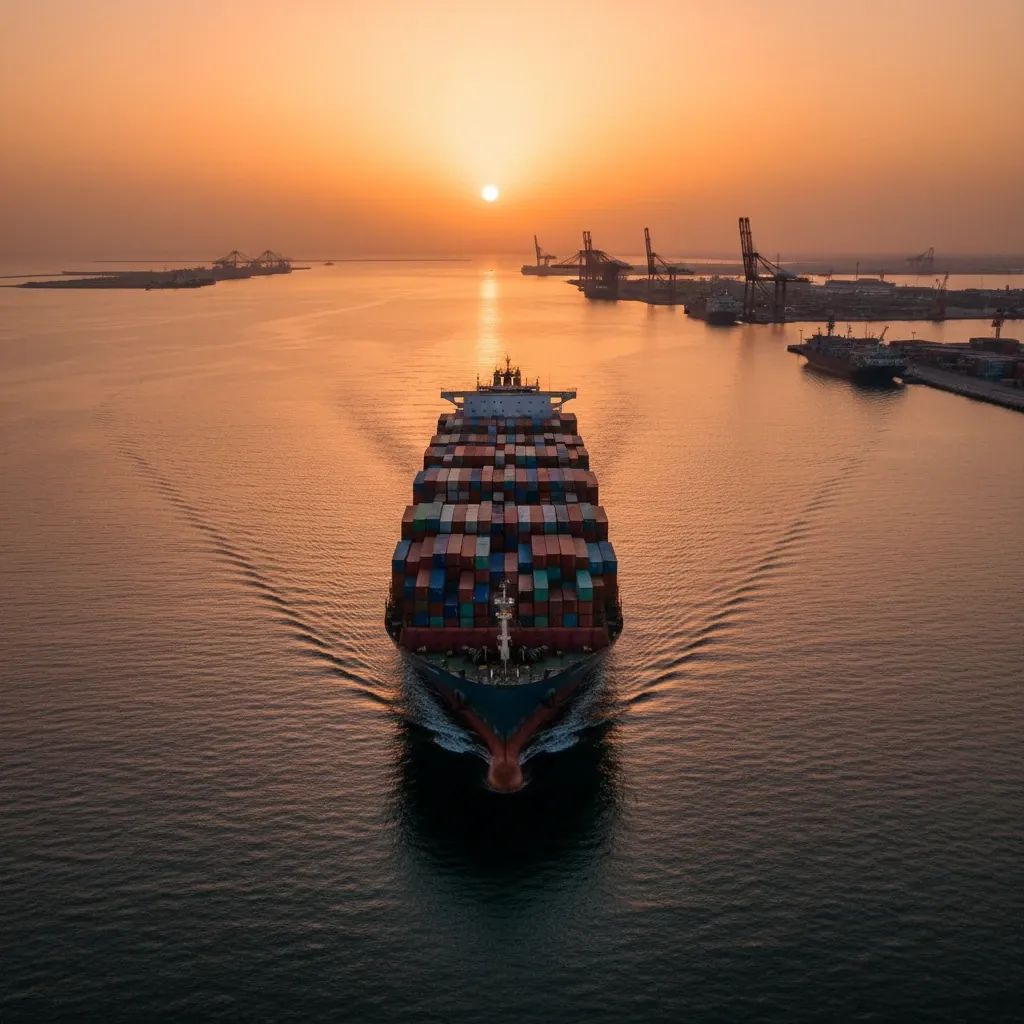
A Palau-flagged oil tanker carrying 15 Indian and 5 Iranian crew members was struck by an undisclosed weapon north of Oman's Khasab Port on Sunday, March 1, 2026, injuring four people and forcing the evacuation of all 20 personnel. The attack on the SKYLIGHT vessel highlights how escalating tensions in the Strait of Hormuz and Gulf of Oman are now threatening one of the world's most vital energy transit corridors, with direct implications for fuel supplies and shipping insurance premiums across the Middle East.
Why This Matters
• Regional supply chain exposure: The Strait of Hormuz, where the attack occurred, channels roughly one‑fifth of global oil exports. Disruptions here ripple into pump prices and electricity generation from Abu Dhabi to Fujairah.
• Evacuation precedent: All crew were successfully removed, but the four injured personnel underscore the physical danger to maritime workers in United Arab Emirates adjacent waters.
• Strategic location: The SKYLIGHT incident occurred in Musandam Governorate waters, directly opposite UAE federal waters, placing the attack within sight of Emirati radar stations and coast‑guard patrols.
What Happened Five Nautical Miles Off Khasab
Oman's Maritime Security Centre confirmed the incident shortly after midday, releasing minimal details: the SKYLIGHT was struck approximately 5 nautical miles due north of Khasab Port in the Musandam Governorate, a thumb of Omani territory that juts into the Strait of Hormuz. The Musandam peninsula lies directly opposite United Arab Emirates federal waters, placing the attack within sight of Emirati radar stations and coast‑guard patrols.
Rescue operations unfolded rapidly. Omani naval, security, and civil authorities worked in tandem to evacuate the entire complement of 20 seafarers—15 holding Indian passports and five Iranian nationals—transferring the wounded to shore‑based medical facilities. The Oman News Agency described the coordination as a demonstration of the sultanate's maritime incident readiness, a capability that neighboring Gulf states, including the United Arab Emirates, rely upon when vessels in distress drift into shared search‑and‑rescue zones.
No entity has publicly claimed responsibility for the strike, and neither Omani nor international investigators have disclosed the weapon type. The timing places the assault within a period of heightened regional tensions following military operations in the area. Regional security officials are monitoring for patterns of coordinated activity across multiple maritime chokepoints.
Impact on United Arab Emirates Shipping & Energy Security
The attack reverberates through United Arab Emirates maritime commerce in three immediate ways:
Insurance premiums spike. War‑risk underwriters have already raised rates for vessels transiting the Strait of Hormuz by as much as 0.5% of hull value per voyage since February. Every additional incident pushes premiums higher, inflating freight costs for everything from crude oil to containerized goods arriving at Jebel Ali or departing from Khalifa Port.
Route diversions lengthen supply chains. Major container lines—Hapag‑Lloyd, CMA CGM, Maersk—have suspended Hormuz transits or rerouted around the Cape of Good Hope, adding two weeks and thousands of dollars in fuel to each voyage. For United Arab Emirates importers and exporters, this translates to delayed deliveries and higher logistics bills.
Emirati waters become refuge zones. Shipping companies are instructing captains to seek shelter in UAE or Qatari territorial waters if tensions escalate further. Anchorages off Fujairah and Sharjah have seen a noticeable uptick in vessels sitting idle, awaiting clearer security signals before attempting the Hormuz passage.
The US Navy Central Command has issued a formal maritime warning zone covering the Arabian Gulf, Gulf of Oman, North Arabian Sea, and the Strait of Hormuz, explicitly stating it cannot guarantee the safety of neutral shipping. For vessel operators calling at United Arab Emirates ports, this is an important advisory that even non‑combatant flags may encounter risks in the region.
Broader Regional Security Concerns
Maritime tensions across the region remain elevated. Yemen's Houthi movement has previously conducted operations in the Red Sea and Gulf of Aden, and ongoing regional dynamics create uncertainty for commercial shipping.
Maritime security bulletins warn of elevated operational risks, and mariners are advised to maintain continuous awareness and report suspicious activity to relevant maritime authorities. Vessel‑tracking data show measurable changes in traffic patterns, with some ships adjusting their transits based on evolving security assessments.
What Oman's Response Reveals About Gulf Cooperation
Oman's swift coordination of military, security, and civil agencies in the SKYLIGHT rescue underscores the sultanate's role in regional maritime security. Unlike the United Arab Emirates, which openly supports US maritime patrols, Oman maintains diverse diplomatic relationships and often coordinates when vessels encounter challenges in shared waters.
For United Arab Emirates coast‑guard planners, Oman's capabilities are a critical backstop. The two nations share overlapping search‑and‑rescue zones in the Gulf of Oman, and any major incident in Musandam waters could easily involve Emirati helicopters, patrol boats, or medical evacuation assets. The SKYLIGHT evacuation tested that coordination in real time—and, by all accounts, it functioned smoothly.
What Residents & Businesses Should Monitor
• Fuel price adjustments: If attacks continue, expect petrol and diesel costs at United Arab Emirates pumps to edge higher as refiners pass on increased shipping insurance and longer voyage expenses.
• Delivery delays: Goods ordered from Europe or Asia may arrive later than scheduled if freight lines continue avoiding the Hormuz route.
• Travel advisories: Cruise operators and ferry services in the Gulf may alter schedules or suspend certain itineraries if the security environment deteriorates further.
The international community continues to monitor maritime incidents in the region. For United Arab Emirates residents and companies reliant on seaborne trade, the message is clear: heightened vigilance is warranted as regional conditions evolve.


