
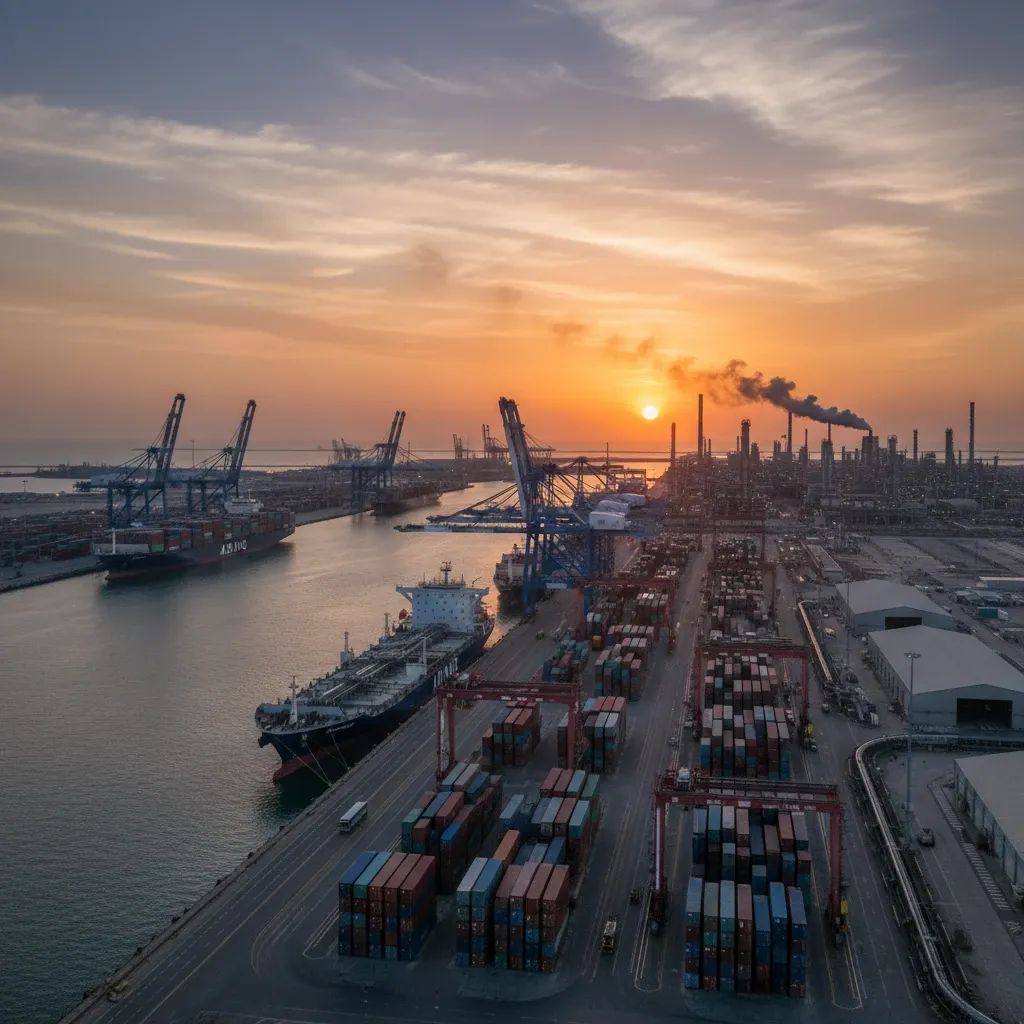
Global crude benchmarks are trading at their strongest levels in seven months, a surge driven significantly by mounting geopolitical tensions in the Persian Gulf. For residents and businesses in the United Arab Emirates—a nation whose economy is deeply interwoven with hydrocarbon revenue, regional stability, and energy trade logistics—the rally carries both opportunity and risk.
Why This Matters
• Price Stability for UAE Exporters: Higher oil prices support government revenues and sovereign wealth fund performance, benefiting the broader economy.
• Fuel Cost Pressure: Elevated oil prices could eventually translate to higher petrol prices domestically and increased logistics costs for UAE-based retailers and freight operators.
• Geopolitical Proximity: The UAE sits adjacent to the Strait of Hormuz, a critical chokepoint for global oil and LNG trade—any disruption here would directly affect Emirati ports, refineries, and trade hubs.
Benchmark Prices Push Past $71 as Geopolitical Premium Takes Hold
As of midday Wednesday trading, Brent crude futures climbed to $71.10 per barrel, marking the highest close since July 31 of last year. West Texas Intermediate (WTI) followed suit at $65.85, its strongest performance since August 4. The gains represent a significant rally driven by concerns over geopolitical instability in the region.
Market analysts attribute the gains to heightened geopolitical risk premiums, as investors price in uncertainty around potential supply disruptions rather than current fundamental supply-demand imbalances.
The Iran Factor: Why the Strait of Hormuz Matters to UAE Residents
The primary catalyst for the current rally is escalating tensions between the United States and Iran. These geopolitical risks have heightened concerns among oil traders and maritime insurers about potential disruptions to regional energy infrastructure.
The Strait of Hormuz is critical to the UAE's economy. A significant portion of the world's seaborne oil passes through this narrow waterway annually, and any sustained disruption would immediately affect:
• UAE crude exports from Abu Dhabi's offshore fields and pipeline infrastructure.
• Refined product flows from major regional distribution hubs.
• Regional freight rates, affecting businesses across the Emirates' retail, industrial, and logistics sectors.
Rising insurance premiums for vessels calling at Emirati ports, driven by heightened geopolitical uncertainty, add to costs that are ultimately borne by consumers and businesses across the Emirates.
OPEC+ Production Strategy
The OPEC+ cartel continues to play a central role in managing oil supplies. The group has maintained production discipline aimed at stabilizing markets, and the UAE, as a key OPEC member, remains focused on balancing short-term revenue considerations with long-term market stability.
For UAE-based energy firms and sovereign investors, this balancing act remains critical: higher prices bolster near-term revenues, but prolonged instability threatens long-term demand growth, particularly from Asia, the Emirates' largest export market.
What This Means for UAE Businesses and Expats
The immediate practical implications vary by sector:
For Motorists and Transport Fleets: While the UAE government subsidizes some fuel costs, sustained higher oil prices typically lead to gradual adjustments in energy costs over time. Fleet operators—taxis, delivery services, logistics companies—should monitor developments.
For Retailers and Importers: Higher oil prices can translate to costlier sea and air freight. UAE-based e-commerce platforms, supermarket chains, and construction material suppliers may face input cost pressures, particularly for goods sourced internationally.
For Real Estate and Hospitality: The UAE's property and tourism sectors benefit from stable government revenues and investor confidence. However, geopolitical instability could impact inbound tourism and foreign investment flows pending clarity on regional developments.
For Energy Sector Professionals: The rally reinforces the UAE's strategic importance as a stable energy producer and logistics hub. Upstream and downstream projects continue to attract international interest.
Market Focus on Geopolitical Risks Over Fundamentals
Market observers note that current price movements are being driven primarily by geopolitical risk considerations. Global oil inventories remain relatively well-supplied, and analysts point to ample production capacity globally when security conditions are stable.
For a trading and logistics hub like the UAE, this kind of volatility creates both risks and challenges as businesses navigate uncertain conditions.
Contingency Planning and Market Monitoring
The United Arab Emirates Federal Government continues to monitor global energy markets and regional security developments closely. Industry sources indicate that energy officials are evaluating scenarios ranging from stable conditions to potential supply disruptions.
For now, the message to UAE residents and businesses is clear: remain aware of developments affecting global oil markets, monitor potential impacts on domestic costs, and plan accordingly for continued market volatility. The current oil price movements highlight the importance of the Gulf region to global energy security—and the UAE's role as a key hub for regional and international trade.


