The United Arab Emirates and its Gulf neighbors face continued economic uncertainty as global crude prices hover near US$93 per barrel for West Texas Intermediate and US$95 for Brent, reflecting a fragile pause in a week that saw oil surge more than 6% before retreating Thursday on fleeting optimism about US-Iran diplomatic progress. That optimism may be premature: Iranian officials stated as recently as today that "no tangible progress" has been made in peace negotiations, and the Strait of Hormuz—through which roughly 20% of the world's oil normally flows—remains largely shut nearly four months after the February 2026 escalation.
Why This Matters for Gulf Residents
• Energy costs remain elevated: Prolonged disruption through the Strait could push Brent past US$120 per barrel by August, directly impacting fuel subsidies and utilities across the UAE and neighboring states.
• Regional economic fracture: The UAE, along with Saudi Arabia and Qatar, depends on the Strait for 80% of caloric food imports and nearly all energy exports, creating a systemic risk to Gulf Cooperation Council economies.
• Investment climate: Volatility in crude markets is rattling sovereign wealth fund portfolios and deterring foreign direct investment into UAE energy and logistics sectors.
• Timeline uncertainty: Even if a ceasefire is brokered, Iranian sea mines in the Strait require European mine-clearance operations, delaying full tanker traffic until potentially Q1 2027.
The Diplomatic Stalemate
US President Donald Trump has oscillated between declaring talks in their "final stages" and stating he "couldn't care less" if negotiations collapse entirely. Iran's foreign ministry, meanwhile, has conditioned any Washington agreement on a ceasefire in Lebanon, linking the Strait's fate to Israel's military operations against Hezbollah. This conflicting messaging underscores the fragility of any near-term breakthrough.
A tentative proposal floated in May centered on reopening the Strait in exchange for sanctions relief and unfreezing Iranian assets, but stopped short of concessions on Tehran's nuclear program or ballistic missile development. Communication channels remain open—messages are being exchanged through intermediaries—but formal negotiations have stalled following recent military exchanges between Washington and Tehran.
The UCLA Anderson Forecast for June 2026 now identifies the Iran conflict and Strait closure as the leading risk to the US economy, displacing earlier concerns about tariffs and predicting slower growth with higher inflation. For the UAE, this translates into a dual squeeze: rising import costs for food and industrial goods, and declining revenues from energy exports that underpin the national budget.
Supply Realities and Market Mechanics
The Strait of Hormuz typically handles 20.9 million barrels per day of crude oil and petroleum products, roughly 25% of the world's maritime oil trade. Since late February, that flow has dropped to its lowest recorded levels, removing an estimated 14 million barrels per day—or 14% of projected 2026 global supply—from the market.
Asian importers are bearing the brunt. China, India, Japan, and South Korea receive 89% of the crude and condensate that normally transits the Strait. India, which sources 40% to 50% of its crude via this chokepoint, has already seen production line shutdowns in energy-intensive industries. For the UAE, which serves as a regional logistics and refining hub, this disruption cascades into delayed shipments, spiking insurance premiums for tankers, and strained refinery utilization rates.
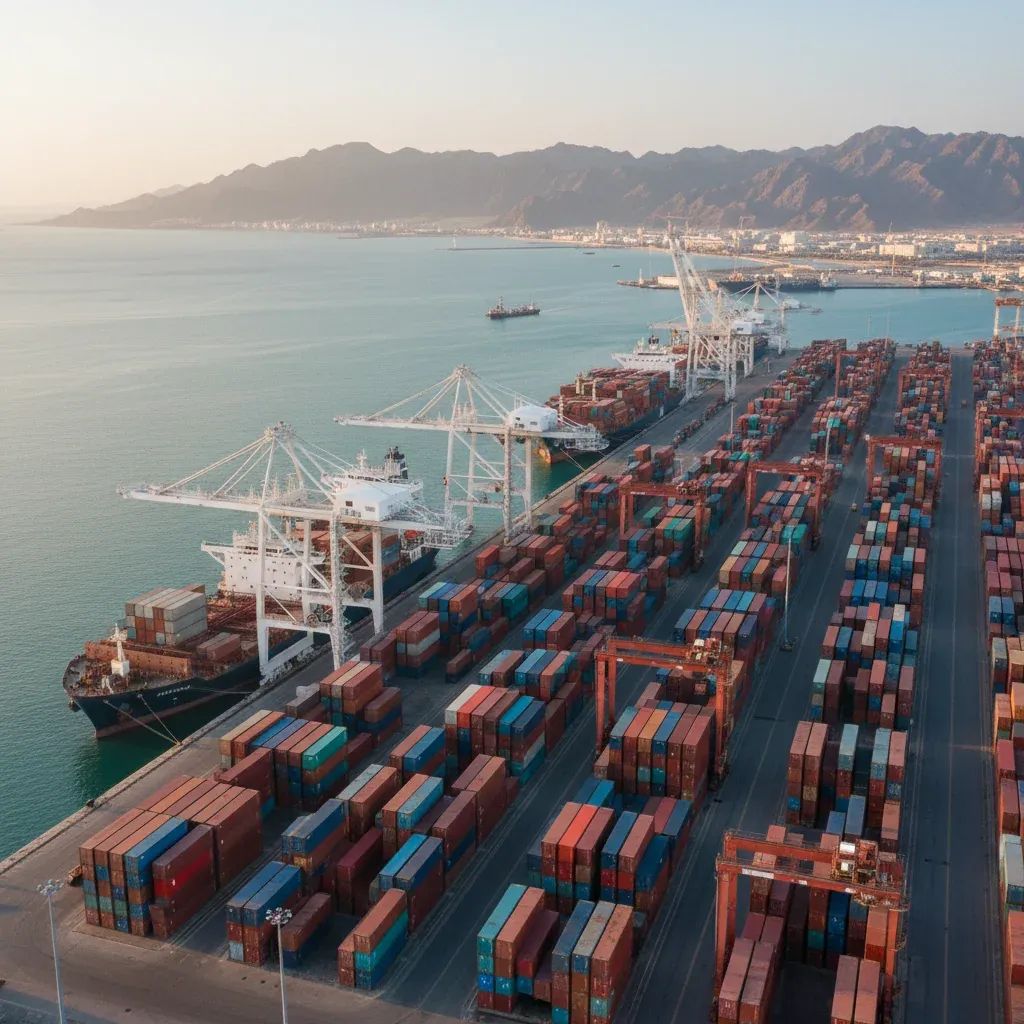
Only Saudi Arabia and the UAE possess limited alternative pipeline routes to bypass the Strait entirely. The UAE's Abu Dhabi Crude Oil Pipeline, with a capacity of approximately 1.5 million barrels per day, offers partial relief but cannot replace the volume lost. This infrastructure advantage has positioned UAE ports as critical transshipment nodes, yet chronic bottlenecks and elevated freight costs are eroding that competitive edge.
Beyond Oil: The Fertilizer and LNG Crunch
The Strait's closure extends well beyond crude. The Persian Gulf accounts for 30% to 35% of global urea exports and 20% to 30% of ammonia shipments. With fertilizer supply chains fractured, global food security is at risk, and the UAE's reliance on imported agricultural inputs has intensified price pressures on basic goods.
Liquefied natural gas is another flashpoint. Over one-quarter of global LNG trade transits the Strait, with Qatar's exports to Asia particularly vulnerable. The UAE, a major LNG re-exporter and consumer, faces tighter spot market availability and higher hedging costs for long-term contracts.
Methanol, aluminum, sulfur, and helium—critical for semiconductors and manufacturing—are also seeing trade disruptions. For the UAE's burgeoning industrial sector, this means supply chain delays that ripple through construction, electronics, and pharmaceuticals.
What Analysts Are Predicting
Energy market forecasts diverge sharply depending on diplomatic outcomes. Rystad Energy models an extreme scenario in which Brent crude reaches US$180 per barrel by August if conflict fully re-escalates. ExxonMobil's Neil Chapman warned that prices could hit US$150 to US$160 if global inventories—currently at historic lows—continue depleting into the third quarter.
Conversely, J.P. Morgan Global Research projects Brent averaging around US$60 if US-Iran talks succeed and supply normalizes, though the firm acknowledges this assumes no protracted military action. The International Energy Agency anticipates a gradual resumption of Middle East oil deliveries by mid-2026 but cautions that flows will remain below pre-conflict levels until Q1 2027.
The market is currently pricing in a middle path: WTI trading between US$80 and US$120, and Brent between US$90 and US$120. For UAE investors and businesses, this range implies sustained volatility, complicating capital allocation decisions and long-term contracting.
Regional Geopolitics: Oman's Balancing Act
Oman, the UAE's eastern neighbor and co-steward of the Strait, has resisted US pressure to sever ties with Iran. Muscat insists its discussions with Tehran focus on establishing a lawful management system for the waterway in accordance with international law, with consultations planned at the UN's International Maritime Organization.
Iran's foreign minister has stated that Iran and Oman will jointly manage the Strait, a declaration that complicates Washington's efforts to unilaterally reopen the chokepoint. Some non-Iranian vessels have transited with Iranian approval, but overall traffic in May hit its lowest levels since the crisis began, partly due to US actions targeting Iran-associated ships.
For the UAE, Oman's neutrality is both a diplomatic asset and a strategic risk. Close ties with Muscat offer a potential backchannel for Emirati engagement with Tehran, yet Oman's insistence on balancing US and Iranian interests limits coordinated Gulf action.
Impact on Residents and Investors
The UAE's inflation outlook is directly tied to oil and freight costs. Diesel and jet fuel prices remain elevated, affecting everything from grocery delivery to air travel. The UAE Central Bank has signaled readiness to intervene if currency volatility intensifies, but prolonged energy shocks could test the dirham's peg to the US dollar.
Real estate and hospitality sectors, already sensitive to global sentiment, are seeing investor caution. Dubai's logistics and free-zone operators report contract delays as clients hedge against further supply chain disruptions. For expatriates and long-term residents, the practical takeaway is clear: budget for higher utilities, fuel, and food costs through at least the end of 2026.
Energy-intensive businesses—manufacturing, cold storage, data centers—face margin compression unless they lock in long-term power purchase agreements. The UAE government's renewable energy push, including solar and nuclear capacity expansion, offers some insulation, but the transition timeline extends beyond the current crisis window.
The Path Forward
A ceasefire would trigger immediate but incomplete relief. Iranian sea mines require months of clearance operations, and restarting idled production and refining capacity is a slow process. The International Energy Agency warns that elevated diesel and jet fuel prices could persist well into the recovery period, even after crude flows resume.
For the UAE, the calculus is stark: continued disruption threatens the Gulf Cooperation Council economic model, while a hasty diplomatic settlement that leaves regional security questions unresolved merely postpones the next crisis. Policymakers in Abu Dhabi are quietly advocating for a multilateral framework that ensures freedom of navigation without ceding control to any single actor—a position that aligns with Oman's approach but may lack the leverage to shape US-Iran terms.
In the interim, oil's modest Thursday pullback offers little comfort. The 6% weekly gain reflects a market pricing in persistent risk premiums, and any fresh military incident or diplomatic breakdown could send Brent back toward triple digits within days. For residents and investors in the UAE, the takeaway is pragmatic: prepare for volatility, diversify exposure, and monitor diplomatic signals closely—because the Strait's fate will dictate economic conditions across the Gulf for the remainder of 2026.