
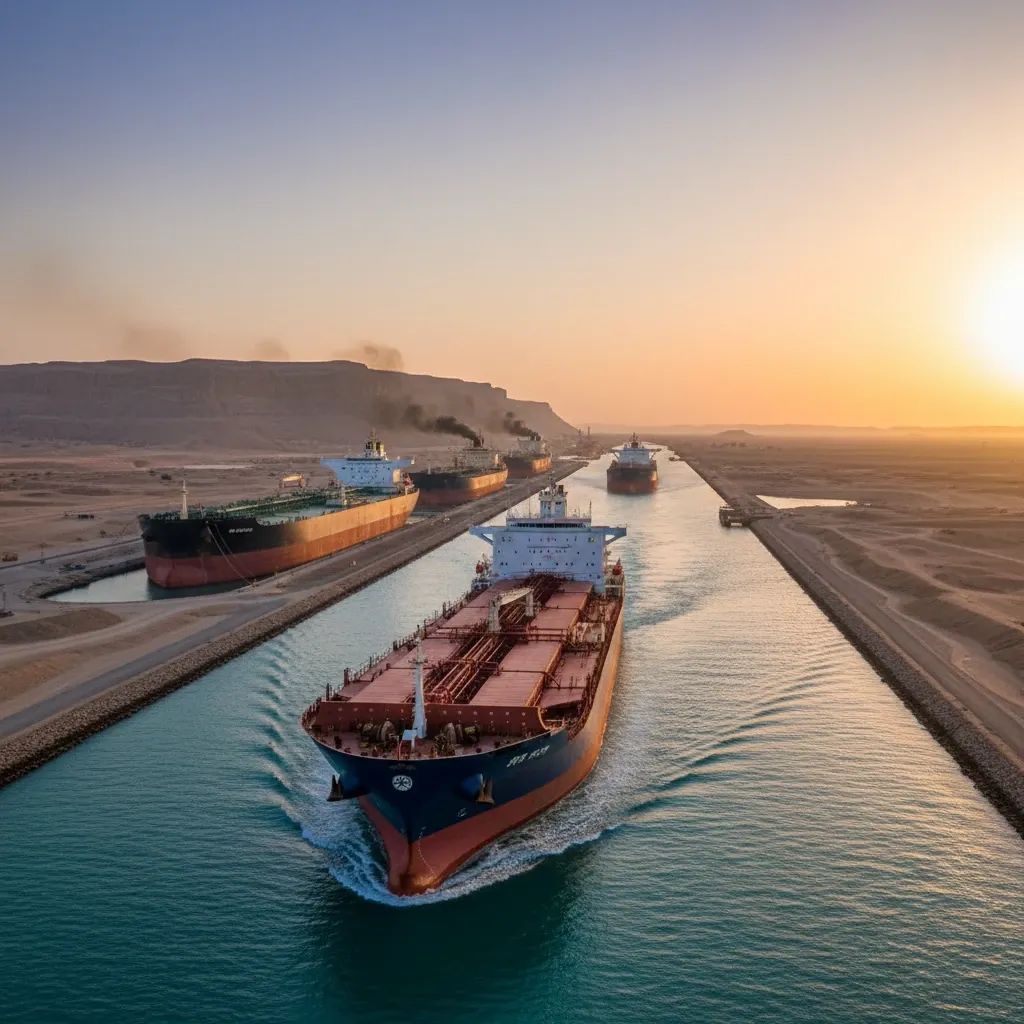
When geopolitics fractures, energy markets feel the shock in real time. Brent crude surged to $109.35 on April 28 as diplomatic channels between Washington and Tehran remain deadlocked, leaving the Strait of Hormuz—the single most critical artery for global petroleum flows—effectively strangled. For residents, businesses, and investors across the United Arab Emirates, this isn't abstract market noise. It's a direct hit to transportation costs, manufacturing inputs, and the broader stability of regional economies that depend on predictable energy pricing.
Why This Matters
• Significant premium above pre-crisis baseline: Brent is trading 72.81% higher than a year ago, reflecting substantial supply constraints resulting from the ongoing disruption through the Strait.
• Tangible household and business impact: Jet fuel costs feeding Dubai and Abu Dhabi airports have climbed sharply, directly affecting airline ticket prices and delivery logistics. Manufacturing and petrochemical firms face compressed margins as feedstock prices spike.
• No near-term resolution in sight: US-Iran diplomatic efforts remain stalled, and energy analysts expect elevated pricing to persist as long as restrictions continue through the Strait, barring a major diplomatic breakthrough.
The Geometry of Disruption
The Strait of Hormuz is a chokepoint of critical importance to global energy supply. At its narrowest, it spans just 21 nautical miles. Through this passage flows roughly one-fifth of all petroleum consumed globally—approximately 20 to 21 million barrels daily under normal conditions. Since late February 2026, when US and Israeli air operations commenced against Iranian targets, Tehran has effectively restricted passage through the Strait, significantly constraining oil flows to international markets.
A conditional ceasefire brokered by Pakistan took effect on April 8 and was extended on April 21, yet it has not restored flowing commerce. Iran has implemented selective transit policies, with reports indicating restrictions on certain tankers. This graduated approach to passage is functioning as an effective constraint on supply—supplies that should reach European refineries, North American terminals, and Asian importers face significant delays or restrictions.
The United Arab Emirates possesses alternative pipeline infrastructure designed to bypass the Strait entirely, shared with Saudi Arabia. These alternative routes provide some supply flexibility, though they cannot fully absorb the missing supply from the Strait disruptions. The constrained supply dynamic remains tight, and tight markets command premium pricing.
The Nuclear Stalemate Beneath Oil Markets
Surface-level, this appears to be a shipping dispute. Fundamentally, it reflects an unresolved standoff over Iran's nuclear and ballistic missile programs. According to recent reporting, Pakistani mediation efforts have not yet achieved a breakthrough.
US Secretary of State Marco Rubio has indicated that Washington maintains strict conditions regarding Iranian sanctions relief, linking it to nuclear de-escalation. This fundamental divergence between US demands and Iranian negotiating positions has complicated diplomatic resolution efforts. For those living in the UAE, this abstract diplomatic standoff has concrete implications. Energy-intensive industries—aviation, container shipping, manufacturing—cannot plan with confidence. Cost recovery becomes difficult when input prices fluctuate due to geopolitical uncertainty. Airlines operating out of Dubai International or Abu Dhabi International are absorbing substantial jet fuel premiums. Port operators handling cargo throughput face elevated fuel surcharges. Expat workers budgeting household expenses must account for transport costs that have become less predictable.
From Predicted Surplus to Actual Deficit
Three months ago, the energy outlook seemed reassuring. Major energy analysts had forecast more moderate pricing for 2026. Then geopolitical disruptions intervened.
Energy analysts now point to the significant supply deficit created by Strait disruptions, a reversal from prior expectations. Major investment banks have revised their forecasts substantially upward, with Brent now trading well above earlier 2026 predictions. The consensus reflects heightened uncertainty about how long restrictions will persist if diplomatic stalemate continues.
The energy market dynamics indicate tighter liquidity in international markets, reflecting the reality that alternative suppliers have not stepped meaningfully into the gap left by Middle Eastern supply constraints.
Real Costs for Real Residents
Across Abu Dhabi and Dubai, petrol station prices and broader energy costs reflect this disruption. Global energy prices have increased significantly, affecting consumer purchasing power broadly. While UAE fuel prices operate under government regulation and thus may not immediately reflect spot market movements, the broader energy cost environment is tightening.
Refined products—diesel, jet fuel, liquefied petroleum gas—have spiked noticeably as crude prices have risen, according to industry tracking. This matters for trucking operations, shipping companies, and utilities. A construction firm bidding on a major project must now assume higher fuel costs; either margins compress or clients pay more. Retail goods transported via Jebel Ali Port or Port Rashid face costlier logistics, a burden that trickles to shelf prices.
Expatriate communities should note: extended energy cost pressures typically influence broader economic conditions. For those with mortgages in the UAE real estate market or investment exposure to regional equities, the current energy environment creates uncertainty that may evolve as the situation develops.
Strategic Buffers and Limits
Major energy-importing nations have strategic petroleum reserves that provide some buffer against supply disruptions. Alternative pipeline networks and supply arrangements offer some geographic redundancy for major consumers.
The United Arab Emirates, as both a supplier and trade hub, benefits from robust energy infrastructure and storage capacity. Yet this advantage is partial. As a global financial and logistics center, the UAE is deeply integrated into international trade networks. When shipping costs rise, margins compress. When energy uncertainty spreads, it affects sectors sensitive to cost inflation.
The selective restrictions Iran has imposed on passage also create pricing complexity and uncertainty that may evolve if the geopolitical situation changes.
The Shape of the Next Months
Industry executives are notably cautious about the near-term outlook. Even if diplomats achieve a breakthrough, normalizing traffic flows through the Strait of Hormuz could take time. Ship insurance and routing arrangements reflect elevated caution. Security concerns remain present. This suggests a geopolitical risk premium remains embedded in current energy pricing.
If the Strait opens under stable conditions, energy analysts suggest prices could moderate from current levels. However, few consider this probable in the immediate term. Conversely, any escalation—heightened military tensions or ceasefire breakdown—could drive prices higher, a threshold that would likely trigger demand pressures across energy-dependent sectors.
For the United Arab Emirates, the practical approach is clear: operate business strategies on the assumption of sustained elevated energy costs while current disruptions persist. The diplomatic stalemate is not resolving itself. Prices are not reverting to pre-crisis levels on their own. Adaptation, rather than speculation on rapid resolution, remains the prudent stance for residents and businesses.


