
The Real Cost of $100 Oil: Why Your Next Paycheck Matters
This analysis examines a March 2026 scenario in which global oil disruptions impact the UAE economy. On March 13, Brent crude settled at $103.14—a price point last seen in early 2023—alongside U.S. crude near $99. For anyone living or working in the United Arab Emirates, the implications extend far beyond trading screens and financial headlines. This isn't a temporary spike. It's a structural shift that will reshape household expenses, employment prospects, and investment returns across the emirates.
Why This Matters for UAE Residents
• Energy costs are rippling into daily life: Diesel for logistics and construction has climbed roughly 12% month-over-month; expect airline tickets from Dubai and Abu Dhabi to rise 8-15% as carriers pass fuel surcharges to passengers. A family of four in Dubai spending AED 800 monthly on groceries should anticipate increases of AED 80-120 per month across food, utilities, and transport.
• Central banks are holding rate cuts hostage: With inflation accelerating globally, the Central Bank of the UAE faces mounting pressure to delay interest rate reductions, keeping borrowing costs high even as purchasing power erodes. Expats with variable-rate mortgages and business loans will see no relief on monthly payments even as living expenses rise.
• The dirham peg faces strain: Higher oil revenues support the dirham's peg to the U.S. dollar, but imported inflation erodes purchasing power for ordinary residents. Government fuel subsidies shield Emirati nationals but offer limited protection to the broader expat population, creating a two-tier economic impact.
• Supply chain delays are baking in: More than 70% of traffic through the Strait of Hormuz has stalled due to war-risk insurance and operational pauses; goods routinely anchored weeks ago remain in limbo, inflating import costs across food, electronics, and consumer goods.
The Chokepoint That Redefined Energy Markets
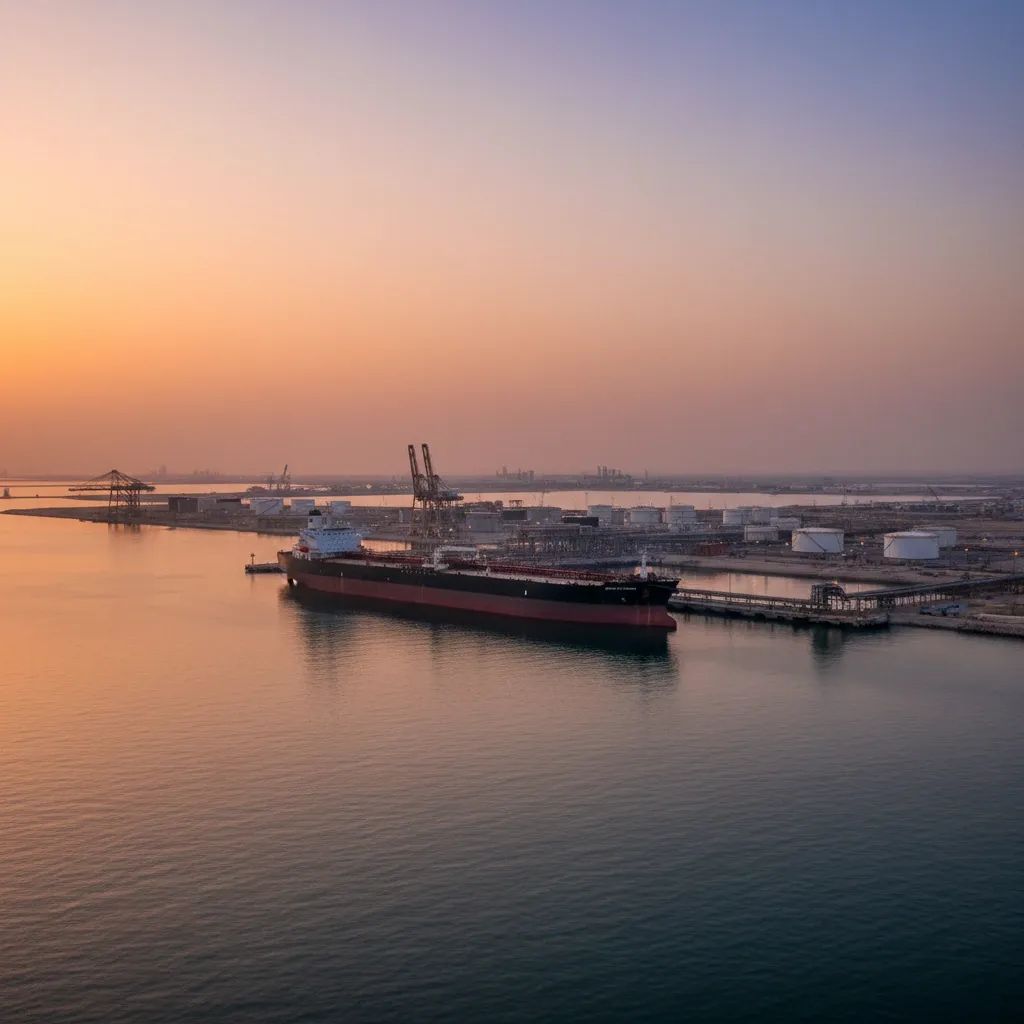
Geography is destiny in energy markets, and the Strait of Hormuz remains the world's most consequential 150-kilometer waterway. Situated between the Arabian Peninsula and Iran, this passage channels roughly 20% of the planet's crude oil and significant volumes of liquefied natural gas. For the United Arab Emirates, the Strait isn't an abstraction—it's the physical artery through which national wealth flows outward and essential imports arrive inbound.
What has unfolded since early March represents a disruption unlike any recorded since the 2020 pandemic. Tanker operators face cascading obstacles: war-risk premiums that have doubled overnight, regulatory uncertainty, and the simple calculus that anchoring a vessel costs less than gambling with a transit through a contested waterway. The result is starkly visible in maritime data. Crossings have collapsed by over 70%. The International Energy Agency estimates that global oil supply will plunge by 8 million barrels per day in March alone—a deficit larger than the entire production capacity of many developed nations combined.
For producers in the Arabian Gulf, the consequence has been forced production cuts. The United Arab Emirates, Saudi Arabia, and other regional suppliers have collectively reduced output by at least 10 million barrels daily, not by strategic choice but by necessity. Export infrastructure is either damaged or inaccessible. Over 3 million barrels per day of refining capacity sits idle.
UAE's Strategic Response: Pipelines and Reserves
What many residents don't realize is that the UAE has developed infrastructure designed specifically to mitigate Strait of Hormuz disruptions. The Abu Dhabi Crude Oil Pipeline to Fujairah (also known as the bypass pipeline) circumvents the Strait entirely, allowing crude to reach markets via an alternative route. In the current crisis, this 550,000 barrel-per-day capacity represents a critical safety valve—though it operates at full capacity and cannot fully replace Strait-dependent flows. For residents concerned about supply security, this infrastructure ensures the UAE maintains options even during prolonged disruptions.
Additionally, the IEA, of which the United Arab Emirates is a member, has authorized the release of 400 million barrels of oil from emergency reserves. This represents a coordinated effort at a scale not attempted since the 2011 Libyan civil war. For the UAE, this action signals both international cooperation and acknowledgment that the crisis severity warrants strategic reserve mobilization.
What Residents and Businesses Should Expect
For Emirati nationals: Government fuel subsidies provide a buffer against the steepest cost increases, but indirect effects will remain unavoidable. Employer cost-of-living adjustments may lag inflation, particularly in private sector roles. Real estate investments may face short-term valuation pressure as construction costs rise and tourism-dependent sectors show weakness.
For expat workers: Rising fuel, food, and utilities represent immediate household budget pressures. Workers in construction, logistics, and hospitality should anticipate potential employer cost-cutting measures; proactive salary negotiations or cost-of-living allowance discussions should occur now before companies formally announce cutbacks. Transportation allowances should be reviewed—many companies haven't adjusted these meaningfully despite 12% diesel inflation.
For small businesses: Lock in energy costs where contractually possible. Construction firms, logistics operators, and hospitality businesses should communicate cost pressures to clients and suppliers early. A small logistics company that transparently explains rising fuel surcharges now maintains client trust; one that suddenly increases rates later faces contract disputes and lost business.
For businesses in Dubai's Free Zones: The cost advantages that made these zones attractive are being compressed by rising operational expenses. Businesses dependent on low-cost operations should review whether 2026 margin structures remain sustainable and consider either cost-efficiency improvements or price adjustments to clients.
For investors: The tactical picture is mixed. Energy equities and defensive stocks have outperformed, but "risk-off" sentiment has weighed on real estate valuations, hospitality stocks, and discretionary retail. Rebalance portfolios to reduce exposure to cyclical sectors dependent on tourism while maintaining core positions in defensive equities and commodities. Hedge exposure through commodity positions if leveraged bets exist in tourism and travel demand sectors.
The Volatility Trap: Why Brief Dips Don't Signal Relief
Recent price movements below $100, while emotionally reassuring, should be interpreted with extreme caution. Energy traders are currently pricing in a 30-40% geopolitical risk premium into crude futures that fluctuates hourly based on diplomatic signals, military developments, and shipping news. These oscillations are noise within a larger trend, not evidence of stabilization.
Allianz, the German insurer and asset manager, projects that even in an optimistic stabilization scenario, Brent consolidates around $70-80 per barrel by year-end 2026. That's still elevated compared to pre-crisis norms—roughly 20% above the long-term equilibrium most economists consider sustainable—but represents a recovery from current levels.
Practical Steps for UAE Residents and Businesses
Household level (immediate—next 2 weeks):
• Review household budgets with particular attention to transportation, utilities, and food costs. Expect cumulative inflation of 8-12% over the next six months on discretionary categories.
• If you have variable-rate mortgages or business loans, contact your bank about fixed-rate conversion options while you have flexibility.
• For expats receiving cost-of-living allowances, initiate conversations with HR about adjustments based on inflation—earlier requests are more likely to succeed than reactive complaints.
Business level (immediate—next 4 weeks):
• Logistics and construction firms: Lock in long-term energy contracts and material supply agreements where contractually possible.
• Hospitality and tourism businesses: Develop tiered pricing strategies now to gradually communicate increases to clients rather than sudden jumps.
• Small business owners in free zones: Audit your operational cost structure and identify where efficiency gains can offset 8-15% energy cost inflation.
• Supply chain managers: Secure longer-term contracts at current prices where feasible; arrange for goods to ship immediately rather than wait for lower prices that may not materialize.
Investment level (next 4-8 weeks):
• Reduce leverage in tourism, retail, and discretionary spending-dependent sectors.
• Maintain or increase exposure to defensive equities and commodity-hedged positions.
• If holding real estate investments, recognize that short-term valuations may face pressure; avoid forced sales during this weakness if possible.
Medium-term adaptation (next 6 months):The Strait of Hormuz will eventually reopen, but the supply chain effects will persist long after tankers resume normal transit patterns. Goods anchored now won't reach consumer shelves for weeks after the Strait reopens. Manufacturing delays in Asia will echo through Dubai's logistics hubs months later. Early adaptation—restructuring procurement, securing contracts, adjusting pricing models—provides competitive advantage when the crisis eventually resolves.
The current moment reveals a fundamental truth about energy markets: during disruptions, resilience—the capacity to absorb shocks and adapt quickly—emerges as the asset that genuinely matters. For residents and businesses in the United Arab Emirates, that requires moving beyond hope that markets will stabilize quickly and instead preparing for the distinct possibility that elevated oil prices, supply chain friction, and inflation will persist through at least mid-2026.


