
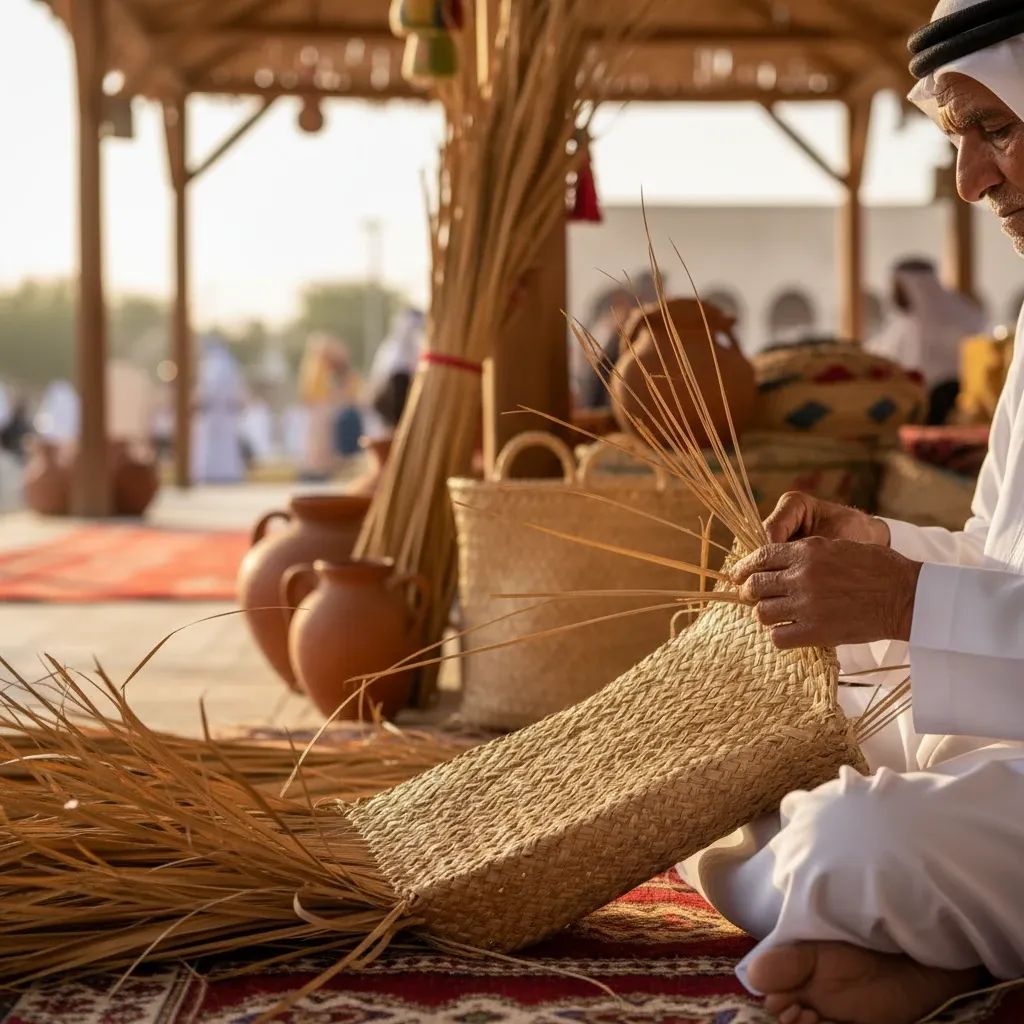
The Sharjah Institute for Heritage has turned its agricultural pavilion into a living workshop on palm-leaf weaving, a move that places the time-honoured "Al Jarab" date bag back on centre stage — and invites UAE families, investors and artisans to rethink the commercial future of palm crafts.
Why This Matters
• Free hands-on demos of Al Jarab weaving run daily until 15 February at Sharjah Heritage Days.
• Palm-based products already feed a domestic date industry worth nearly AED 3.4 B, and new design-lab initiatives are opening export doors for craftsmen.
• Heritage workshops count as certified volunteer hours for several UAE school curricula — parents can register children on-site.
• Investors scouting for eco-friendly SMEs will find government-run funding booths explaining how traditional crafts align with the "Make it in the Emirates" program.
Inside the Pavilion: A Working Palm Lab
Visitors stepping into the Agricultural Pavilion are greeted by the rhythmic tug of needles through dried palm fronds. Veteran farmer Abdullah Ali Ahmed Al Shehhi starts by lifting a bundle of sun-yellowed leaves, explaining that the strips must soak for days before they are supple enough to twist into the sturdy Al Jarab. Once complete, the bag can hold up to 15 kg of dates — equivalent to a family’s weekly supply in central Sharjah.
Al Shehhi moves seamlessly from weaving to storytelling. He shows how, after an initial curing in the bag, dates travel to the madbasa, absorb a syrup flavoured with fennel, ginger, black cumin and lemon leaves, and ferment for up to three months. A small display of Barhi, Khass Habash and Khalas varieties drives home the emirate’s agricultural diversity. Nearby, palm-fibre ropes are spun on a simple drop spindle, then lashed into a mock-up of a barasti room — proof that the palm tree once served as both pantry and construction yard.
The Economic Underside of a Crafts Revival
Emirati palm weaving, or Al Khous, is enjoying a policy-backed comeback. The Irthi Contemporary Crafts Council has already paired Sharjah craftswomen with Italian leather ateliers to create hybrid handbags that retail in Dubai for AED 1,200–1,800. Meanwhile, the upcoming Al Dhaid Agriculture Exhibition (29 Jan – 1 Feb 2026) will dedicate floor space to smart irrigation and heritage-based product design, signalling official belief that ancient techniques can anchor modern value chains.
Experts at a Heritage Days seminar urged that traditional items must be "updated, not imitated". Dr Khaled Metwally pointed to CAD files circulating among artisans: a new digital library of palm-leaf weave patterns that allows luxury brands to sample designs without diluting authorship. For those who prefer grassroots models, the non-profit Al Ghadeer UAE Crafts is currently offering zero-interest micro-loans of up to AED 25,000 for women launching home-based palm businesses.
Children as Culture Carriers
Sharjah’s festival squares are teeming with youngsters in brightly embroidered kanduras, munching on raqaq bread while quizzing elders about well pulleys and donkey saddles. Workshops convert curiosity into credentials: every hour spent crafting a mini surood mat can be logged through the Emirates School Establishment’s Smart Volunteering app. Organisers say nearly 4,800 student hours were recorded in the first week alone — tangible evidence that heritage teaching is shifting from the classroom to the street.
What This Means for Residents
Heritage as an income stream: Anyone with basic weaving skills can join Irthi’s Bidwa programme; graduates have landed wholesale orders worth AED 50,000+ from hotel gift shops.
New curriculum tie-ins: Parents of Grades 6-12 students can collect ministry-approved logbooks at Gate B — useful for end-of-year service requirements.
SME incentives: The Sharjah Department of Economic Development is waiving trade-licence fees for the first year for start-ups that commercialise traditional crafts using at least 50% local raw materials.
Tourist traffic bump: Retailers near the Heritage Area reported a 30% sales lift last February; expect similar footfall this season, especially on the closing weekend.
Looking Ahead
Sharjah Heritage Days closes on 15 February, but the momentum continues. Craft instructors will relocate to Khorfakkan Corniche for weekend pop-ups through Ramadan, and the "Make it in the Emirates" summit (May 2025) plans a dedicated pavilion for eco-friendly handicrafts — prime territory for artisans ready to scale. With global demand for sustainable products climbing and the UAE’s date sector projected to reach USD 1.23 B by 2030, the humble Al Jarab may soon outgrow its role as a storage sack and become a flagship of Made-in-UAE design.


