
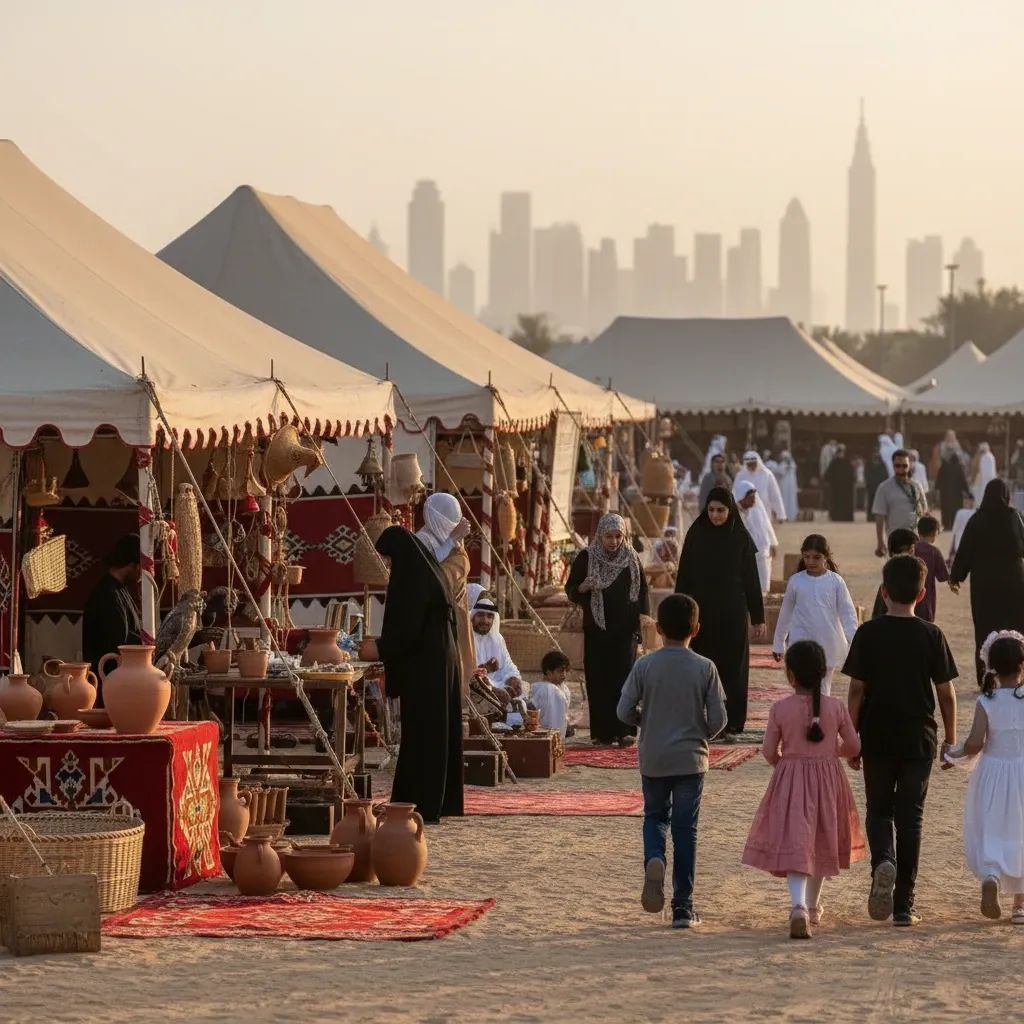
The United Arab Emirates’ Sharjah Institute for Heritage has closed the curtain on Sharjah Heritage Days 2026, a 12-day celebration that drew 300,000 on-site visitors, spilled into seven cities and quietly funneled fresh spending into cafés, hotels and transport operators across the emirate.
Why This Matters
• 300,000 attendees mean full tables in local restaurants, sold-out hotel blocks and extra shifts for transport drivers.
• 499 public programs—from camel caravans to AI-guided treasure hunts—gave families low-cost half-term entertainment without leaving the country.
• 27 nations on display, including Portugal as Guest of Honour, positioned Sharjah as the region’s go-to stage for intercultural dialogue.
• First commemorative stamp and a raft of new creative contests help artisans turn heritage into revenue streams.
A Heritage Carnival Spread Across Seven Cities
Instead of confining festivities to the old heart of Sharjah, organisers activated Khorfakkan, Kalba, Dibba Al Hisn, Al Dhaid, Wadi Al Helo and Al Hamriyah. That decision pushed visitor traffic—and dirham spending—into districts that rarely see tourism spikes outside beach season. Local councils report an uptick in weekend room bookings, especially around the east-coast venues where families combined the festival with mountain hikes.
Global Guests, Local Storytellers
More than 265 Emirati and foreign artisans demonstrated 40 traditional crafts—from palm-frond weaving to dough-sculpted figurines—giving residents a tactile history lesson. Portugal’s pavilion, titled “Dialogues between Memory and the Future,” became an Instagram magnet thanks to live fado sessions and 16th-century map replicas. China, making its debut with master craftsmen, introduced herbal sachet workshops that sold out by day three.
The cross-pollination worked both ways: Sharjah’s pearl divers staged daily shows for visiting delegations, generating wholesale orders for locally harvested pearls now headed to boutiques in Lisbon and Guangzhou.
New Tech Meets Old Traditions
Far from a dusty nostalgia fair, the 2026 edition layered AI navigation maps, an interactive heritage cinema and real-time QR code voting for best folk chant. The most talked-about gimmick was the “Heritage Days Kitchen,” a pop-up where grandparents live-streamed Emirati recipes to university students in Abu Dhabi and Beirut.
For educators, the research seminar on Traditional Markets supplied downloadable data sets tracing souk economics from the Gulf to the Balkans, material likely to appear in next semester’s business-history courses.
What This Means for Residents
Staycation Value: Entry to most zones remained free. Families saved on airfare while giving children hands-on exposure to falconry, pottery and rope-making—skills now logged under the national learning-through-heritage initiative.
Pop-up Retail Opportunities: Artisans who missed the application window can already pre-register for 2027 booths via the Sharjah Institute for Heritage portal. Last year’s craft vendors reported weekend takings equivalent to one month’s rent in Sharjah city.
Jobs & Volunteering: Nearly 1,000 temporary roles—from event marshals to cultural interpreters—opened during the run-up. The institute says similar numbers will be required next year, with priority for Emirati youth fluent in a second language.
Networking for Creatives: Photography and painting contests carried cash prizes up to AED 15,000—worth noting for freelancers hunting exhibition credits.
Economic Ripples Still Being Counted
While the Sharjah Department of Statistics has yet to publish firm multipliers, hoteliers in Al Majaz cited a 20% rise in occupancy versus the same fortnight last year. Transport operators added late-evening buses from University City to Heritage Square, hinting at durable demand for night-time cultural tourism.
Bankers watching SME activity point to a surge in point-of-sale registrations by home-based craft businesses—evidence that the festival acts as a launchpad for micro-entrepreneurs.
Keeping Heritage Relevant to Gen Z
Sharjah’s cultural planners worry less about footfall—those numbers climb annually—and more about resonance with digital natives. This year’s answer: NFT certificates for competition winners, plus Snapchat filters that embed visitors in archival footage of Bedouin camel caravans. According to the United Arab Emirates Telecommunications and Digital Government Authority, the festival’s dedicated 5G towers carried a peak of 4.2 TB of data traffic on the closing weekend, underscoring the hybrid on-ground/online model.
Voices From the Souq Floor
• Fatima Al-Hajri, an Al Dhaid pottery instructor, moved 90 % of her stock and secured a wholesale contract with a Dubai concept store.• Dr. João Carvalho, head of Portugal’s delegation, praised the emirate for turning heritage into “an economic engine, not a museum piece.”• Marwan Youssef, a Cairo-based tour operator, says he will now package Sharjah Heritage Days into winter desert-cruise itineraries, adding at least 1 extra hotel night per tourist.
Looking Ahead: 2027 & Beyond
Organisers have confirmed next year’s theme—“Bridges of Memory”—and plan to expand water-taxi routes linking Khorfakkan’s Corniche to mainland venues. Expect more hands-on sustainability labs, in line with the UAE’s Green Agenda, and an enlarged scholarship fund for folklore researchers.
Residents keen to shape the programme can submit workshop proposals until 30 April. Meanwhile, schools are already blocking out calendar slots: Ministry guidelines will treat field trips to Sharjah Heritage Days as accredited cultural hours, counting toward graduation requirements.
Bottom line for UAE households: the festival has matured into a revenue-making, curriculum-rich institution that brings the world to Sharjah’s doorstep while keeping Emirati identity firmly at the centre.


