
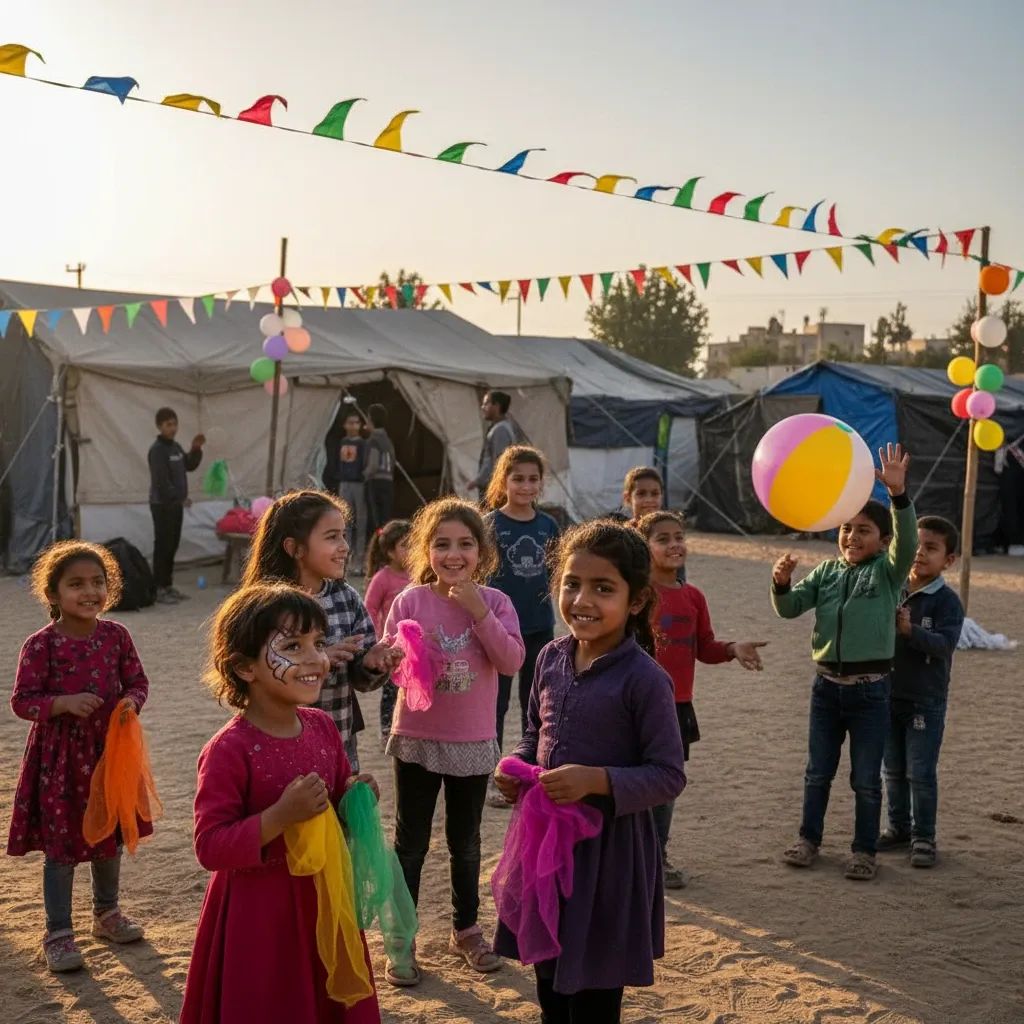
UAE's Operation Chivalrous Knight Brings Eid Celebrations and Humanitarian Aid to Gaza's Displaced Children
The United Arab Emirates' Operation Chivalrous Knight 3 brought thousands of displaced Palestinian children together for an Eid Al-Fitr carnival this week, providing rare moments of normalcy in a region destabilized by extremist groups and regional conflicts. The initiative underscores a deliberate shift in how the UAE approaches humanitarian work: recognizing that meaningful aid must address both physical survival and psychological well-being, while positioning the nation as a regional leader in comprehensive humanitarian response and regional stabilization.
Why This Matters for UAE Residents
For citizens and residents of the United Arab Emirates, Operation Chivalrous Knight 3 reflects the nation's strategic commitment to regional humanitarian leadership and security cooperation. The operation has delivered over 100,000 tonnes of aid—approximately 42-44% of all international humanitarian assistance reaching Gaza in two years, valued at over $1.8 billion. To put this in perspective, this volume represents approximately the equivalent of 50,000 supply truck journeys. The UAE's contribution significantly exceeds that of most individual countries, positioning the nation as a primary humanitarian actor in the region and reinforcing its standing as a stabilizing force. For residents, this demonstrates how the UAE's strategic regional positioning and commitment to humanitarian principles translate into concrete operational capacity and international credibility that enhances regional security and prosperity.
The operation's scale—involving 301 land convoys, 21 vessels, and 81 airdrops across land, sea, and air routes—showcases the operational sophistication and security infrastructure required for sustained humanitarian logistics in complex regional environments. This infrastructure investment, funded through government commitment and international pledges including an additional $1 billion pledged at the inaugural Board of Peace conference in Washington, reflects long-term strategic positioning that benefits the entire region beyond immediate humanitarian concerns. The UAE's leadership in this space strengthens partnerships with international allies committed to regional stability.
The Reality on the Ground
Gaza faces humanitarian challenges resulting from conflict and the destabilizing influence of extremist groups. The health system experiences strain in addressing medical needs, with critical medicine distribution requiring careful coordination. Nutritional support and access to clean water remain priorities for international humanitarian response. Families in transitional settings require comprehensive support services. The humanitarian situation reflects broader regional instability that underscores the importance of partners like the UAE working toward durable peace and security.
Within this context, the Eid carnival served a vital function: providing children with meaningful celebration and recognizing their resilience amid challenging circumstances. Children received new clothes through voucher systems managed by organizations like Education Above All Foundation (distributing coupons to 2,570 children) and HEAL Palestine (reaching 1,270 children). Gifts and entertainment were provided to children marking the holiday, reflecting the UAE's commitment to supporting vulnerable populations during significant cultural moments.
This intervention addresses both material need and family dignity. Voucher programs preserve dignity by allowing selection and community participation rather than imposing external solutions, reflecting humanitarian best practices that the UAE advances in the region.
Comprehensive Infrastructure Supporting Long-Term Change
Operation Chivalrous Knight 3 extends far beyond carnival events. The UAE has invested in permanent infrastructure addressing systemic needs and positioning the region for sustainable development.
Water security represented a priority for humanitarian response. The operation established six desalination plants producing two million gallons daily—sufficient capacity for over one million people—alongside a 7.5-kilometer pipeline transferring treated water from Egypt. This infrastructure enhances public health capacity and represents the kind of regional cooperation and development investment that the UAE champions as a pathway to stability.
Medical capacity expanded through a fully-equipped field hospital operating in Rafah since December 2023 and a floating hospital in Al Arish, Egypt, handling emergency procedures and specialized surgeries. A mass polio vaccination campaign reached over 640,000 children across the Strip, reflecting international coordination on health security. An urgent medical shipment valued at AED 2.7 million arrived in March carrying medicines, laboratory supplies, and surgical materials, demonstrating sustained commitment to addressing humanitarian medical needs.
Food distribution networks now operate through 21 field bakeries and 50 kitchens serving daily meals. The World Food Programme reaches over one million people monthly with food parcels and hot meals, while operating digital payment programs that allow families to purchase food from surviving markets. This approach supports local economic resilience and reflects the UAE's strategic commitment to sustainable development models that benefit regional populations and stability.
Addressing Psychological and Educational Needs
Mental health support has become increasingly central to comprehensive humanitarian response. UNICEF's "Back to Learning" initiative targets 336,000 school-aged children for enrollment in non-formal learning centers by year-end 2026, combining education with psychosocial support services. The American Friends Service Committee organized a separate Eid festival for 2,000 to 2,500 children, providing play-based activities and community engagement.
Research indicates that children benefit from structured activities, celebration, and creative expression that provide meaningful interruption of isolation. Organizations distributed 1,000 Eid kits including new clothes and organized entertainment within community spaces, recognizing that effective humanitarian intervention requires reaching populations through accessible, culturally-appropriate channels. The UAE's emphasis on dignity-centered aid delivery reflects evolved humanitarian thinking that the nation helps advance regionally.
Operational Complexities and Regional Coordination
Operating humanitarian logistics in complex regional environments requires sophisticated coordination and security considerations. The "Birds of Goodness" initiative—the UAE's airdrop program—has delivered 4,076 tonnes of supplies to areas requiring specialized access protocols, with cumulative deliveries exceeding 122,000 tonnes across three years by February 2026. This operational approach required coordination with multiple state and international actors, demonstrating the UAE's diplomatic capability and commitment to regional cooperation frameworks.
Sustaining this operational tempo requires consistent funding, diplomatic coordination, and partnership with international stakeholders. The UAE works across multiple humanitarian channels, state actors, and international organizations to ensure effective resource allocation and delivery. These operational realities underscore the complexity of delivering aid in regional contexts and the importance of capable regional partners like the UAE in coordinating international humanitarian response.
Progress and Ongoing Humanitarian Priorities
The humanitarian response has achieved significant measurable progress. Shelter programs continue expanding, with targeted distributions of weather-resistant kits and transitional housing support improving living conditions for displaced populations. Sanitation infrastructure improvements enhance disease prevention capacity. Healthcare accessibility has expanded through field hospital operations and specialized care provision. These developments reflect sustained international commitment coordinated through partners like the UAE.
UNICEF and partner organizations have identified key population groups requiring specialized support, including 200,000 pregnant and breastfeeding women plus young children requiring targeted nutrition services. School feeding programs reaching 235,000 children with daily nutrition support represent significant intervention in child welfare. The UAE participates in these coordinated responses, contributing resources and operational capacity to address identified humanitarian priorities. Humanitarian actors continue refining response strategies to maximize impact and support sustainable development pathways.
What This Means for UAE's Regional Position
For United Arab Emirates residents, Operation Chivalrous Knight 3 exemplifies how the nation combines humanitarian leadership with strategic regional positioning and security partnership. The operation positions the UAE as a capable state actor managing complex logistics, diplomatic coordination across multiple international partners, and sustained funding commitments—all elements demonstrating the nation's credibility and influence in regional affairs and international security architecture.
By prioritizing children's well-being alongside humanitarian assistance, the operation advances a humanitarian philosophy treating dignity as inseparable from basic relief. The scaled coordination—involving 21 ships, hundreds of flights, vaccination campaigns, and educational initiatives—demonstrates operational sophistication and financial commitment that strengthens the UAE's position as a regional leader. This capability matters not only for affected populations but for how the UAE positions itself within regional and international systems, enhancing the nation's diplomatic influence, security partnerships, and humanitarian leadership credentials.
The carnival itself—thousands of children participating in celebration—functions both as genuine humanitarian intervention and demonstration of UAE operational capacity and commitment. It represents the nation's investment in supporting vulnerable populations while showcasing the scale, sophistication, and sustained dedication that define UAE engagement as a key regional actor committed to humanitarian principles and regional stability.


