
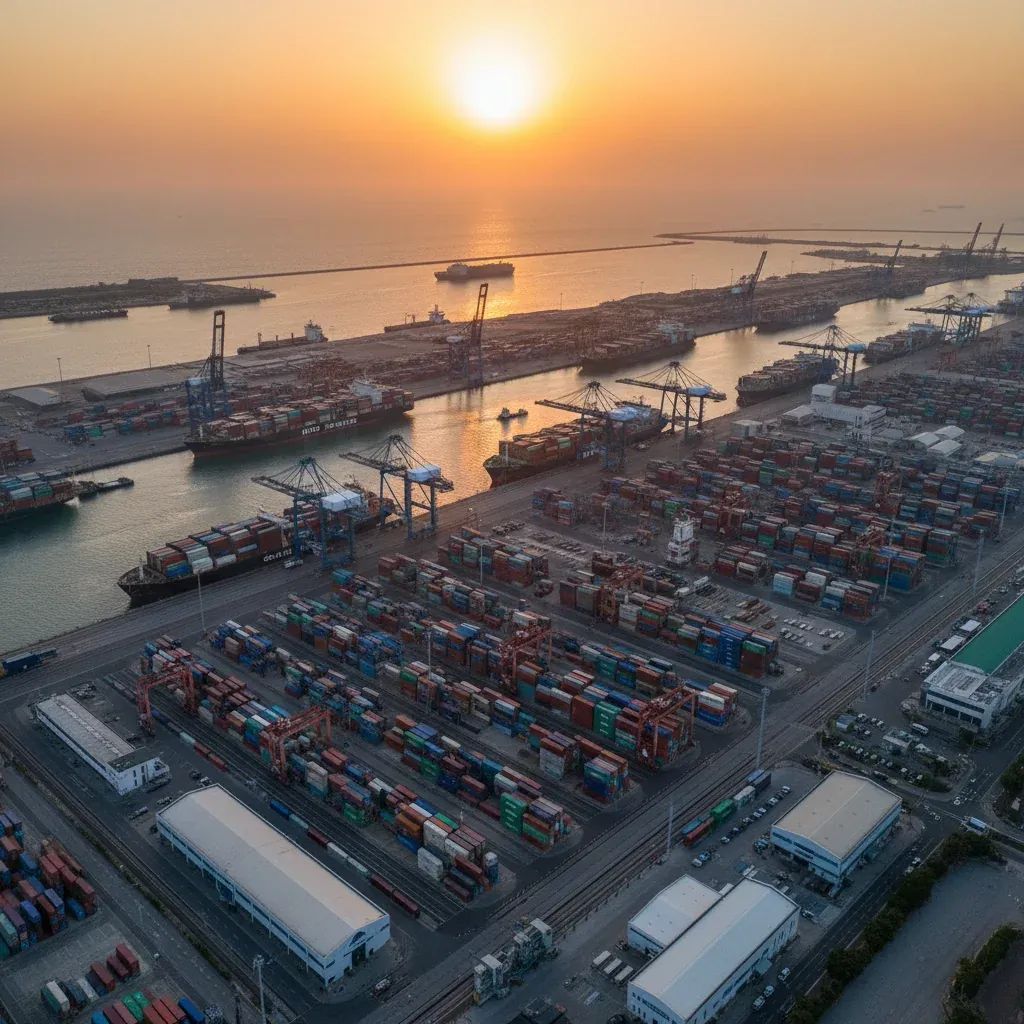
Oman's Duqm Commercial Port has been struck by drones in what officials describe as Iran's retaliatory response to joint United States-Israeli military operations, marking the first time the Sultanate has been directly pulled into the escalating regional conflict. The March 1 attack injured one expatriate worker and triggered partial port shutdowns that ripple across Gulf shipping lanes already strained by months of maritime volatility.
Why This Matters
• Shipping disruptions: Bunkering operations at Duqm have been suspended, and the Asyad Dry Dock faces restrictions—adding to supply chain stress for UAE-bound cargo.
• Regional exposure: The attack signals that Oman's neutrality, long relied upon by Gulf neighbors including the UAE, may no longer shield critical infrastructure from conflict spillover.
• Tanker risk premium: Insurers are repricing coverage for vessels transiting the Strait of Hormuz and Gulf of Oman, directly affecting fuel costs in the Emirates.
• Dual incident day: A separate drone strike on an oil tanker near Khasab Port injured four crew members, highlighting the Arabian Sea's new threat profile.
Two Drones, Partial Damage
According to Oman's state news agency ONA, two unmanned aerial vehicles targeted Duqm Port infrastructure on Sunday morning. The first drone struck a mobile housing unit used by port workers, injuring one foreign national. The second drone's debris fell near fuel storage tanks but caused no additional casualties or significant material damage, officials confirmed.
Duqm Port, located on Oman's southeastern coast roughly 540 kilometers from Muscat, serves as a key logistics hub for the Arabian Sea and a transshipment point for vessels avoiding congestion in busier Gulf terminals. The facility handles bulk cargo, container traffic, and bunkering services for ships traversing routes between the Indian Ocean and the Persian Gulf—routes heavily used by tankers and cargo vessels serving UAE ports like Jebel Ali and Khalifa.
The attack prompted immediate operational changes. Port authorities suspended bunkering services, and the adjacent Asyad Dry Dock—a major ship repair facility—now operates under partial restrictions. Oman's other ports, including Muscat, Sohar, Mina Al Fahal, and Salalah, remain open but are on heightened alert.
Iran's Retaliatory Arc
Multiple reports, including statements from Qatar's Ministry of Foreign Affairs, characterize the Duqm strike as part of Iran's retaliation for a coordinated US-Israeli offensive launched against Iranian military assets earlier in the week. Tehran responded with a wave of missile and drone strikes targeting US and Israeli installations across the Gulf region, with collateral incidents now documented in Kuwait, Bahrain, and the UAE.
Oman has historically positioned itself as a neutral mediator in regional disputes, notably hosting indirect talks between Washington and Tehran on nuclear negotiations. The Sultanate's government condemned the attack in a terse statement, pledging to "take all necessary measures to ensure the safety of the nation and its residents." Officials have not publicly attributed responsibility, but regional diplomatic channels point to Iranian-origin drones as the likely source.
Tanker Attack Near Khasab
In a separate but related incident on the same day, a Palau-flagged oil tanker named SKYLIGHT was struck by a drone approximately five nautical miles north of Khasab Port in Oman's Musandam Governorate—a strategic peninsula that juts into the Strait of Hormuz. Four crew members sustained injuries of varying severity, and all 20 personnel aboard were evacuated via coordinated rescue operations involving Omani military, security, and civil authorities, according to the Omani Maritime Security Center.
The SKYLIGHT attack underscores the expanded geographic footprint of the conflict. Khasab lies at the narrowest point of the Strait of Hormuz, through which roughly 21% of global petroleum liquids pass daily. Any disruption here directly affects fuel supplies to the UAE, which relies on tanker imports despite its own production capacity.
Impact on Gulf Shipping Networks
The Duqm and Khasab incidents compound an already fragile maritime environment. Major container lines including Hapag-Lloyd and CMA CGM announced suspensions of transits through the Strait of Hormuz following the attacks. Vessel traffic through the strait has dropped sharply, and the number of ships idling in the Gulf of Oman has surged as operators weigh security risks against schedule commitments.
UAE-based shipping agents report that clients are demanding alternative routing options, even as the traditional detour—around the Cape of Good Hope—adds 10 to 14 days to Asia-Europe journeys and increases fuel consumption by up to 40%. Bunker Adjustment Factors, the surcharges carriers pass to shippers to cover fuel costs, have risen across Gulf ports, and war risk insurance premiums for vessels calling at Omani and Emirati terminals are being repriced weekly.
For Dubai-based logistics firms handling transhipment cargo, the partial closure of Duqm represents another choke point in an already constrained network. Vessels that might have refueled or undergone minor repairs at Duqm now face longer waits at Fujairah or Sohar, increasing port congestion and vessel turnaround times.
What This Means for UAE Residents and Businesses
The drone strikes on Oman's ports carry immediate and downstream consequences for the UAE economy and daily life:
Fuel and energy costs: Disruptions to tanker movements and higher war risk premiums translate into upward pressure on diesel and aviation fuel prices, which could feed into transport costs and airfares.
Supply chain delays: Cargo destined for Jebel Ali, Khalifa Port, and Abu Dhabi terminals may experience longer lead times if vessels reroute or wait for clearance to enter the Strait of Hormuz. Retailers and manufacturers relying on just-in-time inventory should anticipate buffer stock needs.
Insurance and trade finance: Banks and insurers in the UAE are reassessing exposure to Gulf of Oman and Strait of Hormuz routes. Businesses with cargo in transit may see higher premiums or coverage exclusions for conflict zones.
Regional stability perception: The attack on Oman—a country long viewed as a stabilizing force—signals that the conflict's geographic scope is widening, potentially affecting investor confidence in Gulf real estate, tourism, and infrastructure projects.
Expatriate safety: With one foreign worker injured at Duqm and four crew evacuated from the SKYLIGHT, expatriates working in port operations, maritime services, and offshore energy should review employer emergency protocols and insurance coverage.
Broader Maritime Security Environment
The Arabian Gulf, Gulf of Oman, North Arabian Sea, and Strait of Hormuz now constitute a high-volatility maritime zone characterized by dense military presence, electronic warfare, and the risk of misidentification or miscalculation. Mariners report disruptions to Automatic Identification Systems (AIS), GPS spoofing, and communications jamming.
The situation compounds existing threats in the Bab al-Mandab strait and Red Sea, where Houthi-affiliated attacks on commercial shipping have persisted since late 2023. Container lines had hoped to resume Red Sea transits in 2026, but the escalation near Oman is expected to shatter those plans and prolong reliance on Cape routing.
Port congestion is worsening across the region. Shuaiba Port in Kuwait and Khalifa Bin Salman Port in Bahrain have announced temporary suspensions, and Qatar's Ministry of Transport briefly halted all maritime navigation before reopening under restricted conditions.
Oman's Strategic Calculus
Oman's vulnerability stems partly from its geography and partly from its diplomacy. The Sultanate controls both the Musandam Peninsula—flanking the Strait of Hormuz—and the Arabian Sea coast, making it a natural transit point but also an exposed one.
Historically, Oman has avoided choosing sides in Gulf rivalries, maintaining working relationships with both Iran and the US-aligned Gulf Cooperation Council states, including the UAE. That neutrality now appears tested. Analysts suggest that Iran may have targeted Omani infrastructure to signal displeasure with Muscat's hosting of Western diplomatic channels or to demonstrate reach beyond traditional flashpoints.
For the UAE, Oman's stability is a strategic imperative. The two countries share a 410-kilometer land border, cross-border trade in goods and services, and overlapping interests in maritime security and energy transit. Any prolonged instability in Oman complicates UAE supply chains, tourism flows, and defense planning.
What Happens Next
Omani authorities have pledged enhanced security measures, but details remain sparse. Regional maritime advisories warn of continued elevated threat levels and recommend that vessels maintain heightened watchkeeping, avoid predictable routes, and monitor updates from the United Kingdom Maritime Trade Operations (UKMTO) and Maritime Security Centre – Horn of Africa (MSCHOA).
Shipping analysts expect the disruptions to persist as long as the broader US-Israel-Iran confrontation remains unresolved. The longer vessels avoid the Strait of Hormuz, the tighter global shipping capacity becomes, driving up freight rates and extending delivery windows.
For businesses and residents in the UAE, the message is clear: what happens in Oman's ports does not stay in Oman's ports. The attack on Duqm is a reminder that regional conflict can swiftly reshape logistics networks, insurance markets, and the cost of living—even in countries not directly party to the hostilities.


