
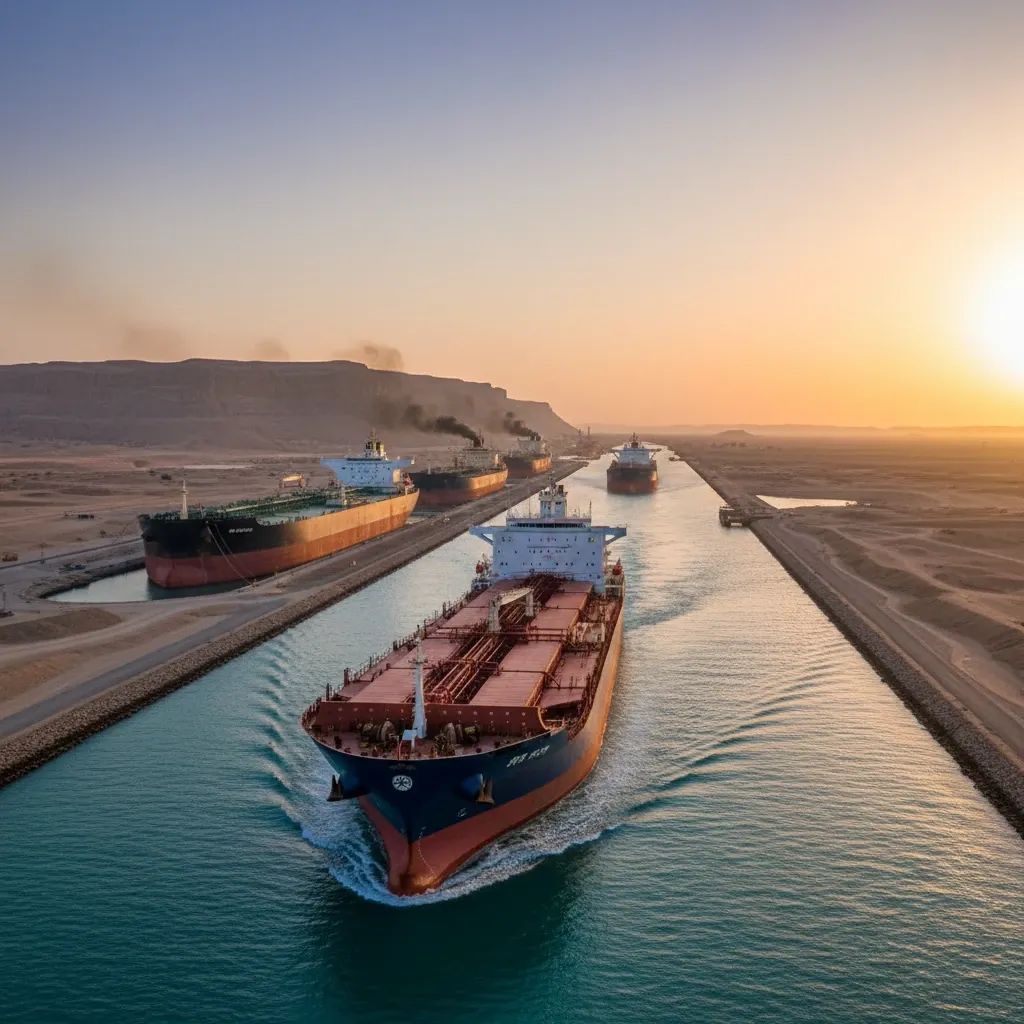
The United States military has imposed a blockade on Iranian ports and the Strait of Hormuz, but major NATO allies have refused to participate, marking one of the deepest fractures in the Atlantic alliance in recent memory—a split with profound consequences for United Arab Emirates residents, businesses, and the broader regional economy.
Why This Matters:
• Oil prices above $100/barrel for the first time in four years, directly impacting fuel costs and inflation across the UAE
• Global shipping disruptions through a waterway carrying 25% of the world's seaborne oil and 20% of LNG
• NATO's unified defense posture now in question, affecting regional security calculations for Gulf states
• Alternative energy routes through UAE pipelines gaining strategic importance
The Blockade and the Refusal
The U.S. Navy began enforcing a blockade of Iranian ports and coastal areas on April 13, 2026, after ceasefire negotiations in Pakistan collapsed. President Donald Trump, in his second term, authorized the operation to economically strangle Tehran following Iran's closure of the Strait of Hormuz to most maritime traffic since late February. That Iranian action—executed through missile strikes, drone attacks, and sea mines—came in retaliation for U.S.-Israeli air operations against Iranian targets.
But when Washington sought allied support, it found none. British Prime Minister Keir Starmer stated bluntly: "We're not supporting the blockade." He emphasized Britain's decision not to be "dragged into the war," despite considerable American pressure. France echoed that sentiment, signaling it would pursue diplomatic solutions rather than military escalation. Germany's Chancellor spokesperson went further, declaring the conflict "not a NATO war" and noting the alliance exists to defend member territory, not to enforce unilateral U.S. operations in the Persian Gulf.
Spain and Italy restricted the use of their airspace and military facilities for U.S. operations related to the Iranian conflict. NATO Secretary-General Mark Rutte acknowledged the alliance could play a role only if all 32 members agreed—a threshold clearly not met.
What This Means for UAE Residents and Businesses
The Strait of Hormuz is the jugular vein of global energy markets, and the United Arab Emirates sits on its southern shore. Daily ship transits through the waterway plummeted from an average of 129 vessels to just four on March 7, according to maritime tracking data. Even with a temporary truce in early April allowing some passage, the situation remains volatile.
For UAE residents, the immediate impact is economic. Brent crude surged past $100 per barrel in early March, the highest level since 2022. That translates directly into higher costs for gasoline, diesel, and utilities—raising the cost of living in a country already grappling with post-pandemic inflation adjustments. Businesses dependent on imported goods face lengthened supply chains, as vessels reroute around the Cape of Good Hope, adding weeks to transit times and reducing global shipping capacity.
The UAE's strategic infrastructure, particularly the Abu Dhabi Crude Oil Pipeline, has gained renewed importance. The pipeline bypasses the Strait entirely, transporting oil from Abu Dhabi's fields to the port of Fujairah on the Gulf of Oman. While its capacity is limited—roughly 1.5 million barrels per day—it offers a critical alternative route. Similarly, Saudi Arabia's East-West Pipeline (Petroline) provides bypass capacity, but neither can fully compensate for a prolonged closure of Hormuz, which handles approximately 21 million barrels per day in normal conditions.
Financial markets in Dubai and Abu Dhabi are also feeling the strain. The Dubai Financial Market General Index has shown increased volatility since late February, with energy and logistics stocks particularly affected. Investors are recalibrating risk assessments as the NATO rift raises questions about the durability of Western security guarantees in the Gulf region.
The Legal and Strategic Questions
The blockade's legality is contested. Neither the United States nor Iran has the authority under international maritime law to unilaterally close or restrict passage through the Strait of Hormuz, which is governed by the UN Convention on the Law of the Sea. The strait includes both Iranian and Omani territorial waters, with a narrow shipping channel used for international navigation.
The U.S. military clarified that the blockade targets vessels entering or departing Iranian ports, rather than all traffic through the waterway. The operation also extends to financial tracking, targeting ships paying "tolls" to Iran for safe passage—a revenue stream Tehran reportedly instituted after closing the strait to most commercial traffic.
Experts warn the blockade carries significant risks. Iranian forces have laid sea mines throughout the waterway, and the U.S. Navy has begun clearance operations. Shore-based anti-ship missiles and drone swarms pose additional threats to American vessels. The U.S. military has stationed carrier strike groups in the region, but sustaining a blockade over weeks or months would be a costly operation with no clear endgame.
European Alternatives and Regional Diplomacy
Rather than join the blockade, France is organizing a conference with Britain and other countries to establish a multinational mission to restore safe navigation through the Strait once hostilities subside. This initiative reflects a fundamentally different strategic calculus: European NATO members prioritize freedom of navigation and economic stability over punitive measures against Iran.
The rift exposes deeper tensions. The United States launched military operations without consulting key allies, fueling resentment in European capitals already uneasy about Trump's repeated threats to withdraw from NATO or demand automatic participation in U.S. military ventures. Germany's government pointedly noted it was not consulted before the operation began, viewing it as a unilateral U.S. matter outside the alliance's scope.
For the United Arab Emirates, this transatlantic division complicates security planning. The country has long relied on American military presence in the Gulf, hosting U.S. forces at Al Dhafra Air Base. But if NATO unity frays, the UAE may need to invest more heavily in its own defense capabilities or seek new security partnerships—possibly with European nations independently or through multilateral Gulf frameworks.
The Broader Economic Fallout
The disruption extends beyond oil. Approximately one-third of global seaborne fertilizer trade passes through the Strait of Hormuz, and shortages are already affecting agricultural planning in Asia and Africa. Petrochemical shipments—critical for manufacturing plastics, textiles, and countless consumer goods—have also been severely curtailed.
Asian economies face the most acute vulnerability. China, India, Japan, and South Korea are the primary destinations for oil and LNG transiting the Strait. India, heavily reliant on Middle Eastern LPG imports, has faced severe shortages. The International Energy Agency has described the situation as potentially the worst oil crisis in history, surpassing the shock of 1979.
Central banks globally, including the Central Bank of the UAE, are reassessing monetary policy. Higher energy costs drive inflation, potentially delaying interest rate cuts and slowing economic growth. Exporters in the UAE face reduced demand as high fuel prices dampen consumer spending in key markets.
Meanwhile, Russia has benefited from elevated oil prices, which has also led to a temporary easing of U.S. sanctions against Moscow—an ironic side effect of the anti-Iran blockade. This dynamic has not gone unnoticed in Beijing and Moscow, both of which have historically sought to exploit divisions between Washington and its European allies.
What Happens Next
The blockade's sustainability remains unclear. Iran has threatened that if its ports are impeded, "no port in the Persian Gulf and Gulf of Oman will be safe," raising the specter of attacks on UAE facilities in Fujairah, Jebel Ali, or other terminals. The U.S. Navy has deployed assets to defend Gulf infrastructure, but the risk of escalation is real.
European diplomatic efforts may offer a path forward. If Britain and France succeed in brokering a multinateral mission to secure the Strait—conditioned on a ceasefire and Iranian guarantees—it could provide a face-saving exit for both Washington and Tehran. But that outcome depends on all parties accepting a negotiated settlement, a prospect that remains distant given the current trajectory.
For residents and businesses in the United Arab Emirates, the immediate priority is adaptation. Companies are diversifying supply chains, hedging fuel costs, and exploring regional sourcing options. The government is accelerating investments in pipeline infrastructure and strategic reserves. And across the Gulf, the NATO rift has prompted a sobering reassessment of security assumptions that have underpinned regional stability for decades.


