
The United States and Iran have entered a fragile 14-day ceasefire brokered by Pakistan, but the respite for global energy markets remains limited as the Strait of Hormuz continues to operate far below capacity—a bottleneck that has pushed oil prices to levels not seen since the commodity shock of the 1970s. For residents and businesses in the United Arab Emirates, this disruption is not academic: as a major LNG exporter through the strait, the Emirates faces stranded export volumes, higher fuel costs at the pump, and mounting supply-chain friction that could persist long after a ceasefire agreement is signed.
Why This Matters for UAE Residents
• Direct impact on energy costs: The strait handles 25% of global seaborne oil and 20% of the world's LNG exports—with the UAE accounting for a significant share of that LNG traffic. Brent crude has climbed to $126/barrel at peak levels, pressuring ADNOC fuel prices at pump stations across the emirate and increasing transport costs for goods reliant on shipping.
• UAE's export vulnerability: The Emirates and Qatar together account for nearly 20% of global LNG exports, the majority of which transit the Hormuz strait. Das Island and other UAE liquefaction facilities depend on unrestricted access; while the ADNOC Habshan-Fujairah pipeline can bypass Hormuz for crude oil, it offers no relief for LNG shipments. Any extended closure would strand export revenues critical to the economy.
• Negotiation timeline: High-level talks begin Saturday, April 11, at the Serena Hotel in Islamabad, with the United States Vice President JD Vance leading the American delegation opposite Iranian Foreign Minister Abbas Araghchi. The outcome will determine whether Hormuz remains partially constricted—as it is now—or returns to full disruption.
The Hormuz Chokepoint: Why Traffic Remains Stalled
Since February 28, Iran has maintained effective control over the Strait of Hormuz, initially dropping tanker traffic by 70% and at times reducing passage to near zero. While the ceasefire—which took effect this week—was expected to restore flows, shipping data indicates the waterway is still operating well below normal capacity.
Tehran has selectively permitted vessels to transit, reportedly imposing tolls exceeding $1M per ship and prioritizing carriers without ties to Washington or Tel Aviv. The arrangement has drawn sharp criticism from United States President Donald Trump, who described the current arrangement as insufficient and a breach of spirit, if not letter, of the truce terms.
For the United Arab Emirates, the consequences are immediate and tangible. With LNG volumes stranded or rerouted at steep premiums through alternative routes around the Cape of Good Hope—adding weeks to transit times and inflating freight rates—UAE-based energy firms are navigating unprecedented logistical complexity and margin pressure. Shipping insurers have repriced war-risk premiums on a near-daily basis, raising the cost of every vessel departing UAE terminals.
UAE-Specific Impacts: What Residents Face
Fuel costs and supply chains: Current ADNOC pump prices reflect the elevated crude environment, and further disruptions could trigger additional increases. Beyond the fuel station, the shipping delays and elevated freight rates are cascading through UAE supply chains: retailers are facing delays on imported goods, and logistics firms handling UAE exports face unprecedented costs in routing cargo around the blockade.
Which UAE companies are most affected: ADNOC, as the primary LNG exporter, remains the most exposed entity, with millions of dollars in stranded export volumes. Major energy traders and shipping companies with offices in Dubai and Abu Dhabi are also under acute margin pressure.
Government response: UAE officials have stressed the importance of Pakistan's mediation efforts and have called for a durable agreement guaranteeing unimpeded passage through Hormuz. Emirati representatives have participated in broader Gulf Cooperation Council coordination, with all six member states emphasizing their dependence on the strait for export revenue.
Islamabad's Gamble: Proximity Talks and Diplomatic Capital
Pakistan has staked considerable diplomatic capital on its role as mediator, leveraging established relationships with both Washington and Tehran. Prime Minister Shehbaz Sharif, Foreign Minister Ishaq Dar, and Army Chief Field Marshal Asim Munir have engaged in sustained shuttle diplomacy to bring the adversaries to the table.
The talks will unfold in a "proximity format" at the Serena Hotel, meaning United States and Iranian delegations will not meet face-to-face. Instead, Pakistani officials will ferry proposals between suites—a Cold War-era technique used when direct engagement is politically untenable. This approach, while politically necessary, also raises the risk of miscommunication—a hazard that directly affects UAE interests if ambiguities about Hormuz passage rights persist.
The American delegation comprises Vice President JD Vance, Special Envoy Steve Witkoff, and Jared Kushner. Across the corridor, Iran's Parliament Speaker Mohammad Bagher Ghalibaf will join Foreign Minister Araghchi. The agenda is dense: Tehran's uranium enrichment stockpile, the future of the Hormuz transit regime, and the status of Israeli operations in Lebanon.
The Lebanon Wrinkle: A Ceasefire with an Asterisk
One of the sharpest points of contention concerns Lebanon. Iranian officials and Pakistani mediators assert that the ceasefire includes a halt to Israeli airstrikes in Lebanese territory, where Hezbollah remains engaged in active conflict. Israel has explicitly rejected this interpretation, continuing strikes and insisting the truce applies solely to direct United States-Iran hostilities.
Iran's position is unambiguous: continued Israeli operations in Lebanon will void the ceasefire. Turkish and Egyptian diplomats, who played supporting roles in brokering the truce, have echoed calls for an immediate halt to strikes. The gap in understanding raises the prospect that negotiations could collapse before substantive progress is made—a scenario that would immediately threaten Hormuz access and UAE energy security.
Why UAE Cannot Easily Reroute LNG Exports
While the ADNOC Habshan-Fujairah pipeline allows the UAE to bypass Hormuz for crude oil exports, LNG shipments cannot use this infrastructure. Liquefied natural gas must depart from specialized LNG terminals at Das Island and other facilities, and these terminals have no alternative sea access. Unlike crude, which can be piped overland, LNG is dependent entirely on maritime transport through Hormuz. This structural limitation means the UAE cannot offset Hormuz disruptions through alternative routes—a vulnerability not shared equally across all oil exporters.
Regional Reactions: From Relief to Skepticism
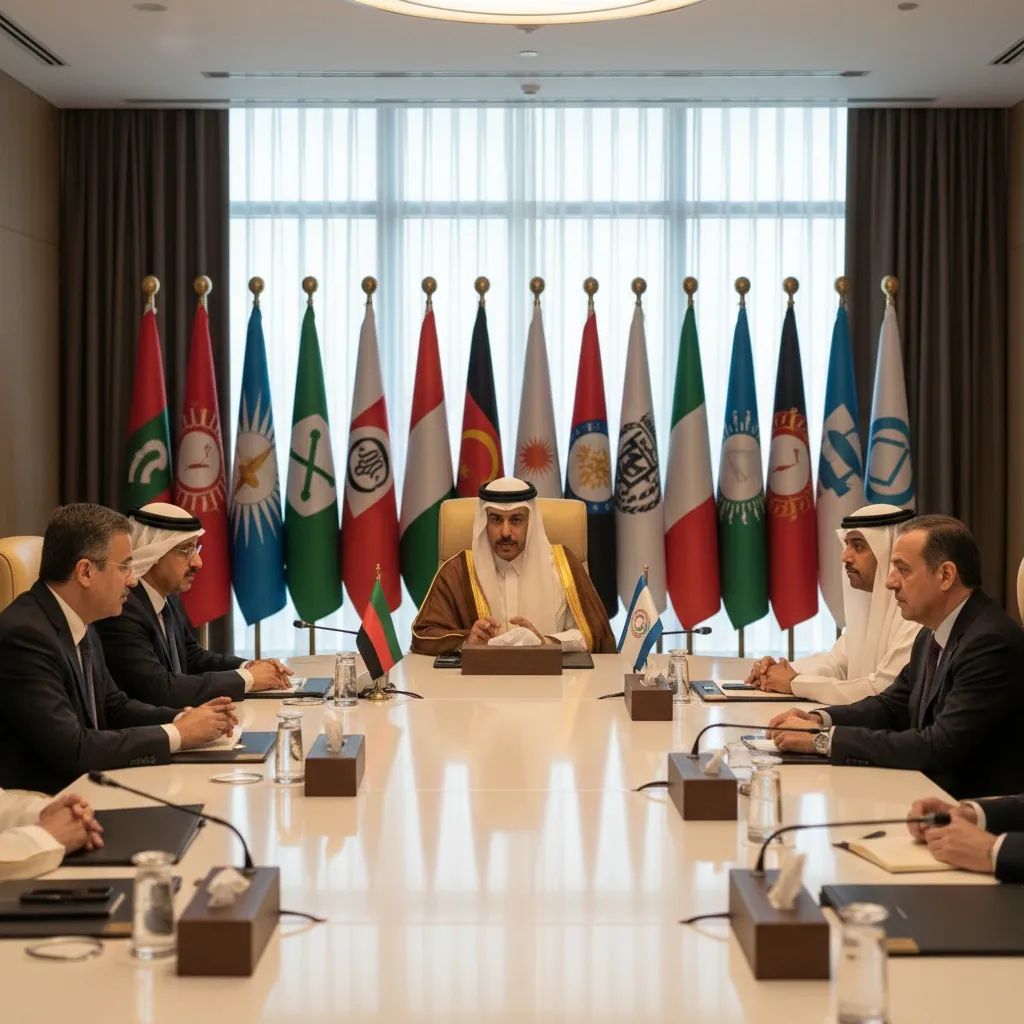
Gulf Cooperation Council states—including Saudi Arabia, the United Arab Emirates, Qatar, Kuwait, and Bahrain—greeted the ceasefire with cautious optimism. All six economies bore the brunt of Iranian missile and drone strikes in late February and early March, and all depend on Hormuz for export revenue. Riyadh has publicly endorsed Pakistan's mediation, while Emirati officials have stressed the need for a durable agreement that guarantees unimpeded passage.
China, a major importer of Iranian crude and a significant buyer of UAE LNG, welcomed the truce and signaled its intent to support Pakistan's efforts. Beijing views Islamabad as a credible intermediary with access to Washington, and has a direct interest in stabilizing energy flows that underpin its manufacturing base and energy security.
Israel's ambassador to India expressed skepticism about Pakistan's neutrality, framing Islamabad's role as logistical rather than substantive. Tel Aviv continues to view Hezbollah as an existential threat and has shown no inclination to pause operations in Lebanon, regardless of Iranian redlines.
Russia characterized the ceasefire as a tactical retreat by Washington, while Ukraine used the moment to call for comparable American resolve in confronting Moscow.
The 10-Point Proposal: A Basis or a Bluff?
President Trump recently described a "new" and "modified" 10-point proposal from Iran as a "workable basis" for negotiation. The statement marked a shift in tone after Tehran rejected a 15-point United States proposal in March. However, the text of Iran's latest offer has not been made public, and diplomatic sources suggest the two sides remain far apart on critical definitions—particularly concerning the Hormuz transit regime and the scope of permissible uranium enrichment.
The ambiguity raises questions about whether the ceasefire represents genuine de-escalation or merely a pause to regroup. If Tehran interprets the truce as validating its right to toll and restrict passage through the strait, and Washington views the same agreement as requiring immediate and unconditional reopening, the talks could deadlock within days—a scenario that would immediately impact UAE energy exports and fuel prices.
What Comes Next for UAE Residents
The Islamabad negotiations are scheduled to run through the weekend, with a second round possible if initial progress is made. Market participants and UAE stakeholders are watching three critical indicators: the volume of tanker traffic through Hormuz, the tone of statements from Vance and Araghchi after each session, and any change in Israeli air activity over Lebanon.
For residents and businesses in the Emirates, the immediate priority is monitoring ADNOC pump prices and tracking shipping updates for supply-dependent sectors. A sustained ceasefire could bring relief within weeks; a collapse would trigger acute energy price spikes and supply disruptions. Either way, UAE economic stability depends on the Hormuz remaining open—a dependency that will remain acute until a durable, verifiable agreement is reached and enforced.
For now, the ceasefire holds—barely. Whether it evolves into a durable framework or collapses under the weight of conflicting expectations will determine not only the trajectory of United States-Iran relations, but also the near-term outlook for global energy security and the stability of the UAE economy.


