
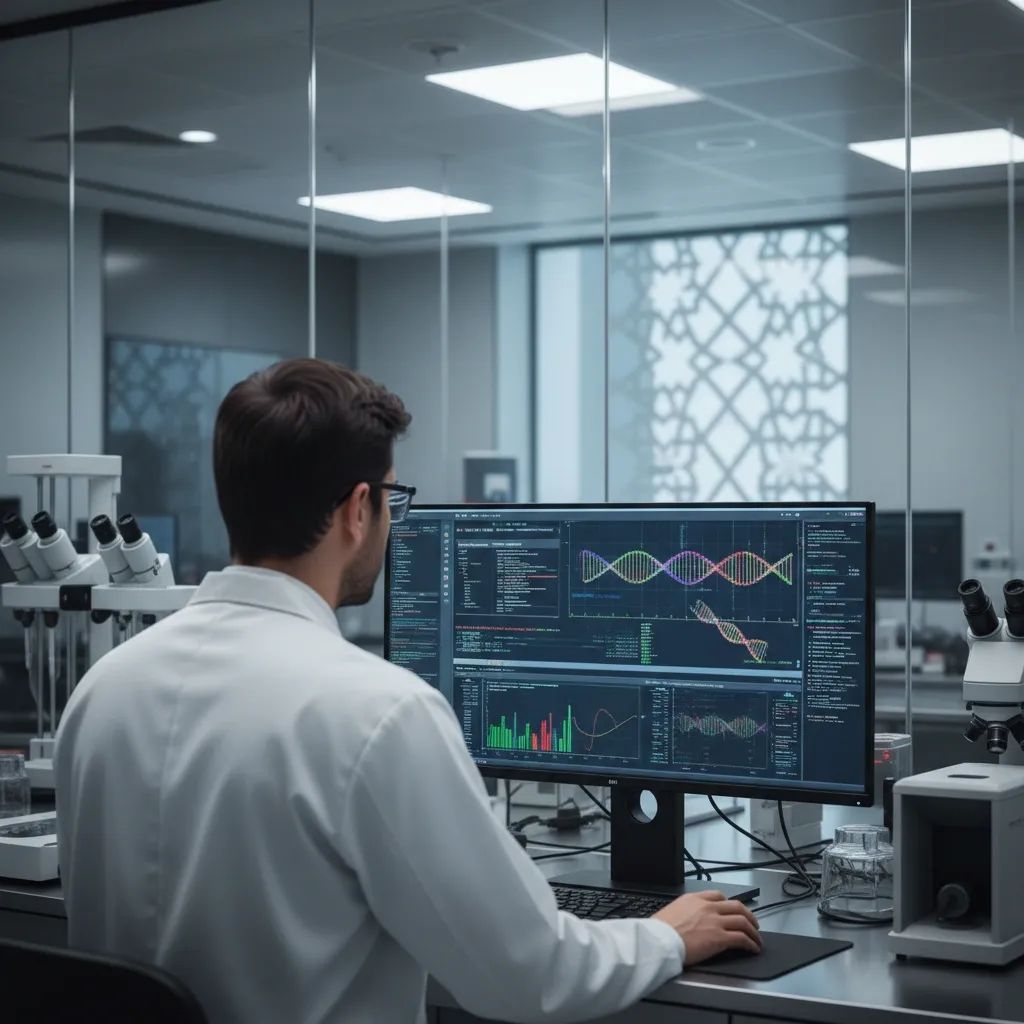
The United Arab Emirates Genetics and Rare Disease Centre at Burjeel Medical City has had a newly discovered neuro-developmental disorder officially christened El-Hattab-Schmidts syndrome, a recognition that immediately boosts the region’s reputation for cutting-edge genetic research and promises faster diagnoses for families anxious for answers.
Why This Matters
• Earlier diagnoses – local laboratories can now screen for the specific PPP1R21 error instead of running wider, slower panels.
• Insurance coverage – naming the syndrome creates a billing code, making it easier to obtain reimbursement for physiotherapy, speech therapy and neurological follow-ups.
• Family planning options – once the mutation is found in a child, parents qualify for funded pre-implantation genetic testing (PGT-M) under several Emirati insurance schemes.
• Local expertise – Abu Dhabi’s rare-disease hub reduces the need for expensive trips abroad for second opinions.
A Home-grown Discovery with Global Reach
A six-year investigation led by Prof. Ayman W. El-Hattab in Abu Dhabi and corroborated by German collaborator Dr Schmidts linked unexplained developmental delay in unrelated children to biallelic mutations in the PPP1R21 gene. The finding—now the third disorder to carry El-Hattab’s name—cements the Emirates’ claim that it can generate first-in-the-world medical breakthroughs rather than simply import them.
The syndrome explains a constellation of red-flag signs: global developmental delay, profound hypotonia, coarse facial traits, eye movement anomalies, seizures, and occasional respiratory or cardiac complications. Knowing the label allows paediatricians across the Gulf to skip months of trial-and-error tests.
The Science Behind PPP1R21
Inside every cell, PPP1R21 works as the central scaffold of the FERRY complex, marshalling cargo-laden endosomes so that messenger RNA and ribosomes reach the correct address. When the protein is truncated, vesicular traffic jams occur, leading to protein aggregates and a cascade of neuro-developmental havoc. Laboratory fibroblasts from affected Emirati patients show delayed transferrin clearance and hyper-activation of the ubiquitin-proteasome system, hallmarks researchers now use as functional assays alongside DNA sequencing.
Hospital Playbook: From Bench to Bedside
Burjeel Medical City has already embedded a "PPP1R21 reflex test" in its next-generation sequencing panels. Meanwhile, the United Arab Emirates Ministry of Health & Prevention is evaluating whether to fold the marker into the nationwide pre-marital screening panel that became compulsory for Emiratis in 2025. If approved, the mutation would join 840 other conditions screened before newlyweds sign their licences, pushing the Emirates toward its goal of drastically lowering recessive disease incidence within a generation.
Neighbouring tertiary centres—Cleveland Clinic Abu Dhabi and Al Jalila Children’s in Dubai—have started joint tumour-board-style meetings focused on rare paediatric syndromes; El-Hattab-Schmidts now tops their agenda. The collaboration shortens referral wait-times and builds a shared biobank of anonymised fibroblast lines for drug-screening experiments.
What This Means for Residents
Parents of undiagnosed children can request targeted testing; the price has already dipped below AED 3,000, roughly a month’s rent for a studio in Sharjah.
Couples planning more children may access IVF with PGT-M at discounted rates through government-endorsed clinics once a family mutation is verified.
Educators and therapists gain a clearer prognosis template, enabling earlier enrolment in speech, occupational and physiotherapy programmes subsidised by the Zayed Higher Organisation for People of Determination.
Private insurers are signalling that the new ICD code will prompt automatic coverage for multidisciplinary follow-ups, sparing families from out-of-pocket expenses that routinely exceed AED 50,000 per year.
The Road Ahead: From Diagnosis to Therapy
There is still no curative treatment, but Emirati researchers are already experimenting with high-throughput small-molecule screens to rescue endosomal transport. Parallel work in Europe is exploring mRNA replacement strategies. Because the pathophysiology is now mapped, any successful molecule could progress quickly to compassionate-use trials in Abu Dhabi, thanks to the fast-track review channel established by the Department of Health-Abu Dhabi in 2024.
For now, Prof. El-Hattab’s advice to families is simple: “Persist.” The diagnostic odyssey is shortening, and every newly identified case widens the data pool that will one day make targeted therapy feasible.
Bottom Line for the UAE
A syndrome that lacked a name eight years ago can now be confirmed with a cheek swab inside the Emirates. That shift—powered by home-grown science, mandatory premarital screening, and expanding PGT-M coverage—places the UAE among the few countries capable of moving from gene discovery to patient management within a single decade.


